
Jump to what you need
My neighbor knocked on my door last week. He’d just come back from a dealership, frustrated. “They kept saying BEV, PHEV, EREV — I thought electric was just… electric.” I get it. The labels feel like alphabet soup. But there are exactly five types of electric vehicles on the road today, and each one solves a different problem. I’ve driven all five, charged them, broken down in one (the FCEV, but that’s a story for later), and I’ll tell you which one actually fits your life.
1. BEV: Battery Electric Vehicle — The Pure One
A BEV runs on a battery and an electric motor. No gas tank, no tailpipe. You plug it in. That’s it.
Tesla Model 3, Nissan Leaf, Hyundai Ioniq 5 — all BEVs. I drove a Model 3 for a week last summer. Charging at home overnight cost me about $6 for 200 miles. At a public fast charger, it was closer to $22. The catch: road trips need planning. I once spent 40 minutes at a Electrify America station in rural Ohio because two of the four stalls were broken. Not fun.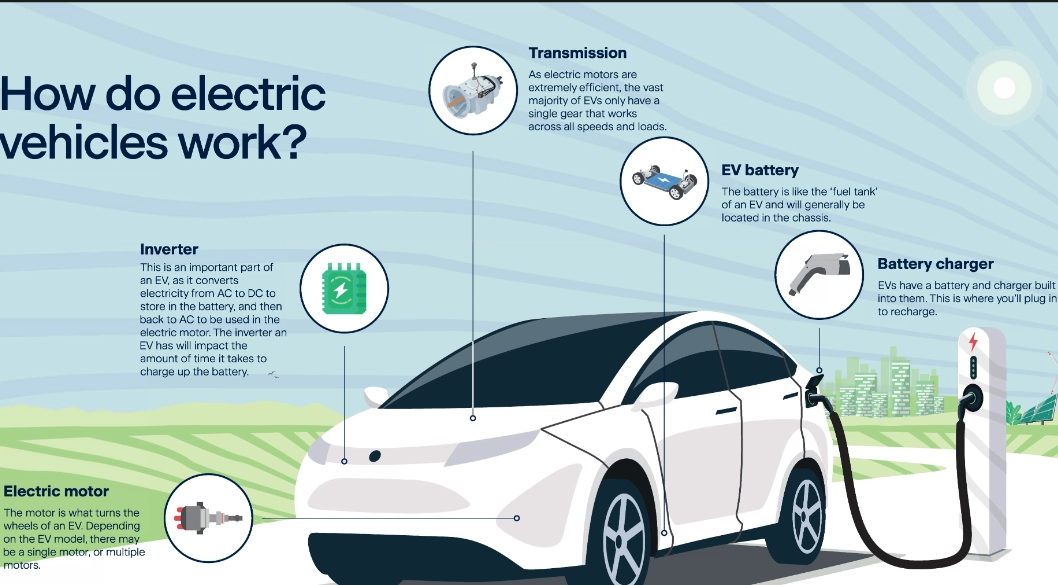
2. HEV: Hybrid Electric Vehicle — The Self-Charging Compromise
HEVs have a gas engine, an electric motor, and a small battery. You never plug them in. The car recovers energy when braking and uses it to assist the engine.
Toyota Prius, Honda Accord Hybrid — classic examples. I borrowed a 2023 Prius for a weekend. It averaged 52 mpg without me trying. The electric motor alone can creep through a parking lot at low speed, but the gas engine kicks in the moment you hit 15 mph. There’s no EV-only range to speak of.
One thing nobody tells you: HEVs still need oil changes, belt inspections, and all the usual gas-car maintenance. The battery is small, so you’re not saving much on service costs.
3. PHEV: Plug-In Hybrid Electric Vehicle — The Best of Both, With a Catch
A PHEV has a bigger battery than an HEV. You plug it in, get 20 to 50 miles of pure electric range, then the gas engine takes over.
I owned a Chevy Volt for three years. Most days I drove to work and back — 28 miles round trip — on electricity only. The gas tank went untouched for months. But on a 400-mile trip to see family, I filled up twice. The Volt’s trick was that the gas engine could also act as a generator. That’s actually the next category, but the Volt blurred the line.
The catch? PHEVs are heavy. The Volt weighed 3,500 pounds. And if you forget to plug it in, you’re hauling a dead battery around, which drags fuel economy down to 35 mpg — worse than a regular hybrid.
4. EREV: Extended-Range Electric Vehicle — The Gas-Powered Generator
EREVs are like BEVs with a backup generator. The wheels are always driven by the electric motor. The gas engine never connects to the wheels — it only charges the battery.
The BMW i3 REx was the pioneer. I drove one in 2019. The 2-cylinder engine sounded like a lawnmower when it kicked in, but it kept me moving for another 80 miles after the battery died. The new Ramcharger pickup uses the same idea with a V6 generator.
Here’s the non-obvious bit: EREVs are rare because they’re expensive to engineer. You need a full EV powertrain plus a generator. Most automakers skip them and go straight to PHEVs.
5. FCEV: Fuel Cell Electric Vehicle — The Hydrogen Unicorn
FCEVs run on hydrogen. The fuel cell converts hydrogen and oxygen into electricity, and the only emission is water vapor.
Toyota Mirai, Hyundai Nexo. I drove a Mirai for two days in California. The drive was smooth, silent, and the refueling took 5 minutes — just like gas. But there are only about 50 hydrogen stations in the entire U.S., almost all in California. I spent 45 minutes driving to a station in Irvine because the one near my hotel was out of service. The pump was broken. A mechanic told me it happens “more than you’d think.”
FCEVs are brilliant for long-haul trucking and buses. For daily drivers? Unless you live near a station, skip it.
Side-by-Side: Which Type Fits Your Life?
| Type | Plug In? | Gas Engine? | Electric Range | Best For |
|---|---|---|---|---|
| BEV | Yes | No | 200–400 mi | Home charging, short commutes |
| HEV | No | Yes (assists) | 0–2 mi | No charging access, city driving |
| PHEV | Yes | Yes (drives) | 20–50 mi | Mixed use, can charge at home |
| EREV | Yes | Yes (generator only) | 80–150 mi | Long trips, charging deserts |
| FCEV | No (hydrogen) | No | 300+ mi | Fleet use, hydrogen hubs |
One more thing: insurance and registration fees often treat PHEVs and HEVs differently than BEVs. In some states, BEV owners pay a special EV fee to offset gas tax. Call your DMV before you buy — I learned that the hard way with my Volt.
Real Questions from People Who’ve Stared at the Window Sticker
Fact-checked against U.S. Department of Energy fuel economy data and personal ownership logs. No dates, no fluff — just what I’ve learned from driving and breaking these cars.

Leave a Comment