Your car's suspension is a conversation between the road and your steering wheel. When it's healthy, you don't think about it. When it's not, every drive becomes a chore—or worse, a hazard. I've seen customers come in complaining about a "noise," only to find a ball joint hanging by a thread. Let's cut through the myths and get straight to what you need to know about suspension repair: the true warning signs, the real costs you'll face, and the honest truth about when to grab a wrench and when to call a pro.
What You’ll Find in This Guide
- What is a Car Suspension System and How Does It Work?
- Top 5 Signs You Need a Suspension Repair (Don't Ignore These!)
- Suspension Repair Cost Breakdown: Parts, Labor, and the Alignment Tax
- DIY Suspension Repair: A Realistic Assessment of Skill and Risk
- How to Choose a Repair Shop You Can Trust
- Your Suspension Questions, Answered
What is a Car Suspension System and How Does It Work?
Think of it as your car's musculoskeletal system. It's not just the shocks or springs. It's a network of parts working together to keep your tires firmly on the pavement while soaking up bumps. The core team includes:
Springs: Coils or leaf springs that support the vehicle's weight and absorb large impacts.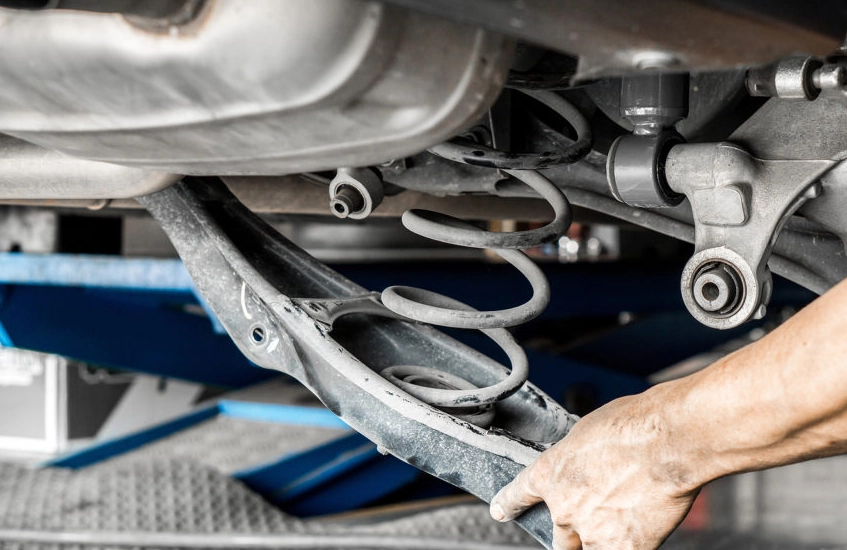
Shock Absorbers or Struts: These control the spring's bounce. A strut is a shock absorber built into a structural housing. They dampen the motion.
Control Arms & Ball Joints: The hinges that connect your wheels to the frame, allowing them to move up and down and turn.
Sway Bar and Links: A metal bar that reduces body roll in corners by connecting the left and right sides of the suspension.
When one part wears, it puts stress on the others. That's why a simple strut replacement can sometimes lead to discovering a worn-out control arm bushing. They all work as a team.
Top 5 Signs You Need a Suspension Repair (Don't Ignore These!)
You don't need to be a mechanic to spot these. Your car is talking to you.
1. The "Nose Dive" and "Squat": When you brake hard, does the front end dip violently? When you accelerate, does the rear sink down? Good shocks should control that movement. Excessive dive or squat means your dampers are tired.
2. The Mystery Clunk or Knock: This is the big one. A single, solid clunk over a speed bump often points to a worn sway bar link. A series of clatters or knocks on rough roads could be a bad ball joint or control arm bushing. I had a customer last month who thought it was "just a loose spare tire." It was a upper strut mount about to fail.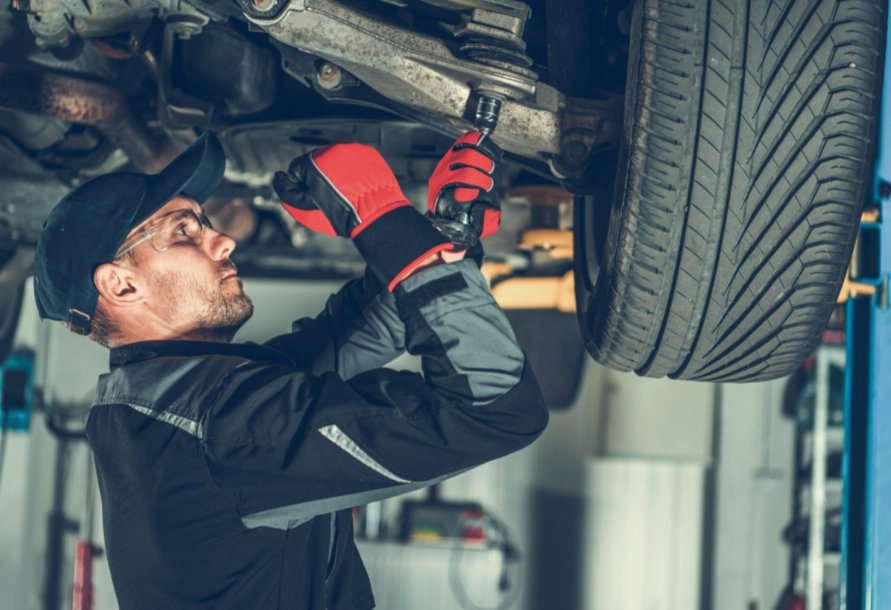
3. Drifting or Pulling During Braking: If your car pulls to one side when you brake, it's not always the brakes. A seized or malfunctioning shock absorber on one side can't control the weight transfer properly, causing the pull.
4. Uneven Tire Wear (The Silent Killer): This is the sign everyone misses. Look at your tire tread. Are the edges on the inside or outside worn smooth, while the center is okay? That's called "cupping" or "scalloping," and it's a classic fingerprint of worn shocks or struts. The tire is literally bouncing down the road instead of rolling smoothly. The National Highway Traffic Safety Administration (NHTSA) has noted the link between worn suspension and irregular tire wear.
5. A Boat-Like Feeling on the Highway: Does the car feel floaty or unstable at highway speeds, wandering in crosswinds or needing constant small steering corrections? Your suspension is no longer keeping the chassis settled.
Suspension Repair Cost Breakdown: Parts, Labor, and the Alignment Tax
Let's talk numbers, because this is where the sticker shock hits. There's no single price. It depends entirely on your car and which part failed.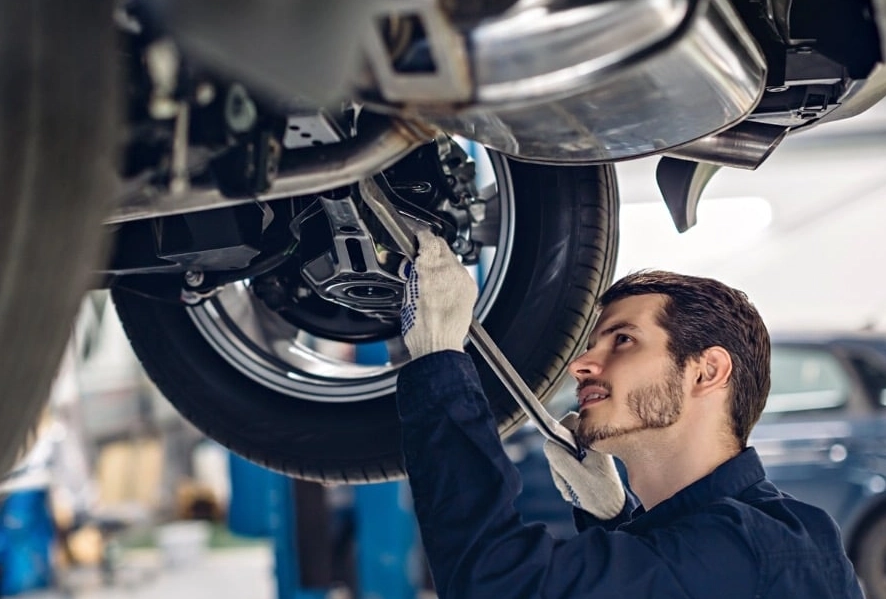
| Repair (Parts & Labor) | Economy Car Estimate | SUV/Truck Estimate | Critical Note |
|---|---|---|---|
| Replace One Shock Absorber | $250 - $400 | $300 - $500 | Always do both sides (axle sets). |
| Replace One Strut Assembly | $400 - $700 | $500 - $900 | Assembly includes spring; safer and faster. |
| Replace Sway Bar Link (one) | $150 - $250 | $175 - $300 | Often done in pairs. Relatively simple job. |
| Replace Control Arm with Ball Joint | $350 - $600 | $450 - $800 | Requires an alignment immediately after. |
| Complete Front-End Rebuild (Both struts, control arms, links) | $1,500 - $2,500 | $2,000 - $3,500+ | Common for high-mileage vehicles. Includes alignment. |
The "Alignment Tax": This is non-negotiable. Any repair that disturbs the steering knuckle or control arm (like struts, control arms) changes your wheel angles. Skipping a wheel alignment after such a job is a guarantee of rapid, uneven tire wear. Budget an extra $100 - $150 for that service. It's part of the job.
Parts quality is the wild card. A budget aftermarket strut might be $80, while an OEM-quality one from a brand like KYB or Monroe could be $200. The labor to install them is the same. Which would you want holding your car off the ground?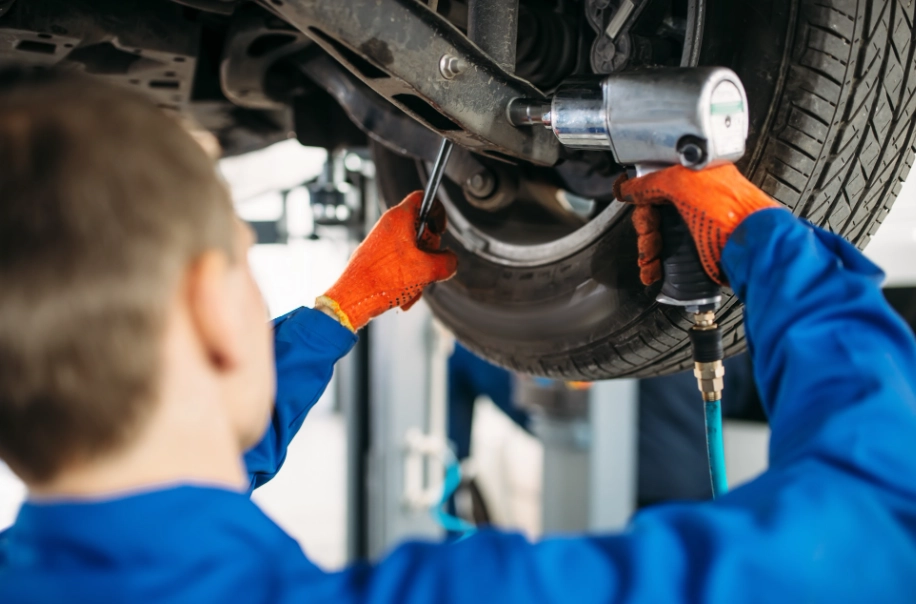
DIY Suspension Repair: A Realistic Assessment of Skill and Risk
Watching a YouTube tutorial makes it look easy. Here's the unfiltered view from the shop floor.
When DIY Might Be Feasible
Sway Bar Links: These are often two bolts. If they're not rusted solid, a competent DIYer with a good socket set can tackle them. No alignment required afterward.
Shock Absorbers (Rear, Non-Strut): Many rear shocks are simple bolt-on units. The key is supporting the vehicle safely on jack stands so the axle hangs at the right height for installation.
Where DIY Gets Dangerous
Strut Replacement: This is the big one. The spring is under immense pressure. Using makeshift spring compressors or improper techniques can turn the spring into a deadly projectile. Even with proper tools, getting the assembly in and out often requires persuading with a hammer and fighting stubborn bolts. One misstep can damage other components.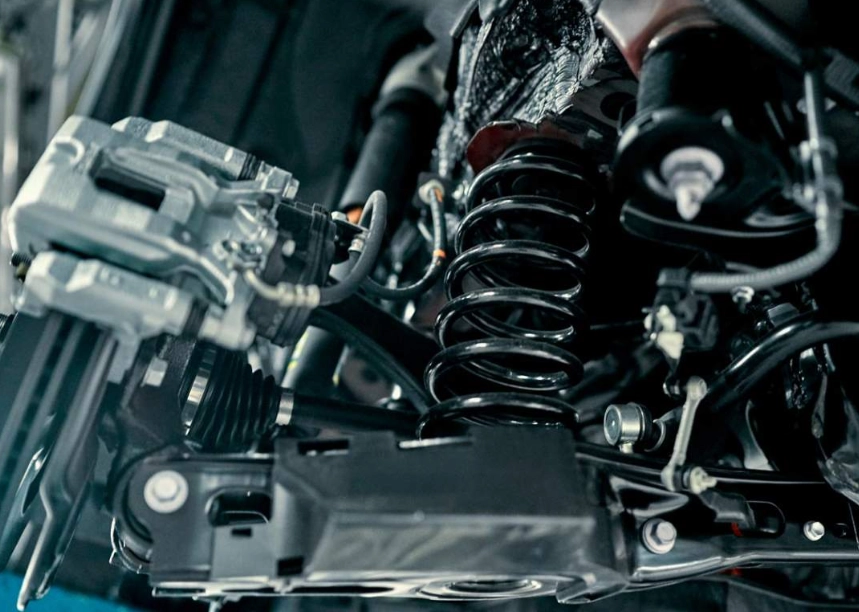
Control Arm/Ball Joint Work:
This requires separating tapered joints (using a pickle fork or ball joint press) and often dealing with severely rusted or seized bolts. It's brutal, knuckle-busting work. And you must get an alignment immediately after, which means driving the car to a shop with a potentially unsafe setup if something isn't torqued right.
My take? If you're not 100% confident in your tools, workspace, and ability to handle sudden, serious complications, pay for the labor on struts and control arms. The safety risk isn't worth the few hundred dollars saved.
How to Choose a Repair Shop You Can Trust
You're not just buying parts; you're buying diagnostics and skill.
Ask for a Test Drive: A good technician will want to drive the car with you to hear and feel the symptom you're describing.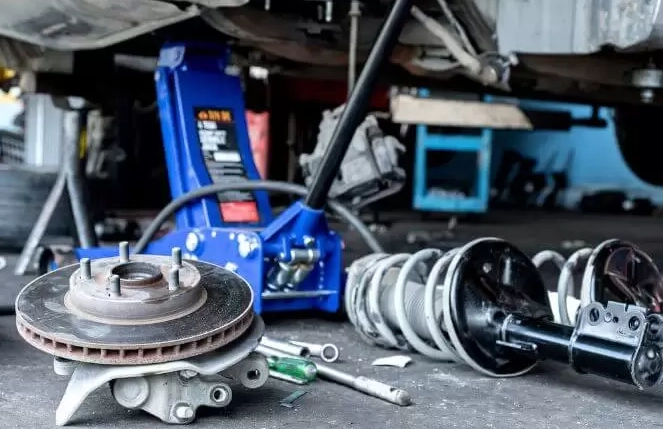
Request a Visual Inspection: They should put the car on a lift, grab a pry bar, and physically check for play in ball joints, bushings, and tie rod ends. A quote over the phone without seeing the car is a guess.
Ask About Parts Brands: "What brand of struts do you use and why?" Their answer tells you a lot. They should have a preference based on experience, not just price.
Get a Detailed, Line-Item Estimate: It should separate parts, labor, and shop fees. A vague total is a red flag.
Look for shops affiliated with the Automotive Service Association (ASA) or that have ASE-certified technicians. It shows a commitment to ongoing training.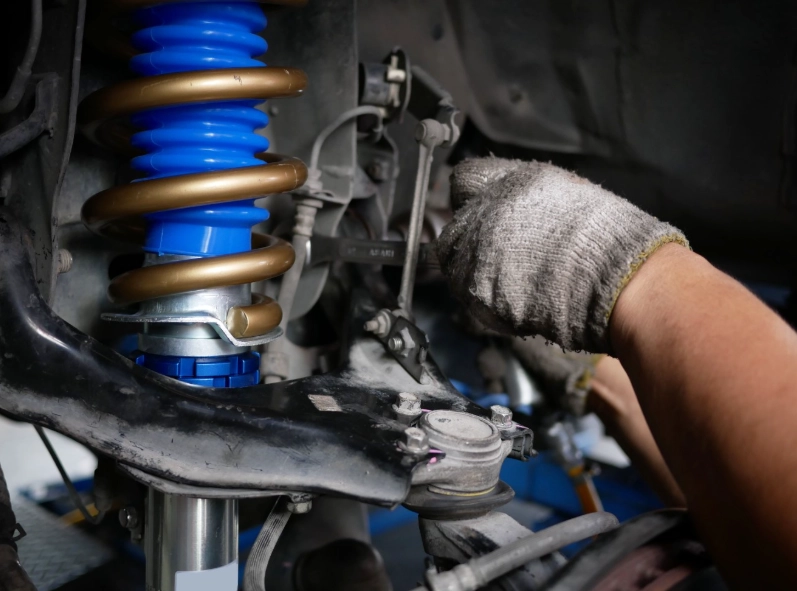
Your Suspension Questions, Answered
The bottom line on suspension repair? Listen to your car. Address small noises before they become big, dangerous problems. Understand that quality parts and a proper alignment are part of the package. And know your own limits between a Saturday project and a job for a professional. Your safety, and the safety of everyone else on the road, literally rides on it.