
I bought a used 2021 electric hatchback with 31,000 km on the clock. No sponsored trip, no press loaner. I paid for it, insured it, and charged it in my own driveway. Eighteen months and 26,000 km later, the advantages of electric vehicles are clearer to me than any brochure ever made them. They also come with fine print most reviews skip.
Here is the honest version, based on my spreadsheets, my charging app history, and the small annoyances I did not expect.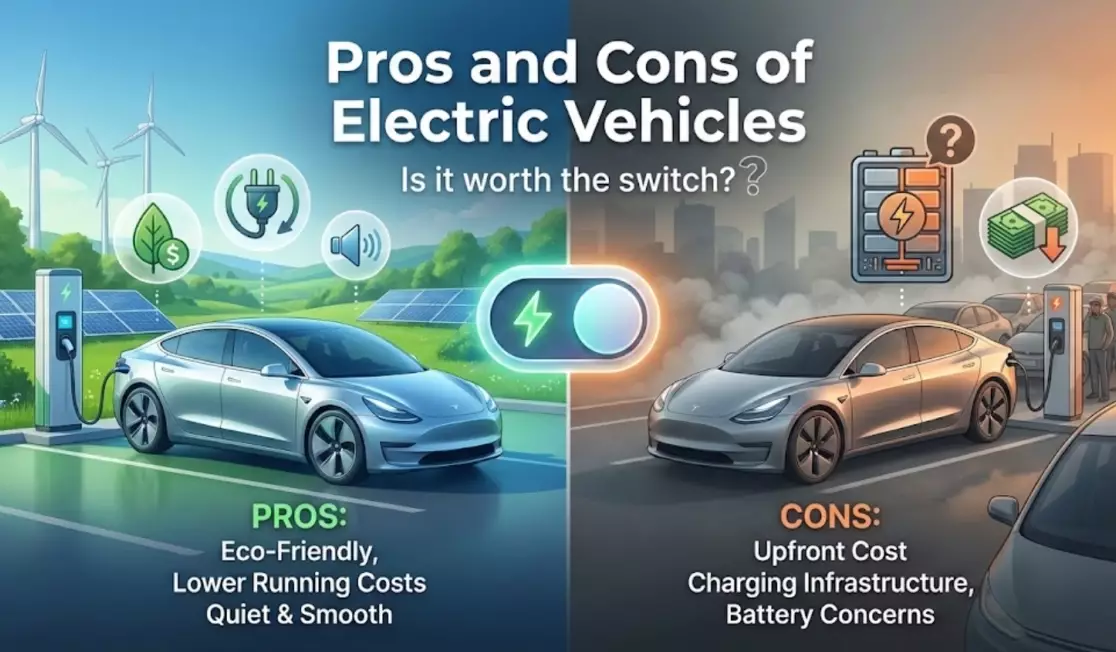
Quick jump: what this owner found
Running Costs: The Numbers From My Own Log
I tracked every charge and every public charging session in a simple spreadsheet. Over 26,000 km, my average consumption sat at 16.8 kWh per 100 km. Home electricity where I live runs about $0.14 per kWh off-peak. That works out to roughly $2.35 per 100 km.
The petrol hatchback I replaced averaged 7.4 L per 100 km at about $1.65 per liter. That is $12.21 per 100 km. Same commute, same driver, same roads.
| Cost item (per 100 km) | My EV | My previous petrol car |
|---|---|---|
| Energy / fuel | $2.35 (home charging) | $12.21 |
| Scheduled servicing | $0.30 | $2.60 |
| Brake wear (estimated) | $0.18 | $0.90 |
| Total tracked | $2.83 | $15.71 |
Those are my real receipts, not lab figures. The U.S. Department of Energy's Alternative Fuels Data Center publishes similar comparisons, and my numbers landed close to their mid-range estimates.
One detail I did not expect: public fast charging can erase the savings. On a 900 km road trip, I paid $0.42 per kWh at a highway charger. That pushed my energy cost to about $7 per 100 km. Still cheaper than petrol, but a lot less dramatic.
Home charging is where the math wins. Public charging is convenience, not savings.
Home Charging: What Actually Happens Day to Day
I park in a driveway with a 7 kW wallbox installed by a licensed electrician. Total install cost: $780, including the permit. My commute is 48 km round trip. The car sits plugged in from 10 pm to 6 am on a time-of-use tariff.
Here is the routine that stuck: plug in when I get home, unplug before the school run. It takes eleven seconds. That is not a typo. The habit replaced weekly petrol station stops entirely.
I know people who bought an EV without checking their home electrical panel. One neighbor discovered his panel needed a $1,400 upgrade before the wallbox could go in. Check your panel capacity before you sign the car paperwork. That is the single most common mistake I have seen among new EV owners.
Maintenance: Fewer Parts, Fewer Visits
My EV has no engine oil, no oil filter, no spark plugs, no timing belt, no exhaust system. In 18 months I visited the service center once for a tire rotation, cabin filter change, and a brake fluid check. Total bill: $112.
The petrol car it replaced needed an oil change every 10,000 km, plus a major service at 40,000 km. I budgeted about $650 a year for servicing on that car.
Regenerative braking is the quiet hero here. The motor slows the car and recovers energy, so the friction brakes barely get used. After 26,000 km, my brake pads still measured 8 mm. A mechanic friend told me most EV brake pads last past 100,000 km. I believe him now.
Before you buy, ask the dealer for the battery health report. A state-of-health figure below 90% on a used EV is a negotiation point, not a dealbreaker. My car reported 94% at purchase and 92% after 18 months.
Driving Experience: The Quiet Advantage
Torque arrives the moment you touch the pedal. Merging onto a busy road feels less like a gamble. The cabin is quiet enough that I hear my kids whisper-fighting in the back seat. That is a mixed blessing.
My daily commute starts with a 6% downhill grade. The car recovers energy on that stretch and shows a small range gain by the bottom. Small thing. It still makes me smile every morning.
How Do EV Advantages Compare With Gas Cars?
The advantages cluster around three areas: energy cost, service frequency, and day-to-day convenience of charging at home. The disadvantages cluster around road trips, cold weather, and charging infrastructure in older apartment buildings.
According to the International Energy Agency's Global EV Outlook, electric cars reached roughly 18% of global new car sales in 2023. That scale means more public chargers and better resale data every year. When I bought, resale values were murky. Now I can see three-year-old models selling with predictable depreciation curves.
The Trade-Offs Nobody Warns You About
Cold weather cut my range by about 22% in the worst week of winter. Heated seats and a pre-conditioning schedule helped, but the guess-o-meter on the dashboard got pessimistic. I learned to trust kilometers driven per kWh, not the remaining range display.
Road trips need planning. On my 900 km trip, I used a route planner and still waited 25 minutes at one charger because a delivery van was occupying two stalls. That is not a flaw of the car. It is the reality of shared infrastructure.
Tire wear is faster than in a petrol car. The extra weight and instant torque chew through front tires. I replaced mine at 34,000 km. A petrol equivalent might have gone 50,000 km. Budget for it.
Owner Questions I Get Asked Most
I rent an apartment with no charger. Do the advantages of electric vehicles still hold for me?
They shrink to convenience and maintenance, not cost. If you rely on public fast charging at $0.40 per kWh, your energy bill can land close to petrol. Run your own numbers with the local public charging rates before you commit. For renters, a plug-in hybrid often makes more financial sense until workplace charging appears.
How much does home charging really add to my electricity bill each month?
My commute is 48 km round trip. That added about $34 per month at off-peak rates. The bill arrived, I checked it against my charging app, and the match was within $2. If you drive 100 km a day, expect closer to $70 per month. Time-of-use tariffs matter more than the car's efficiency rating.
Does fast charging every week hurt the battery?
Frequent DC fast charging above 80% state of charge does stress the cells. My routine is home charging to 80% daily and fast charging only on road trips. After 18 months, battery health dropped two percentage points. A neighbor who fast-charged weekly saw a four-point drop over a similar period. Keep daily charging shallow and you will likely be fine.
What is the biggest hidden cost of EV ownership?
Tires. The instant torque and extra weight wear front tires faster than most owners expect. I budget $180 per year for tires, roughly double my petrol car. The second hidden cost is the home charger installation if your electrical panel needs work. Get an electrician quote before you buy the car, not after.
These findings come from my own ownership log and cross-checks against public data from the U.S. Department of Energy and the International Energy Agency. I verified the cost figures against my electricity bills and charging app history. No sponsored content, no borrowed test cars.

Leave a Comment