
I get this question a lot from friends who are eyeing their first EV. They see “hybrid,” “plug-in,” “mild hybrid,” “fuel cell,” and their eyes glaze over. The truth is, automakers have made the labels messy. There are actually four core types of electric vehicles—and knowing which one fits your daily grind changes everything.
- 1. BEV – Battery Electric Vehicles: The Pure Play
- 2. HEV – Hybrid Electric Vehicles: The Self-Charging Compromise
- 3. PHEV – Plug-In Hybrid Electric Vehicles: The Gateway Drug
- 4. FCEV – Fuel Cell Electric Vehicles: The Niche Long-Hauler
- How the Four Types of Electric Vehicles Compare
- Which Electric Vehicle Type Fits Your Life?
- Common Questions About Electric Vehicle Types
1. BEV – Battery Electric Vehicles: The Pure Play
A BEV runs on a large battery pack and one or two electric motors. No gas tank. No spark plugs. You plug it in, and you drive. That’s it.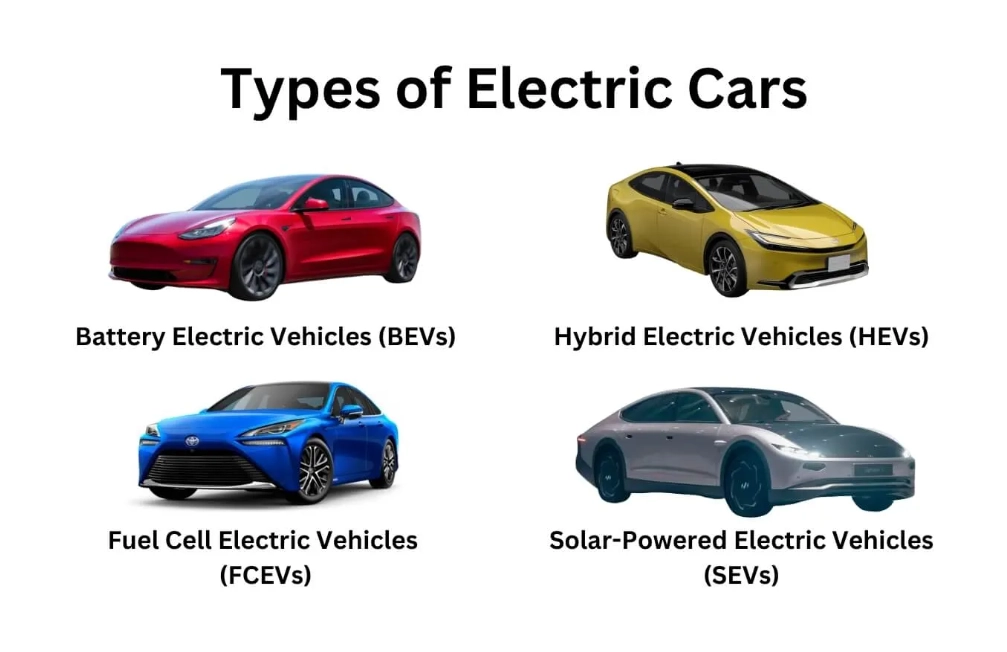
I’ve owned a BEV for three years. The first week felt weird—like I was forgetting something every time I left the house. But the instant torque and one-pedal driving hooked me fast. The trade-off? Range anxiety is real on road trips if you don’t plan charging stops.
Real talk: a BEV is the best choice if you have a garage or dedicated parking spot for charging, and your daily driving rarely exceeds 150 miles. If you live in an apartment in a city where public chargers are always occupied, you’ll feel the friction. I’ve been there. It’s not fun.
Who should consider a BEV?
Urban commuters with home charging, people who hate oil changes, and drivers who want the lowest running costs. Electricity is much cheaper per mile than gas in most regions, but insurance can be higher because battery repairs are expensive.
2. HEV – Hybrid Electric Vehicles: The Self-Charging Compromise
An HEV uses a small battery and an electric motor to assist a gas engine. You never plug it in. The car recharges itself through regenerative braking and engine power. Think Toyota Prius, Honda Insight, or the classic Ford Escape Hybrid.
Here’s the non-consensus take: I test-drove a new HEV last month, and the salesperson kept calling it “an electric car.” It’s not. It’s a gas car with an electric assistant. You won’t be driving on electricity alone for any meaningful distance. The battery is tiny—usually under 2 kWh.
But that’s okay. HEVs shine in stop-and-go traffic. The engine shuts off at red lights, and the electric motor fills in during low-speed cruising. I’ve seen real-world fuel savings of 30-40% compared to a plain gasoline car in city driving. No charging hassle. No range anxiety. Just lower fuel bills.
Who should consider an HEV?
People without charging access who still want better fuel economy. Rideshare drivers. Anyone who does a lot of city driving but can’t commit to plugging in. The downside? You’re still buying gas. You’re still doing oil changes. It’s a bridge, not a destination.
3. PHEV – Plug-In Hybrid Electric Vehicles: The Gateway Drug
A PHEV has a bigger battery than an HEV—typically 10 to 20 kWh—and you can plug it in. It runs on electricity alone for a limited range (say, 20 to 50 miles), then switches to hybrid mode.
The idea: most daily trips are short. If you charge at home every night, a PHEV can behave like a BEV for your commute. Then, on weekends, the gas engine kicks in for longer trips. I borrowed a friend’s PHEV for a week and barely touched the gas station. But—and this is a big but—if you forget to plug it in, you’re hauling around a heavy battery for nothing. Fuel economy drops below that of a regular hybrid.
PHEVs are also the most misunderstood type. I’ve met owners who didn’t realize they had to plug in. They bought it for the tax credit and never used the plug. That’s a waste. If you’re not going to charge regularly, skip the PHEV and get an HEV.
Who should consider a PHEV?
Commuters with short daily drives and home charging access. People who want an EV experience but still need gas for the occasional long road trip. The sweet spot is a daily round-trip under 30 miles with a reliable outlet at home or work.
4. FCEV – Fuel Cell Electric Vehicles: The Niche Long-Hauler
Fuel cell vehicles generate electricity from hydrogen and oxygen. The only emission is water vapor. You refuel with hydrogen at a station, much like a gas station, in about 5 minutes.
I’ve driven a Toyota Mirai. The silence and smoothness are BEV-like. The range is impressive—over 300 miles. But finding a hydrogen station is like finding a unicorn in most places. In California, there are clusters in Los Angeles and the Bay Area. Elsewhere? Forget it. The infrastructure is practically nonexistent.
FCEVs are a chicken-and-egg problem. Automakers don’t sell many because there’s nowhere to fuel them. No one builds stations because there aren’t enough cars. I wouldn’t recommend an FCEV unless you live near a hydrogen station and want to make a statement. It’s a bold choice, but a risky one for most families.
Who should consider an FCEV?
Fleet operators with centralized fueling, early adopters in California, and people who need long range but can’t wait for BEV charging. For the average driver, it’s not practical yet.
How the Four Types of Electric Vehicles Compare
| Type | Plug-in? | Electric-Only Range | Fuel Source | Best For |
|---|---|---|---|---|
| BEV | Yes | 150–400+ miles | Electricity only | Home charging, short commutes, lowest running costs |
| HEV | No | 0–1 miles (assist only) | Gasoline (self-charging) | No charging access, city driving, budget-friendly |
| PHEV | Yes | 20–50 miles | Electricity + gasoline | Short commutes, home charging, occasional road trips |
| FCEV | No (hydrogen) | 250–350+ miles | Hydrogen | Long-haul driving near hydrogen stations |
Notice the pattern? The more you plug in, the more you slide toward pure electric. The less you plug in, the more you rely on gas. PHEV sits right in the middle, and that’s why it’s the most confusing category for buyers.
Which Electric Vehicle Type Fits Your Life?
Forget the spec sheets for a second. Ask yourself three questions:
- Can I plug in at home or work overnight?
- How far do I drive on a typical day, and what’s my longest regular trip?
- Am I willing to plan around charging stops?
If you answered yes to charging and your longest day is under 200 miles, a BEV is the easiest choice. You’ll rarely regret it.
If you can plug in but regularly drive 300+ miles in a day, a PHEV gives you electric commuting plus gas backup. Just promise yourself you’ll actually plug it in. I’ve seen too many PHEVs running on gas alone because the driver got lazy. That’s an expensive way to own a heavy hybrid.
If you can’t plug in at all, an HEV is your best bet. It’s not sexy, but it works. You’ll save fuel without changing your habits.
And FCEV? Only if you have a hydrogen station nearby. Don’t buy one hoping infrastructure will arrive. In my experience, “coming soon” often means “maybe someday.”
Common Questions About Electric Vehicle Types
One last thing: don’t let the labels overwhelm you. The four types of electric vehicles really boil down to how much you want to plug in. Pick the one that matches your charging access and driving habits, not the one with the flashiest marketing.
This article was fact-checked against publicly available manufacturer specifications and U.S. Department of Energy resources for accuracy.
Leave a Comment