Quick Navigation
- Why Bother? The Hidden Costs of Ignoring Alignment
- Is Your Car Screaming for an Alignment? The Tell-Tale Signs
- The Three Musketeers of Alignment: Camber, Toe, and Caster
- What Actually Happens During a Wheel Alignment Service?
- The Million-Dollar Question: How Much Does a Wheel Alignment Cost?
- How Often Do You Really Need a Wheel Alignment?
- DIY vs. Professional Wheel Alignment: Let's Be Real
- Special Considerations: EVs, AWD, and Performance Cars
- Finding a Good Shop: What to Ask For
Let's talk about something most of us ignore until it's too late. You're driving down a straight, flat road, and you notice your car ever so slightly drifting to the right. You loosen your grip on the wheel, and sure enough, it starts to wander. Or maybe you just got new tires and the guy at the shop is giving you the side-eye, asking when you last had an alignment. You shrug. Was it two years ago? Three?
I've been there. I once drove a car for nearly a year with a slight pull, just compensating with my arms, thinking it was the road crown or the wind. Then I saw the inside edges of my front tires. They were as bald as a tire could be, while the rest of the tread looked almost new. That was a $600 mistake I won't make again. A simple wheel alignment check could have saved me that cash.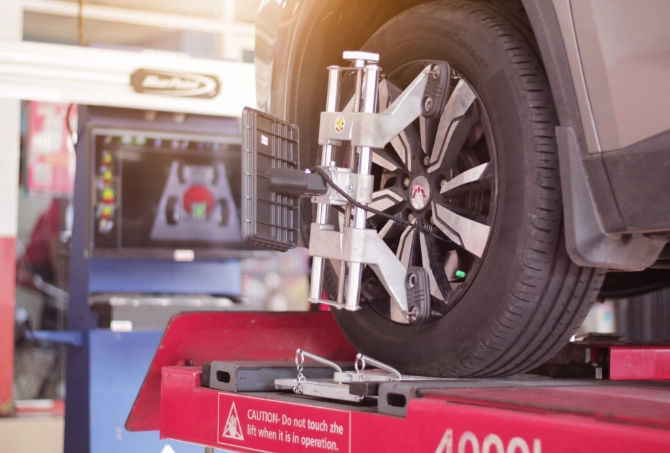
So what is it really? A wheel alignment service isn't some black magic performed by mechanics in lab coats. It's a precise adjustment of your vehicle's suspension—the system that connects the car to the wheels. It's not about adjusting the wheels themselves, but the angles of the wheels relative to each other and to the car's body. When these angles are out of the factory-specified range, that's when the trouble starts.
The Core Idea: Think of your feet. If you're pigeon-toed or duck-footed, you'll wear out your shoes unevenly and walk inefficiently. It's the same for your car. Proper wheel alignment ensures all four tires are pointing in the optimal direction, working together with minimal drag and maximum contact with the road.
Why Bother? The Hidden Costs of Ignoring Alignment
You might think, "My car drives fine, it's just a tiny pull." That's what I thought too. But the consequences are sneakier and more expensive than you'd guess.
First and foremost, tire wear. This is the biggest wallet-hitter. Misaligned wheels scrub against the road surface instead of rolling cleanly. This creates friction that literally shreds your tire rubber. We're talking about cutting your tire life by thousands of miles. On that old car of mine, the tires were supposed to last 50,000 miles. They were shot at 22,000. Do the math—that's a huge waste.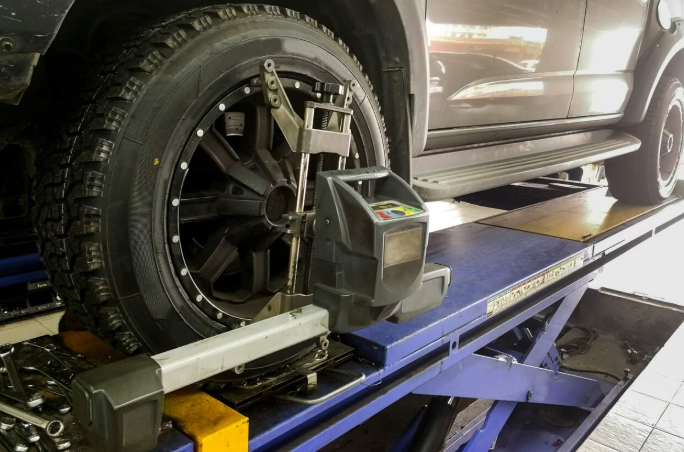
Then there's fuel economy. Increased rolling resistance means your engine has to work harder to push the car forward. The U.S. Department of Energy notes that proper vehicle maintenance, which includes tire alignment and inflation, can improve gas mileage by up to 3% on average. In an era of high gas prices, that adds up fast.
And let's not forget safety. A car that doesn't track straight requires constant steering correction, especially in emergencies or on wet roads. It increases driver fatigue and reduces the vehicle's stability. The National Highway Traffic Safety Administration (NHTSA) lists vehicle condition as a contributing factor in many accidents. While they don't single out alignment, any compromise in handling is a risk.
Finally, component stress. Your suspension and steering parts—tie rods, ball joints, bushings—are under abnormal stress when fighting a misalignment. This can lead to premature and costly failures down the line.
Is Your Car Screaming for an Alignment? The Tell-Tale Signs
Your car is pretty good at telling you something's wrong. You just have to know how to listen. Here are the top signals that a wheel alignment check is overdue.
This is the classic sign. The car might be going straight, but your steering wheel is cocked to the left or right. It's annoying and a clear indicator.
On a level road, you feel a constant tug on the steering wheel. You have to actively fight it to keep the car in its lane. Remember, some pull can be from road crown or wind, but a consistent pull on different roads is a red flag.
Get down and look at your tires. Are the inside or outside edges worn more than the center? Is one tire wearing faster than its partner on the same axle? The Tire Industry Association has great resources on reading tire wear patterns. Feathering (tread ribs are smooth on one edge, sharp on the other) and camber wear (wear on one shoulder) are dead giveaways.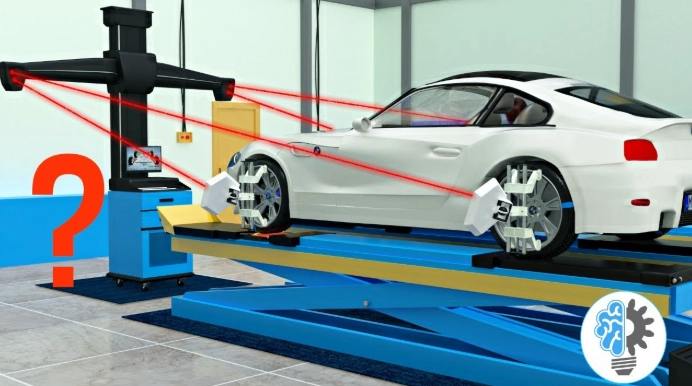
Not just when turning sharply, but sometimes during normal driving. It's that scrubbing sound.
Or conversely, it feels overly tight. The feedback through the wheel just doesn't feel right.
A Critical Point: Don't wait for all these signs. If you hit a massive pothole, curb, or have any suspension work done, get an alignment check. It's cheap insurance. I learned this after a suspension repair where the shop "forgot" to do the alignment. I drove 10 miles and knew immediately something was off.
The Three Musketeers of Alignment: Camber, Toe, and Caster
When you get a wheel alignment service, the technician is measuring and adjusting three primary angles. Let's break them down in plain English.
| Angle | What It Is | Effect When Wrong | Common Cause of Misalignment |
|---|---|---|---|
| Camber | The inward or outward tilt of the wheel when viewed from the front. Negative camber means the top of the tire is tilted in. Positive means it's tilted out. | Uneven wear on one shoulder of the tire (inside or outside). Can cause pulling. | Worn ball joints, control arm bushings, or sagging springs. Hitting curbs. |
| Toe | Think pigeon-toed or duck-footed. The difference in the distance between the fronts and rears of the tires on the same axle. Toe-in means fronts are closer. Toe-out means rears are closer. | Feathering on treads, rapid wear, often with a saw-tooth pattern. Can cause instability or darting. | The most common angle to go out. Impact from potholes, worn tie rod ends. This is often the first adjustment made. |
| Caster | The forward or backward tilt of the steering axis when viewed from the side. Positive caster (tilted back) gives stability at speed (like a bicycle fork). | Heavy steering, poor return-to-center of the wheel, or instability. | Often damaged in collisions. Worn strut mounts or control arm bushings. |
Most modern four-wheel alignment machines will measure all these for both the front and rear axles. Yes, rear wheels have alignment too (camber and toe), and they're just as important! If the rear is out, it makes the whole car crab-walk down the road, throwing off the front end as well.
What Actually Happens During a Wheel Alignment Service?
There's a lot of mystery around the process. Let's demystify it. A proper alignment isn't a five-minute job. A good tech will take 45 minutes to an hour.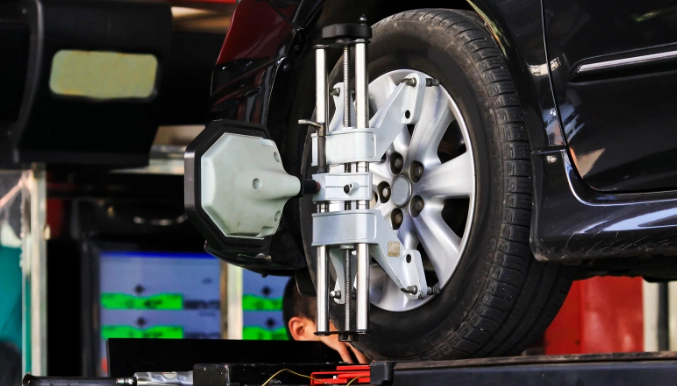
First, they'll do a pre-alignment check. This is crucial and where some cheap shops cut corners. They'll check tire pressure (must be correct!), look for worn suspension/steering parts (ball joints, tie rods), and check ride height. If a component is loose or broken, an alignment is pointless—it'll just go out again immediately.
Then, the car is driven onto an alignment rack. Targets or sensors are attached to each wheel. The tech jounces the suspension a few times to settle it. The computer takes initial measurements, comparing them to the vehicle manufacturer's specifications (which are loaded into the machine's database).
You'll see a screen with green (in spec) and red (out of spec) numbers. The tech then makes adjustments. This involves loosening locking nuts on certain suspension components (like tie rod ends for toe, eccentric bolts for camber) and turning them minutely. They use special wrenches. It's a game of thousandths of an inch and fractions of a degree.
They adjust, re-measure, adjust again. Once all angles are in the green, they tighten everything to the proper torque, remove the sensors, and take it for a quick test drive to verify the feel.
Pro Tip: Always ask for a "printout" or a digital copy of your alignment report, both before and after. A reputable shop will provide this without hesitation. It shows you exactly what was wrong and that it was corrected. If a shop refuses, that's a red flag.
The Million-Dollar Question: How Much Does a Wheel Alignment Cost?
This varies wildly, and the price isn't always an indicator of quality. Let's look at the factors.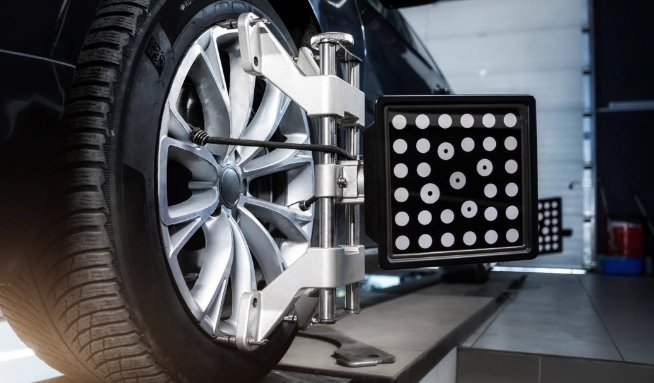
What Influences Wheel Alignment Cost?
- Type of Vehicle: A basic sedan is usually cheapest. SUVs, trucks, and luxury/performance cars often cost more. Some high-end cars (like certain Audis, Mercedes) require more time and specialized equipment.
- Type of Alignment: A two-wheel (front-end) alignment is cheaper but often inadequate for modern cars with independent rear suspensions. A four-wheel alignment is the standard for most cars today and is what you should typically get.
- Location & Shop: Dealerships are usually the most expensive. National tire chains (Firestone, Goodyear) are mid-range and often run promotions. Independent specialty alignment shops can be a great value—they often have the most experienced techs.
- Promotions & Packages: Many places offer lifetime alignment packages for a one-time fee. If you plan to keep the car a long time, these can be a fantastic deal.
As a rough ballpark in the current market:
- Two-Wheel Alignment: $50 - $90
- Four-Wheel Alignment: $100 - $200
- Lifetime Alignment Package: $150 - $300 (one-time payment)
Is it worth it? Absolutely. Compared to a set of tires costing $500-$1000, a $150 alignment that extends their life is a no-brainer. It's preventive maintenance, not a repair.
How Often Do You Really Need a Wheel Alignment?
The old rule of thumb was "every 10,000 miles or once a year." That's not a bad guideline, but it's more about conditions than strict mileage.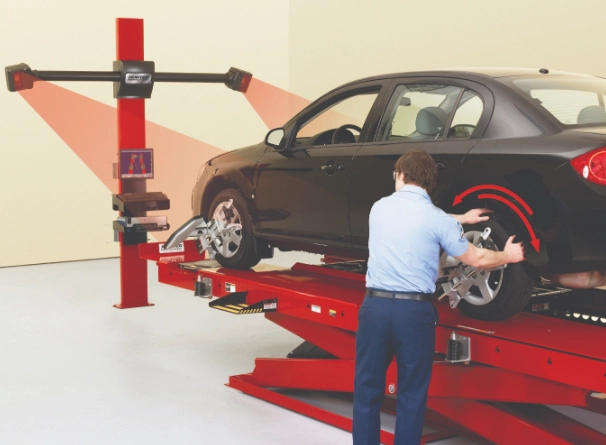
The Society of Automotive Engineers (SAE) and most manufacturers recommend an alignment check at least once a year. But you should get one IMMEDIATELY if:
- You hit a pothole, curb, or road debris with significant force.
- You notice any of the symptoms listed above (pulling, off-center wheel, uneven wear).
- You have new tires installed. Always align with new tires. Putting new rubber on a misaligned car is like pouring money down the drain from day one.
- After any major suspension or steering component replacement.
My personal schedule? I get a check once a year, usually in the spring after the brutal pothole season. And I always, always get one with new tires.
DIY vs. Professional Wheel Alignment: Let's Be Real
Can you do it yourself? Technically, you can check some things and make crude adjustments. There are DIY methods using string, tape measures, and carpenter's levels. You can find them all over YouTube.
But here's my honest, slightly negative opinion on DIY alignment for most people: It's a fool's errand for anything beyond a basic toe adjustment on a old, simple solid-axle car. Modern unibody cars with complex independent suspension require precision. The professional machines use lasers and cameras to measure to hundredths of a degree. You're measuring with string in your driveway, with the car potentially not level.
You might get it "close," but close can still cause wear. And you risk making it worse. For the cost of a professional alignment once a year, it's just not worth the hassle, the potential for error, or the safety risk in my view. Save the DIY for oil changes and brake pads. Leave wheel alignment to the pros with the right equipment.
Special Considerations: EVs, AWD, and Performance Cars
Not all alignments are created equal. Some vehicles have special needs.
Electric Vehicles (EVs): EVs are often heavier due to the battery pack. This can lead to faster suspension component wear if alignment is off. Furthermore, the instant torque can exaggerate tire wear patterns from even a slight misalignment. Some EVs also have very specific alignment settings to maximize range. It's a growing niche—ask if your shop is familiar with EV specs.
All-Wheel Drive (AWD) Vehicles: These systems are sensitive to tire rolling diameter. A misaligned wheel causing excessive wear on one tire can change its diameter enough to cause binding in the AWD system, potentially damaging the center differential. Alignment is critical on these cars.
Performance/Sports Cars: Often have more aggressive alignment settings from the factory (more negative camber for cornering grip). A generic "green" setting might not be correct. You need a shop that understands performance alignments and can set it to the factory sport specification, not just the standard one.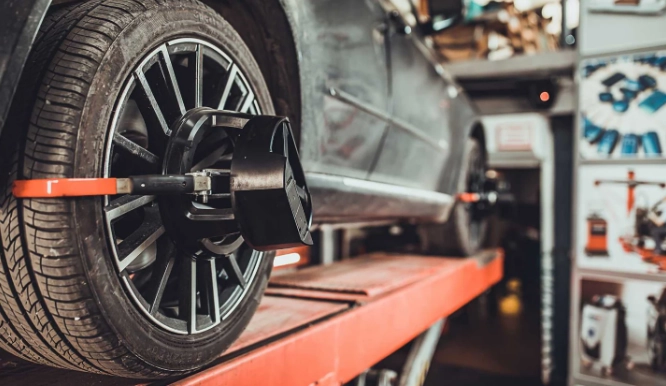
Your Wheel Alignment Questions, Answered
A proper four-wheel alignment should take between 45 minutes and 1.5 hours. If they quote 20 minutes, they're probably not doing a thorough job. The pre-check and adjustments take time.
Usually not. Vibration, especially at highway speeds, is typically caused by unbalanced wheels or out-of-round tires. Alignment deals with the direction of the wheels, not their balance or roundness. However, severe misalignment can sometimes cause a shudder during braking or acceleration.
This is a huge point of confusion. Wheel Alignment adjusts the angles of the wheels. Wheel Balancing adds small weights to the wheel rim to counteract heavy spots and prevent vibration. You need both services, but for different reasons. New tires should always be balanced. They should also prompt an alignment check.
This is frustrating. Several possibilities: 1) The tech didn't get it perfectly within spec (ask for the printout). 2) There's a tire pull. Sometimes a defective or unevenly constructed tire can cause a pull, even with perfect alignment. A shop can diagnose this by swapping front tires side-to-side. If the pull direction changes, it's the tire. 3) A dragging brake caliper or other mechanical issue.
A thrust alignment sets the front wheels parallel to the rear axle's thrust line (the average direction the rear wheels are pointing). It's better than a front-only alignment if the rear is out, but it doesn't actually correct the rear misalignment—it just compensates for it. A full four-wheel alignment that corrects both front and rear angles is superior.
Finding a Good Shop: What to Ask For
Don't just pick the cheapest option. Call around.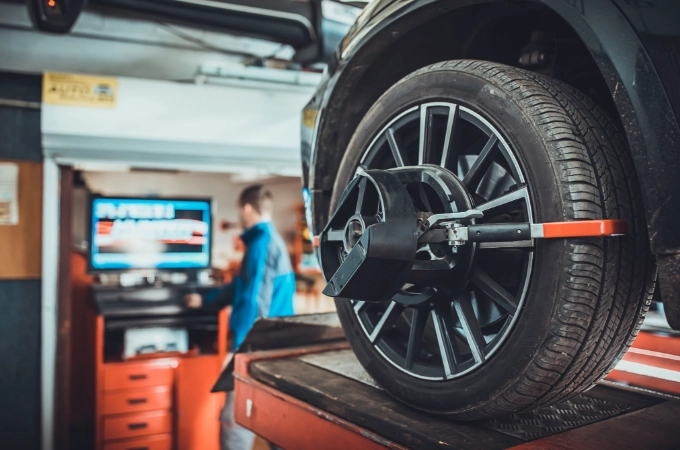
- Ask if they do a pre-alignment inspection of suspension components.
- Ask if they provide a before-and-after printout.
- Specify that you want a four-wheel alignment (unless you have a solid rear axle truck).
- Ask about their equipment. Modern computer-based cameras/lasers are the standard.
- Read reviews. Look for comments about thoroughness, test drives, and explanations.
A good wheel alignment is an investment in your car's safety, your wallet, and your driving enjoyment. It's one of those invisible services that pays massive dividends down the road. Stop ignoring that slight pull or that off-center wheel. Get it checked. Your tires—and your bank account—will thank you.
And next time you're searching for "alignment near me," you'll know exactly what you're asking for and why it matters.