Quick Navigation
Let's be honest. When most people think about car brands, they picture the emblem. The Mercedes star, the Toyota oval, the Chevrolet bowtie. But a car brand is so much more than that. It's a promise. It's a history of engineering triumphs (and sometimes failures). It's a specific feeling you get when you sit behind the wheel. Are you looking for unbreakable reliability, neck-snapping performance, or a cabin that feels like a first-class lounge? The brand you choose decides that journey.
I remember helping my cousin shop for her first new car. She was utterly lost. "They all look the same on the website," she said. That's the problem. On paper, a Honda CR-V and a Ford Escape might have similar horsepower and cargo space. But in reality, they're worlds apart in how they drive, how they're built, and how they make you feel. That's the essence of brand identity.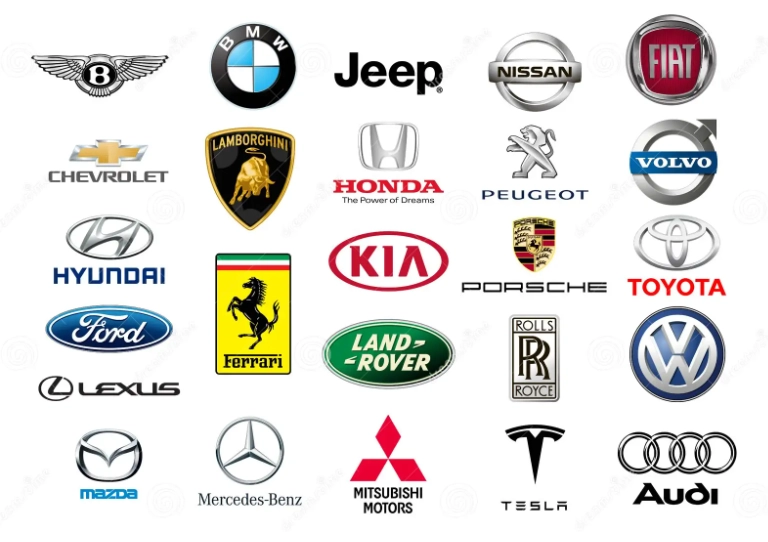
This guide isn't about listing every single car company in the world. It's about understanding the major players, their core philosophies, and what they're actually good at. We'll dig into the established giants, the luxury marques, the rebellious performance brands, and the new electric kids on the block. By the end, you should have a clear mental map of the automotive landscape.
The Heavyweights: Mainstream Car Brands That Dominate the Roads
These are the brands you see everywhere. They build cars for the masses, focusing on value, practicality, and broad appeal. Their success is built on volume and satisfying the core needs of most drivers.
Toyota & Honda: The Kings of Reliability
If your top priority is a car that starts every morning for the next 15 years with minimal fuss, you start here. The reputation is legendary and, for the most part, deserved. Toyota's philosophy of "Kaizen" (continuous improvement) results in relentlessly refined, conservative vehicles. The Camry and Corolla are appliances—in the best possible sense. They are transportation tools that work brilliantly. Honda injects a bit more driving fun and engine sophistication (their VTEC engines have a cult following) while maintaining stellar reliability. The CR-V and Civic are benchmarks in their segments.
But here's my personal gripe: this focus on reliability can sometimes come at the cost of excitement. Driving the latest Corolla is safe, efficient, and... a bit soulless. The infotainment systems have historically lagged behind competitors. You're buying peace of mind, not a pulse-quickening experience.
Ford & Chevrolet: American Icons with Different Souls
Ford and Chevy represent the heart of the American auto industry, but they've taken different paths lately. Ford has made a bold, and I think smart, pivot. They've largely abandoned traditional sedans in the US to focus on what they do best and what sells: trucks (the F-Series is a behemoth), SUVs, and performance cars like the Mustang. Their move into electric vehicles with the Mustang Mach-E and F-150 Lightning feels authentic to their truck and performance heritage.
Chevrolet feels more like a brand in transition. They still have the iconic Corvette (which is now a world-class supercar killer) and the Silverado truck. But their passenger car lineup has shrunk, and their crossovers, while competent, don't always stand out in crowded fields. There's a sense they're trying to be everything to everyone, which is a tough act.
Which is better? For a tough, tech-laden truck, I'd lean Ford. For a sports car that delivers insane performance for the money, the Corvette is untouchable. For a family SUV? It's a toss-up, and you really need to drive both.
Volkswagen & Hyundai/Kia: The Value Engineers
This group excels at offering more perceived quality and features for your money. Volkswagen promises "German engineering" at an accessible price. The interiors often feel more substantial and solidly built than some Japanese or American rivals—think soft-touch plastics where others use hard ones. The driving dynamics are usually tuned for stability and comfort. However, their reliability history has been spotty, with some complex powertrains causing headaches. It's improved, but it's worth researching specific models.
Then there's the Korean duo, Hyundai and Kia. Their transformation over the last 15 years is the industry's biggest success story. They've gone from building cheap, forgettable cars to producing some of the most stylish, feature-packed, and warranty-backed vehicles on the market. A 10-year/100,000-mile powertrain warranty is a massive confidence booster. Cars like the Hyundai Palisade and Kia Telluride have embarrassed more expensive rivals. The catch? While vastly improved, some critics argue the driving experience can still feel a bit numb compared to the best in class. You're getting incredible value, but perhaps not the last word in driver engagement.
The Apex: Luxury Car Brands and What You're Really Paying For
Stepping into the luxury segment means the conversation shifts. It's less about basic transportation and more about craftsmanship, technology, prestige, and an elevated experience. But not all luxury is created equal.
| Brand Tier | Key Players | Core Appeal | Potential Drawback |
|---|---|---|---|
| Entry Luxury | Lexus, Acura, Genesis | Premium features with top-tier reliability (esp. Lexus), lower cost of entry. | Can feel derivative of parent company (Toyota/Honda), less brand cachet. |
| Mainstream Luxury | Mercedes-Benz, BMW, Audi | The established benchmarks. Mercedes for comfort/luxury, BMW for driving, Audi for tech/design. | High ownership costs, complex tech can be frustrating, common on roads. |
| High Luxury / Performance | Porsche, Jaguar, Land Rover | Porsche: engineering excellence. Jaguar: design & grace. Land Rover: ultimate off-road luxury. | Very high purchase price and maintenance, reliability concerns (JLR). |
| Ultra-Luxury | Rolls-Royce, Bentley | Bespoke, hand-built cabins, supreme isolation and presence. | Extremely expensive, impractical for daily use. |
Is a luxury car brand worth it? For the badge alone, no. But if you spend hours in your car and value sublime interior materials, cutting-edge safety tech that actually works well, a whisper-quiet cabin, and a supremely comfortable ride, then the premium starts to make sense. I leased a BMW 3 Series once. The way it communicated with the road, the solid *thunk* of the doors, the intuitive placement of controls (iDrive, once you learned it)—it made every drive, even to the grocery store, feel a bit special. But the maintenance bills after the warranty ended? That was the not-so-special part.
The Luxury Trade-Off:
Pros: Superior materials (leather, wood, metal), advanced noise insulation, often better performance, cutting-edge driver aids and infotainment, high resale value (for some), prestige.
Cons: Significantly higher purchase price, expensive insurance, costly maintenance and repairs (a simple brake job can be 3x the cost), faster depreciation on some models, complexity can lead to more potential issues.
The Electric Revolution: New Car Brands and Legacy Pivots
This is where the map is being redrawn. Electric vehicles (EVs) have given rise to new car brands that think like tech companies and forced the old guard to adapt or risk fading away.
Tesla is the obvious disruptor. Love them or hate them, they forced the entire industry to accelerate EV development. Their strengths are undeniable: a seamless, extensive charging network (Supercharger), blistering acceleration, minimalist tech-centric interiors, and over-the-air software updates that constantly improve the car. Their weaknesses are just as clear: inconsistent build quality (panel gaps, rattles), a polarizing design philosophy that removes buttons, and a reputation for unpredictable customer service. Buying a Tesla feels like buying an iPhone on wheels—it's a ecosystem.
The Legacy Response: Every major brand now has an EV plan. Ford has the Mustang Mach-E and F-150 Lightning. GM has the Chevrolet Bolt and the new Ultium-based models. Hyundai/Kia's Ioniq 5 and EV6 have won universal praise for their design, fast charging, and overall package. Volkswagen is betting the farm on its ID. family.
The New Challengers: Brands like Rivian (adventure trucks/SUVs) and Lucid (ultra-luxury, range-focused sedans) are targeting specific niches with impressive first products. Then there are the Chinese EV brands like NIO and BYD, which are giants in their home market and are beginning to expand globally, often with compelling technology and battery innovation.
Answering Your Car Brand Questions (The Real Stuff People Search)
Let's cut through the marketing and answer the questions people actually type into Google.
Which car brand is the most reliable?
Consistently, Lexus and Toyota fight for the top spot in surveys from J.D. Power and Consumer Reports. Their philosophy of incremental improvement and proven technology pays off. But don't just look at the brand—look at the specific model and powertrain. A brand known for reliability might have one problematic engine, while a less-reliable brand might have a rock-solid model.
Are European car brands more expensive to maintain?
Generally, yes. Parts are often more costly, labor can require specialized tools/software, and the engineering complexity is higher. A routine service on a BMW or Mercedes will almost always cost more than on a Honda or Toyota. This is a critical part of the total cost of ownership. Websites like RepairPal can give you model-specific estimates.
What's the best car brand for a first-time buyer?
You want affordable, safe, reliable, and cheap to insure. Honda (Civic, HR-V), Toyota (Corolla, Corolla Cross), and Hyundai (Elantra, Kona) with their long warranties are fantastic starting points. They hold value, are easy to live with, and won't surprise you with crazy repair bills.
Which brands hold their value best?
This is about desirability and perceived reliability. Toyota (especially trucks and SUVs like the Tacoma and 4Runner), Honda, Subaru, and among luxury brands, Porsche are typically depreciation champions. You can check specific model residuals on sites like Kelley Blue Book (KBB).
Is a luxury brand worth the extra money?
It depends entirely on what you value. If you see a car purely as a tool to get from A to B, probably not. If you derive joy from design, materials, technology, and driving dynamics, and you can comfortably afford the higher purchase price and the long-term ownership costs, then yes, it can be a worthwhile splurge. Leasing can be a smart way to experience a luxury car brand without long-term reliability risk.
How to Actually Choose Between Car Brands
Forget the commercials. Here's a practical, step-by-step filter.
- Define Your Non-Negotiables: Budget (total price AND monthly payment), seating/cargo needs, must-have features (AWD? Apple CarPlay?).
- Shortlist by Vehicle Type: Don't look at all brands. Look at brands that make the type of vehicle you need (e.g., compact SUV, midsize sedan).
- Research Reliability & Costs: Hit NHTSA for safety ratings, J.D. Power/Consumer Reports for reliability, and KBB/Edmunds for true cost-to-own projections.
- The Deal-Breaker Test Drive: This is crucial. Schedule back-to-back test drives of your top 2-3 models. Drive them on your regular routes. Play with the infotainment while parked. Is the seat comfortable after 20 minutes? Does the visibility work for you? This is where you'll feel the brand's philosophy.
- Negotiate & Re-evaluate: Get real offers. Sometimes a great deal on your second-choice brand makes it the winner.
The world of car brands is vast and full of great options. There is no single "best" brand. There's only the best brand for you, right now, for your needs and your budget. Do your homework, take your time, and don't get swayed by the badge alone. The right car is the one that makes you smile when you walk up to it, fits your life seamlessly, and doesn't cause stress when it's time for an oil change. Happy driving.