Navigate This Guide
- The Core of the Matter: What Are Struts and Why Do We Even Ask If It's Worth Fixing Them?
- Decoding the Real Cost: It's Never Just the Part
- The Repair vs. Replacement Showdown: A Brutally Honest Comparison
- The Hidden Costs of Waiting: What Happens If You Don't Fix Them?
- The DIY Question: Can You Do It Yourself and Is THAT Worth It?
- The Ultimate Decision Checklist: Answering "Is It Worth It For ME?"
- Beyond the Repair: What to Expect After You Say Yes
- Frequently Asked Questions (The Stuff You're Secretly Googling)
- The Final Verdict: So, Is It Worth It to Fix Struts?
Let's cut to the chase. You're here because you heard a clunk, your car is bouncing like a low-rider, or your mechanic just dropped the "S" word and gave you a quote that made your eyes water. The big question hanging over your head, the one that's probably keeping you up at night, is simple: is it worth it to fix struts?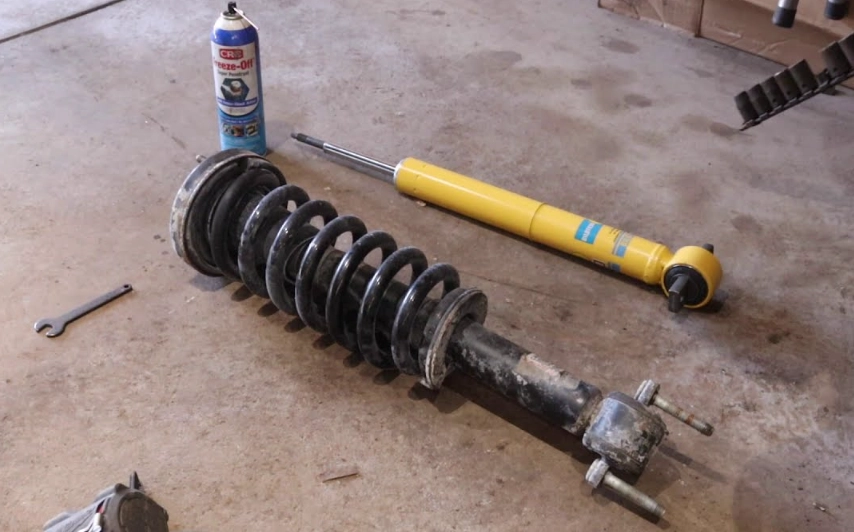
I've been there. Staring at an estimate, wondering if I'm about to throw good money after bad. The internet is full of vague advice – "it's important for safety" (duh) or "it depends" (thanks for nothing). But you need a straight answer. You need to know the real cost, not just in dollars, but in safety, future headaches, and the actual value you get for your hard-earned cash.
This isn't about scaring you into a repair. Frankly, some shops might try that. This is about giving you the complete picture, the kind you'd get from a brutally honest friend who knows cars. We'll tear apart the costs, look at what happens if you wait, figure out when a repair might make sense, and when replacement is the only sane choice. By the end, you'll have a clear roadmap to answer that question for yourself. No fluff, just the facts mixed with some real-world experience.
The Core of the Matter: What Are Struts and Why Do We Even Ask If It's Worth Fixing Them?
First, a quick level-set because not everyone is a gearhead. Your struts are a critical part of your suspension. Think of them as heavy-duty shock absorbers that are also a structural part of the wheel assembly. They don't just smooth out bumps; they keep your tires firmly planted on the road. When you brake, accelerate, or turn, your struts are working hard to control the weight transfer of the car.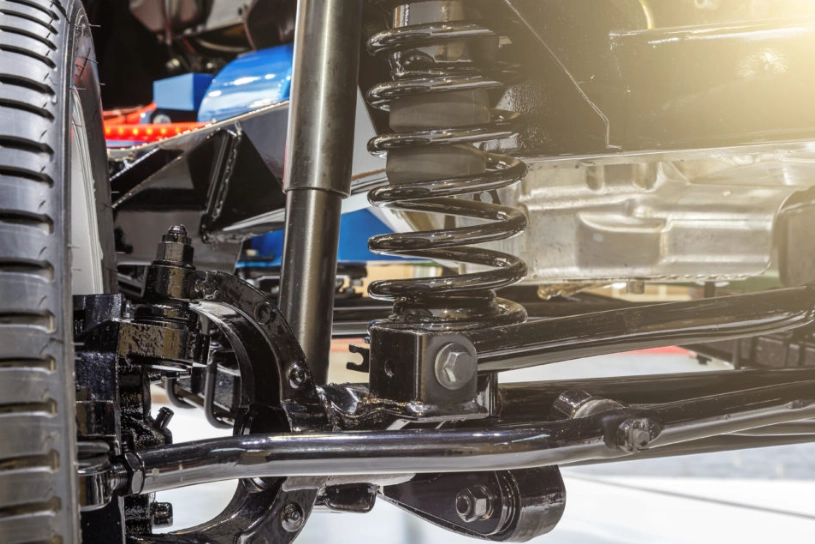
So why is "is it worth it to fix struts?" such a common and anxious question? It's because the job is rarely cheap. It's labor-intensive, often requires special tools, and the parts themselves aren't peanuts. Unlike an oil change, it's a significant investment. People instinctively want to know if they can patch it, delay it, or if there's a cheaper alternative. That's a normal reaction to a big bill.
The trouble is, this isn't a broken cup holder. We're talking about a core safety system. The National Highway Traffic Safety Administration (NHTSA) doesn't mince words about vehicle maintenance and safety, and while they don't issue specific bulletins for every worn part, the principle is clear: compromised steering and suspension components are a major hazard. You can read about how they frame general vehicle safety concerns on their vehicle safety equipment pages, which underscores the importance of all safety-critical systems.
Decoding the Real Cost: It's Never Just the Part
When you get a quote, the number can be shocking. $800, $1,200, sometimes more. To understand if it's worth it, you have to understand what you're paying for. Let's break it down, because the part cost is often the smallest piece of the puzzle.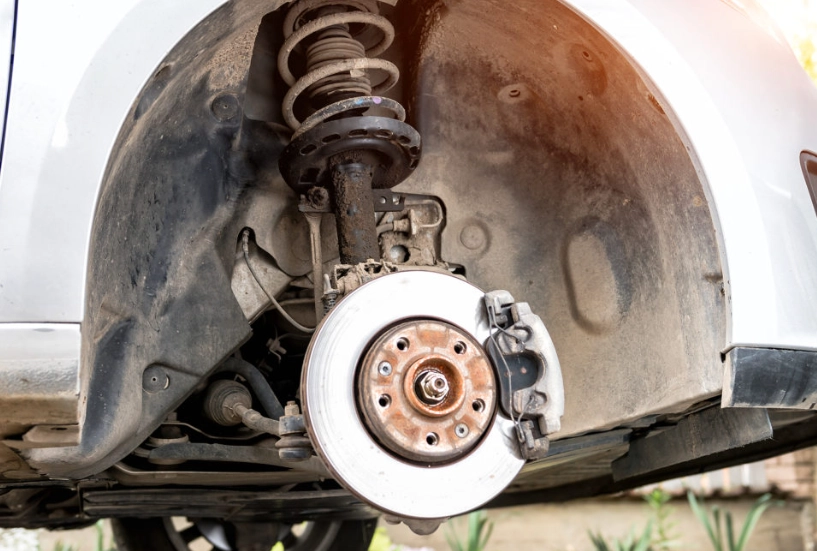
What's In The Box? A Typical Strut Job Cost Breakdown
For a common sedan, replacing both front struts (you should almost always do them in pairs):
- The Strut Assemblies (Themselves): $150 - $400 per side. This range is huge. Economy parts exist, but so do premium performance ones. Most people land in the $200-$250 range for a decent quality, brand-name part like KYB, Monroe, or Sachs.
- Labor - The Big Ticket: $300 - $600. This is where shops make their money. The job involves compressing heavy springs (which can be dangerous), separating old components, and reassembling everything. It's 2-3 hours of book time for a professional.
- The "While You're In There" Items: This is crucial. Worn struts often destroy other parts. The strut mount/bearing ($50-$100 each) and the sway bar end links ($30-$60 each) are commonly replaced simultaneously. If you don't, you'll be paying 80% of the labor again in six months when they start knocking.
- Alignment - The Non-Negotiable Finale: $80 - $120. You must get an alignment after any strut work. New struts change the car's geometry. Skipping this will cause rapid, uneven tire wear, costing you hundreds in new tires prematurely.
So, your realistic all-in cost for a proper job on two struts is easily $900 to $1,500+, depending on your car and location. Seeing it broken down makes the sticker shock a bit more understandable.
Now, what about just fixing them? Ah, the tempting path. For some older strut designs, you might find kits to rebuild them or just replace the shock cartridge inside the housing. The part cost plummets to maybe $80 per side. But here's the rub: the labor is almost identical. You still have to remove the entire assembly, disassemble it, rebuild it, and reinstall it. You save a couple hundred on parts but pay nearly the same in labor. For most modern cars, this isn't even an option anymore—they come as complete, sealed units. The industry has largely moved on from rebuilds, which tells you something about the cost-benefit.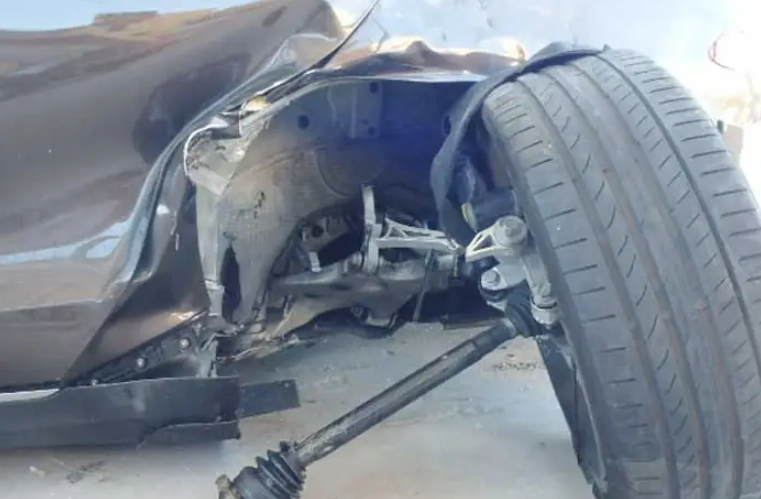
So, is it worth it to fix struts by rebuilding? Only if you have a classic car where new assemblies aren't available, or you're a dedicated DIYer with the time and tools. For 95% of people driving cars from the last 20 years, replacement is the only practical path.
The Repair vs. Replacement Showdown: A Brutally Honest Comparison
Let's lay this out clearly. The decision between a band-aid fix (if one exists), a rebuild, and a full replacement boils down to more than just today's price tag.
| The Case for REPLACEMENT (New Complete Assemblies) | The Case for REPAIR/Rebuild (When Possible) | ||
|---|---|---|---|
| Pros | Cons | Pros | Cons |
| Predictable Outcome: New parts come with a warranty (often lifetime). You know exactly what you're getting. | Higher Upfront Cost: The initial invoice is undeniably larger. | Lower Parts Cost: The core components (seals, fluid, cartridge) are cheaper. | Uncertain Longevity: A rebuild may not last as long as a new unit. You're reusing worn housings and springs. |
| Safety & Performance Restored: Handles like new. Full safety margin is regained. | "While You're In There" Upsell: Temptation to replace ancillary parts adds cost. | Preserves Original Parts: For vintage cars, this maintains originality. | Labor is Still High: Most savings are eaten by similar disassembly/assembly time. |
| Saves Future Labor: Replacing mounts/links now prevents a second costly teardown later. | DIY-Friendly (for some): Can be a satisfying project for a skilled home mechanic. | Risk of Failure: If the rebuild isn't perfect, it leaks and you're back to square one, having paid labor twice. | |
| Peace of Mind: This is huge. You won't be listening for new noises or worrying on a long trip. | Often Not an Option: For most modern vehicles, complete assembly replacement is the only method. | ||
Looking at this, my personal take leans heavily toward replacement for daily drivers. The peace of mind and warranty are worth the extra couple hundred bucks. I tried the rebuild route on an old truck once. Saved $150 on parts, spent two messy weekends covered in grime and shock fluid, and it started leaking again after 18 months. Never again. The shop quote I dreaded initially would have been the smarter play.
The Hidden Costs of Waiting: What Happens If You Don't Fix Them?
This is the part that often gets glossed over. Let's say you decide it's not worth it to fix struts right now. You'll just drive a bit more carefully. What's the real penalty?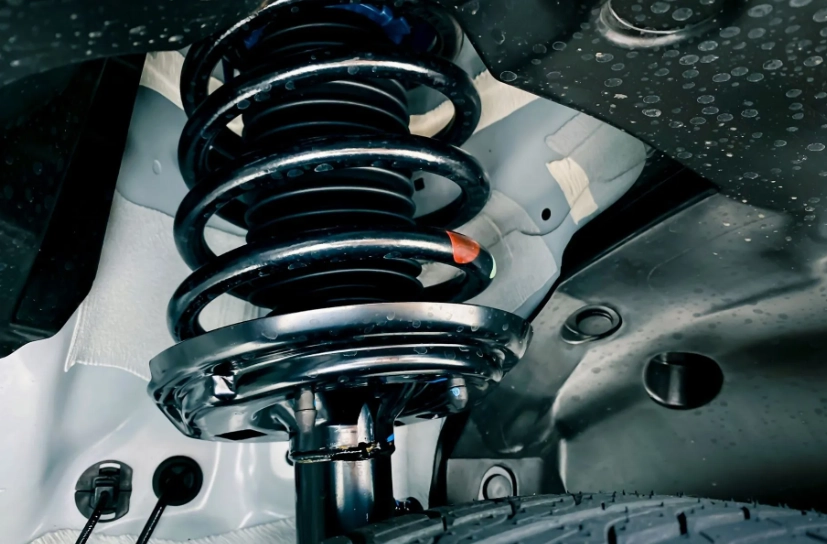
It's not just a bouncy ride. The damage compounds, and your wallet takes a hit in other, sneakier ways.
Your Tires Are Being Murdered
Worn struts can't keep the tire flat on the road. It bounces and skips. This causes something called "cupping" or "scalloping"—weird, uneven wear patterns across the tread. A set of tires can be destroyed in 10,000 miles instead of lasting 40,000. Tires are expensive. Replacing them early is often more costly than the strut job you were avoiding.
Everything Else Gets Beat Up
That uncontrolled bouncing and vibration is a hammer blow to every other component in the suspension and steering. Ball joints, tie rod ends, control arm bushings—they all wear out prematurely. What was a $1,000 strut job can turn into a $2,500 full suspension overhaul because you let one critical failure take out its neighbors.
The Safety Factor Isn't Theoretical
I need to be blunt here. In an emergency maneuver—swerving to avoid a deer, a sudden lane change—a car with blown struts can become uncontrollable. The body will roll excessively, the tires can lose grip, and the braking distance increases dramatically because the front end dives and unweights the rear tires. Organizations like the SAE International publish countless technical papers on vehicle dynamics that detail how critical damping is for stability. You're not just risking a rougher ride; you're compromising the car's ability to respond predictably in a crisis.
Suddenly, asking "is it worth it to fix struts?" feels different. It's not an expense. It's an investment in preventing a domino effect of other expenses and, more importantly, in preserving the safety envelope of your vehicle.
The DIY Question: Can You Do It Yourself and Is THAT Worth It?
This is a big one for many people. The labor is the killer, so why not do it yourself? Let's have a real talk about DIY strut replacement.
The Good: You can save $400-$600 in labor. You can buy exactly the parts you want. There's a massive sense of accomplishment.
The Bad (The Reality Check): This is not a beginner job. It's a 4-6 hour project for a seasoned home mechanic, likely a full weekend for a first-timer. You need a good set of tools, including a spring compressor. And let me tell you, renting a spring compressor from the parts store is a nerve-wracking experience—those things are scary if you don't know what you're doing. A slipped spring is literally lethal.
The Ugly: You will encounter seized bolts. The ones holding the strut to the steering knuckle are famous for rusting solid. You'll need penetrating oil, heat (a torch), and possibly an air impact wrench. Without a lift, you're working on jack stands in an awkward position.
For those in the middle, there's a hybrid option: buy the complete, pre-assembled strut/spring/mount units. They cost a bit more per part, but they eliminate the dangerous spring compression step. You just unbolt the old one and bolt in the new one. It turns a 9/10 difficulty job into a 6/10. This is often the smartest DIY path and makes asking is it worth it to fix struts yourself a much more viable "yes."
The Ultimate Decision Checklist: Answering "Is It Worth It For ME?"
Enough theory. Let's get practical. Grab your mechanic's quote and run through this list. It will guide you to your answer.
Your Personal Strut Decision Matrix
- What's the Car's Value & Future? Is this a car you plan to drive for 3+ more years? If yes, the repair likely pays off. If you're selling it in 6 months, you might just be donating money to the next owner (though a failed safety inspection could kill the sale).
- How Bad Are the Symptoms? Just a little bounce? Or is it bottoming out, clanging, and pulling under braking? Severity accelerates the timeline.
- What's the FULL Quote? Does it include new mounts/bearings and an alignment? If not, get a revised quote that does. Compare the all-in price.
- Can You Bundle the Repair? Do you also need brakes or tires soon? Some shops will discount labor if they do multiple related jobs at once.
- What's Your Safety Priority? Be honest. Do you drive kids around? Do you commute on the highway? The safety calculus changes.
- Have You Gotten a Second Opinion? Not just on price, but on diagnosis. A second shop can confirm the struts are truly gone and not something simpler (and cheaper) like a sway bar link.
If you're leaning towards "yes, it's worth it," the next step is choosing quality parts. Don't go for the absolute cheapest option. A mid-tier brand from a reputable manufacturer (Monroe, KYB, Gabriel) offers the best balance of cost and longevity. For performance cars, look at Bilstein or Koni.
Beyond the Repair: What to Expect After You Say Yes
Okay, you've decided. You're getting it done. What now?
First, the car will feel different. Like, profoundly different. The first time you hit the brakes, you won't experience that scary nose-dive. Corners will feel flat and planted. It can feel so good it's almost like driving a new car. That sensation alone answers is it worth it to fix struts for many people.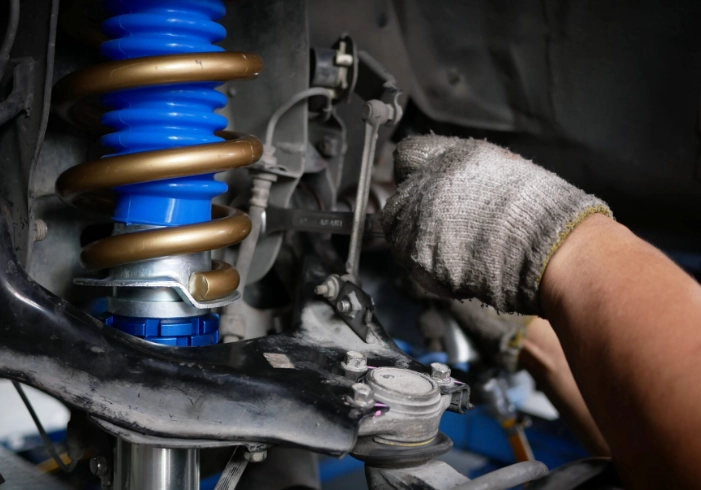
Get the alignment done immediately, as discussed. Then, listen. There should be no new clunks or knocks. If there are, go back to the shop—they may not have tightened something or a new part (like a mount) could be defective.
Finally, recognize the value you've added. You've restored a major safety system. You've protected your tire investment. You've likely prevented more expensive repairs down the line. And you've bought yourself peace of mind for the next 50,000 to 80,000 miles. That's a tangible return on investment.
Frequently Asked Questions (The Stuff You're Secretly Googling)
The Final Verdict: So, Is It Worth It to Fix Struts?
After all this, here's my straight answer.
If your struts are genuinely worn out and your car is a keeper, then yes, it is almost always worth it to replace them. View it not as a repair, but as a critical maintenance item—like replacing worn-out brakes. The cost is high because the job is important and complex.
The "worth it" equation tips towards "no" only in a few specific scenarios: if the car is literally headed to the junkyard in weeks, if the repair cost exceeds the car's total value and the car has other major terminal issues, or if a proper diagnosis reveals the problem is actually a much cheaper component.
For everyone else—the commuter, the family hauler, the road-tripper—investing in new struts is one of the smartest things you can do for your car's health, your safety, and your wallet in the long run. It's a decision that pays you back in confidence every single time you get behind the wheel.
Don't let the initial quote paralyze you. Get the details, understand what you're paying for, and make the informed choice. Your car—and your peace of mind—will thank you for it.