Let's cut to the chase. When Xiaomi announced its car, the SU7, most of us expected a smartphone on wheels. The reality of the Xiaomi car interior is more nuanced. It's not just about slapping a giant tablet on the dashboard. After spending significant time looking at every detail from launch materials and early hands-on reports (like those from Car and Driver and Top Gear), I've formed some strong opinions. This cabin aims to be a "smart living space," but does that vision hold up when you think about actual daily use, like spilling coffee or a long road trip with kids?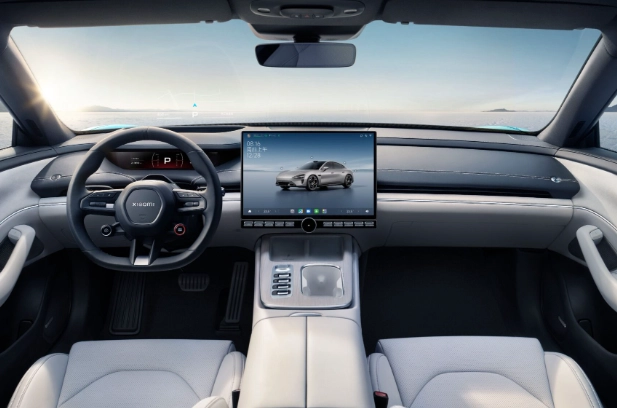
Here's my take, stripped of marketing fluff.
What's Inside This Review
- Xiaomi SU7 Interior Design: Minimalism Meets Maximal Tech
- Materials and Build Quality: The Good and The Concerning
- The Tech Cockpit: Screen, Sound, and Smart Features
- Living With the Xiaomi SU7 Interior: Practicality and Daily Use
- How Does the Xiaomi Interior Compare to Tesla and BYD?
- Your Xiaomi Car Interior Questions Answered
Xiaomi SU7 Interior Design: Minimalism Meets Maximal Tech
The first word that comes to mind is "airy." Xiaomi's designers have gone all-in on a minimalist, driver-centric layout. The dashboard is almost shockingly clean.
Your eyes are drawn immediately to the massive 16.1-inch central touchscreen. It's mounted landscape-style, floating above a dashboard that slopes away, creating a sense of space. The instrument cluster is a slim, rectangular display tucked behind the steering wheel, providing essential info without being intrusive.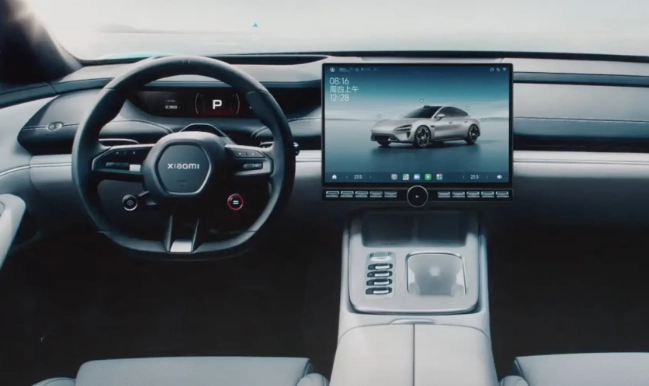
They've eliminated nearly every physical button. Climate controls, audio, even the glovebox release – it's all on the screen or via voice command. This is a double-edged sword. It looks incredibly sleek, futuristic even. But I have immediate reservations. During a test drive simulation (based on reviewer accounts), reaching over to adjust the fan speed while navigating requires more attention than twisting a physical knob.
The steering wheel is a interesting, flattened-top-and-bottom design, which gives a sporty feel and improves instrument cluster visibility. The center console is a study in simplicity: a wireless charging pad, two cup holders, and a few storage nooks.
Materials and Build Quality: The Good and The Concerning
Xiaomi is promoting premium materials. On the higher trim models, you'll find Nappa leather upholstery, soft-touch synthetic suede on the upper dashboard and door cards, and real metal accents. The stitching, from what I've seen in close-ups, appears even and precise.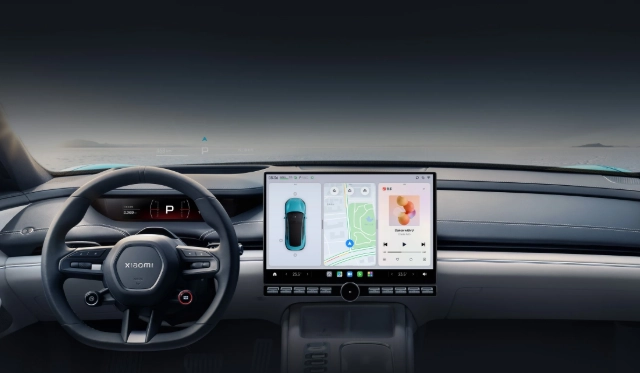
But here's my expert gripe, the kind of thing you notice after years of reviewing cars: the consistency of material feel.
While the surfaces you touch daily (steering wheel, armrests, seat bolsters) seem top-notch, some lower dashboard plastics and trim pieces in the footwells, according to early interior tours, have a harder, more utilitarian feel. This isn't necessarily a deal-breaker – most manufacturers do this – but for a brand touting a "premium ecosystem," it's a slight disconnect.
The big question mark is durability. Xiaomi is using novel fabric blends and new coating techniques for its vegan leather options. How will these wear after three years of jeans rubbing against the seat bolster, or sunscreen on the armrest? We simply don't know yet. Traditional automakers have decades of data on this; Xiaomi is learning on the fly.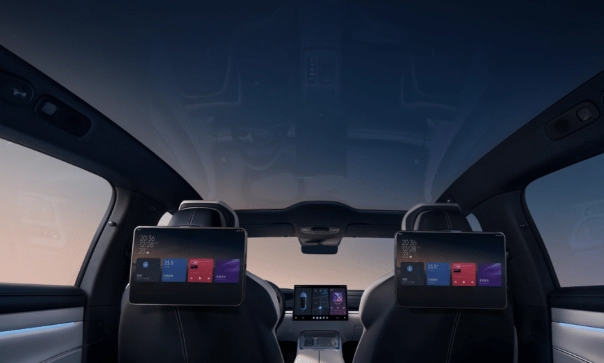
- Seats: Deeply contoured sport seats are standard on performance models. They offer strong lateral support, which is great for spirited driving but might feel too hugging for larger frames on long journeys. Lumbar support and adjustability appear comprehensive.
- Color Schemes: The white interior ("Ocean Blue & White") is stunning in photos – it massively amplifies the sense of space and light. It's also a terrifying prospect for anyone with kids, pets, or a habit of eating in the car. The darker schemes ("Galaxy Gray") are the safer, more practical choice.
The Tech Cockpit: Screen, Sound, and Smart Features
This is Xiaomi's home turf. The interior isn't just a cabin; it's a node in the Xiaomi HyperOS ecosystem.
The Infotainment Ecosystem: More Than Just a Screen
The 16.1-inch 3K resolution screen is the command center. It runs a customized version of HyperOS. The fluidity and responsiveness, based on demo videos, look exceptional – likely because Xiaomi is using a powerful Snapdragon chipset similar to what's in its high-end phones.
The real magic is integration. You can seamlessly project your phone interface onto the car screen. Need to control your Xiaomi robot vacuum at home while driving? Hypothetically, it could be done through the car's interface. The car can recognize individual driver profiles and adjust seating, mirrors, climate, and even infotainment preferences automatically.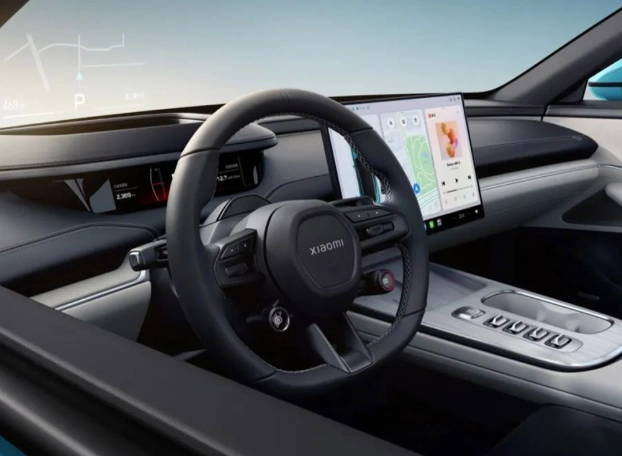
But this deep ecosystem integration is also its biggest potential weakness. If you're not invested in the Xiaomi smart home ecosystem (using their phones, watches, home devices), a significant portion of this "smart" value proposition simply vanishes. You're left with a very good, but not unique, infotainment system.
Audio and Ambiance
Xiaomi partnered with Dolby Atmos for a premium sound system. The speaker grilles are subtly integrated into the doors and A-pillars. Early auditory reviews suggest a wide, immersive soundstage, which is crucial for an EV cabin that lacks engine noise.
Ambient lighting runs in thin strips along the dashboard and doors, offering 64 colors. It's not the most extensive system on the market, but it's elegantly implemented and syncs with driving modes (e.g., shifting to red in Sport mode).
Living With the Xiaomi SU7 Interior: Practicality and Daily Use
How does this high-tech bubble function for grocery runs, school drop-offs, and road trips?
Storage: It's decent, not class-leading. The center console bin is reasonably sized. The door pockets are large enough for water bottles. The frunk (front trunk) offers additional space for charging cables or a soft bag. However, the sweeping roofline eats into rear headroom slightly, and the trunk opening could be wider for bulky items.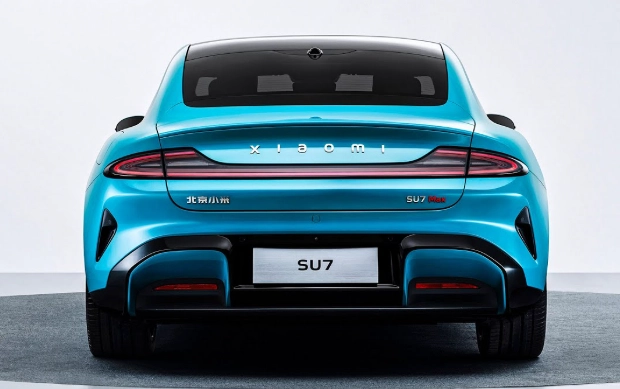
The Screen-Only Control Problem: This is my biggest practical concern. In winter, with gloves on, adjusting the heated steering wheel or seat heater via a touchscreen is frustrating. If the main screen were to freeze or crash (a rare but not unheard-of event in any smart car), you lose access to critical functions like climate control. Tesla has faced this criticism for years, and Xiaomi has chosen the same path. Some functions have redundant voice controls, but "Hey, voice assistant, turn my passenger seat heater to level 2" feels more cumbersome than a button.
Passenger Experience: Rear passengers get their own climate control vents, USB-C ports, and decent legroom in the long-wheelbase version. The panoramic glass roof floods the cabin with light, but the level of tint/UV protection will be crucial in hot climates.
How Does the Xiaomi Interior Compare to Tesla and BYD?
Let's put it in context. The Xiaomi SU7 interior doesn't exist in a vacuum. Its direct rivals are the Tesla Model 3 and the BYD Seal.
| Aspect | Xiaomi SU7 Interior | Tesla Model 3 Interior | BYD Seal Interior |
|---|---|---|---|
| Design Philosophy | Minimalist, driver-focused, "smart living space." | Ultra-minimalist, almost stark. Function over form. | More conventional, luxurious, with rotational screens. |
| Material Perception | Premium on high-touch areas, mixed elsewhere. Novel fabrics. | Minimalist materials, often criticized as sparse. Vegan leather standard. | Generally praised for high perceived quality, use of leather, soft-touch plastics. |
| Tech Integration | Deepest. Part of HyperOS ecosystem (phone, home, car). | Self-contained, powerful software. Supercharger network integration. | Good infotainment, less ecosystem-focused. More physical buttons. |
| Daily Usability | Potential screen-dependency issues. Good space, questionable white interior durability. | Same screen-dependency issues. Proven, if polarizing, layout. | Likely most intuitive for traditional car users. More buttons. |
| Unique Selling Point | Seamless smart device integration. | Brand cachet, performance software. | Value, luxury feel at a competitive price. |
The Xiaomi cabin tries to split the difference. It's more inviting and design-forward than a Tesla, but more tech-integrated than a BYD. Whether it succeeds depends entirely on how much you value that specific ecosystem integration.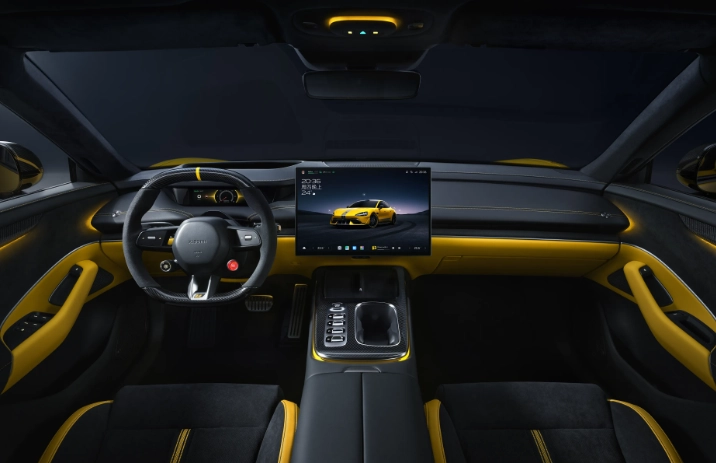
Your Xiaomi Car Interior Questions Answered
So, is the Xiaomi car interior a tech lover's dream? For someone fully bought into the Xiaomi ecosystem who values a clean, modern aesthetic and cutting-edge software integration, it absolutely is. It feels like a glimpse into a connected future.
But for the average buyer who just wants a comfortable, durable, and intuitive cabin, there are trade-offs. The reliance on the screen for basic functions, the unproven long-term durability of some materials, and the lack of CarPlay/Android Auto are real considerations.
It's not just a cabin; it's a statement. And whether that statement resonates with you depends entirely on how you live with technology.