Quick Navigation
- What Are Car Detailing Products and Why Do They Matter?
- How to Choose the Right Car Detailing Products for You
- The Essential Car Detailing Products Checklist
- Advanced Products: Ceramic Coatings and Specialty Items
- Technique and Common Mistakes: It's Not Just the Product
- Building Your Arsenal and Continuous Learning
- Frequently Asked Questions About Car Detailing Products
Let's be real, walking into an auto parts store or browsing online for car detailing products can feel overwhelming. You've got shelves and webpages packed with bottles, sprays, waxes, and polishes, all promising to make your car look brand new. I remember staring at the "cleaner wax" section for a good ten minutes, completely lost. Was that the same as a "pre-wax cleaner"? Did I need both? It's enough to make anyone just grab the shiniest bottle and hope for the best. But that's a quick way to waste money and maybe even mess up your paint.
This guide is here to cut through the noise. We're not just listing products; we're building a system. A system for understanding what each car detailing product actually does, how they work together, and most importantly, how to pick the right ones for your specific car and your specific goals. Whether you're a weekend warrior wanting to maintain your daily driver or someone diving deep into paint correction, the right knowledge about car detailing supplies turns a confusing chore into a satisfying craft.
What Are Car Detailing Products and Why Do They Matter?
At its core, detailing is just deep cleaning and protecting every square inch of your vehicle, inside and out. It goes way beyond a quick drive-through wash. Car detailing products are the specialized tools—chemicals, polishes, protectants—that make this deep clean possible and lasting. A regular car wash gets the dirt off the surface. Detailing products are designed to remove contaminants bonded to the paint, restore gloss to faded clear coats, and shield every surface from the next round of grime, UV rays, and weather.
Using the right car care products is the difference between a car that looks "clean" and a car that looks "showroom" or better. It's also about preservation. That layer of wax or sealant isn't just for shine; it's a sacrificial barrier. It takes the hit from acid rain, bird droppings, and tree sap so your precious paint doesn't have to. Neglecting this protection is like going out in the sun without sunscreen for your car's skin. The damage accumulates slowly but surely.
I learned this the hard way on my old black sedan. I washed it regularly but just used a generic "wash and wax" soap. After a few years, the hood and roof had lost their deep blackness, looking hazy and dull under certain light. That was UV damage and micro-scratches (swirl marks) that had permanently marred the clear coat. Once I started using proper paint cleaners, polishes, and dedicated sealants, I couldn't believe the transformation on the panels that weren't too far gone. It was like seeing the car's true color for the first time in years.
How to Choose the Right Car Detailing Products for You
This is where most people get stuck. You don't need to buy one of everything. Your shopping list should be dictated by three things: your car's condition, your desired outcome, and honestly, how much time you want to spend.
Start by running your hand over a clean section of your car's paint. Does it feel smooth as glass, or can you feel tiny bumps? Those bumps are embedded contaminants—brake dust, industrial fallout, tree sap mist. If they're there, you need a clay bar or synthetic clay towel. That's your first decision point.
Next, look at the paint in bright, direct sunlight or under a strong LED work light. Do you see a web of fine scratches swirling across the surface? That's swirl marks and light scratches. If they bother you, you're entering the world of polishing and compounding, which requires a machine polisher (like a dual-action polisher) and the corresponding compounds and polishes. If the scratches are deep enough to catch your fingernail, a product alone might not fix it; that might need professional touch-up.
Finally, think about protection. How long do you want it to last? A traditional carnauba wax gives a warm, deep glow but might last 2-3 months. A synthetic paint sealant offers more durability, often 6-12 months, with great gloss. The current king of durability is a ceramic coating, which can protect for years, but it requires meticulous paint preparation beforehand. Your choice here shapes a big part of your initial product list.
Understanding Product Labels and Marketing Hype
Walk down any aisle and you'll see words like "premium," "ultimate," "professional grade," and "nano-technology." It's mostly fluff. What you need to look for are the actual descriptors of the product's action.
- Cleaner Wax: This is a combination product. It contains mild abrasives (cleaners) to remove light oxidation and stains, and wax to protect. It's a good one-step solution for older, faded single-stage paints or for quick maintenance on a car in decent shape. It won't remove scratches or heavily embedded stains.
- Pre-Wax Cleaner/Polish: This is a dedicated cleaner with little to no protective properties. Its job is to decontaminate and polish the paint to a perfect, clean surface right before you apply your dedicated wax or sealant. Using a pre-wax cleaner is a best practice for maximizing the bond and longevity of your protectant.
- All-in-One (AIO): Similar to cleaner wax but often more advanced. A good AIO will clean, polish, and leave behind a layer of sealant all in one step. They are fantastic time-savers and excellent for cars that don't need heavy correction.
My rule of thumb? Separate products generally outperform combination products for their specific task. A dedicated polish followed by a dedicated sealant will typically give better, longer-lasting results than a cleaner wax. But an AIO is a fantastic product for the enthusiast who wants great results in half the time.
The Essential Car Detailing Products Checklist
Let's break down the must-haves, category by category. Think of this as building your detailing toolkit from the ground up.
| Category | What It Does | Recommended Product Type | Top Brand Examples (For Reference) |
|---|---|---|---|
| Washing | Removes loose dirt & grime safely | pH-neutral car wash soap (not dish soap!) | Meguiar's Gold Class, Chemical Guys Mr. Pink, Adam's Car Shampoo |
| Decontamination | Removes bonded contaminants wax can't | Iron Remover Spray, Clay Bar or Synthetic Clay Towel | CarPro IronX, Griot's Garage Clay Bar, Nanoskin Autoscrub Sponge |
| Paint Correction | Removes scratches, swirls, defects | Cutting Compound (for heavy defects), Polishing Compound (for light swirls) | Meguiar's Ultimate Compound, Sonax Perfect Finish, 3D One |
| Protection | Shields paint from elements, adds gloss | Paint Sealant (durability), Carnauba Wax (warmth), Ceramic Spray (easy hybrid) | Jescar Power Lock+, Collinite 845, Turtle Wax Hybrid Solutions Ceramic Spray |
| Tires & Trim | Cleans & dresses rubber/plastic | Non-acidic Tire Cleaner, Water-based Tire Dressing | Super Clean (diluted), CarPro PERL, 303 Aerospace Protectant |
| Interior | Cleans & protects dash, seats, etc. | All-purpose Cleaner (diluted), Interior Protectant, Leather Conditioner | Optimum Power Clean, Nextzett Cockpit Premium, Lexol Leather Conditioner |
| Glass | Streak-free cleaning | Dedicated automotive glass cleaner | Stoner Invisible Glass, Sprayway Glass Cleaner |
You don't need the "top" brand in every category, especially when starting. Many reputable brands offer excellent entry-level lines. The key is to avoid the absolute cheapest no-name stuff, as the quality control can be non-existent. I've had off-brand dressings turn tires brown and cheap polishes dust like crazy, creating more mess than they fix.
Advanced Products: Ceramic Coatings and Specialty Items
Once you've mastered the essentials, the world of advanced car detailing products opens up. The biggest topic here is ceramic coatings.
A true ceramic coating (or SiO2 coating) is a liquid polymer that chemically bonds to your vehicle's paint, creating a permanent or semi-permanent layer of protection. It's much harder and more chemically resistant than wax or sealant. The benefits are huge: incredible hydrophobic properties (water beads and rolls off), resistance to UV oxidation, and protection against chemical stains and light etching from contaminants. A good coating can last 2-5 years or more.
But—and this is a big but—a ceramic coating is not a magic solution. The golden rule is: The coating will only be as good as the paint preparation underneath. This means the paint must be flawlessly clean, decontaminated, and perfectly polished to remove all defects before the coating is applied. Any swirl marks or contaminants left on the paint will be sealed in for years. Applying a coating is a serious commitment of time and skill. For most DIYers, a high-quality ceramic spray sealant (like Turtle Wax Hybrid Solutions or Meguiar's Hybrid Ceramic Wax) is a fantastic middle ground. They offer many of the hydrophobic benefits and decent durability (6+ months) with the ease of a spray-on, wipe-off product.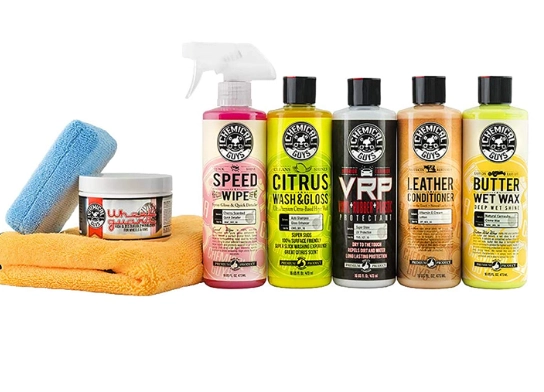
Other advanced products include dedicated fallout removers for heavy brake dust, tar removers for road grime, and specific compounds for removing heavy oxidation from gel coats on boats or RVs. These are niche tools for specific, tough problems.
Technique and Common Mistakes: It's Not Just the Product
The best car detailing products in the world can give bad results if used incorrectly. Technique is everything.
The Two-Bucket Wash Method
This is non-negotiable for preventing swirls. One bucket holds your soapy water. The other holds clean rinse water. After you wash a section of the car with your mitt from the soap bucket, you rinse the mitt in the clean water bucket to remove the dirt before reloading with fresh soap. This prevents you from grinding the dirt you just washed off back into the paint. It's simple and the single most effective technique for paint care.
Applying Wax and Sealants Correctly
Less is more. Apply thin, even layers. A thick, caked-on layer won't bond better; it will just be a nightmare to remove and can haze. Work in small sections (like a 2x2 foot area). For pastes and liquids, use a soft foam applicator. For sprays, mist lightly onto the applicator or panel. Let the product haze or flash as directed on the label—this is crucial for it to cross-link and cure—then remove with a clean, fluffy microfiber towel, flipping to a clean side often.
One of my biggest early mistakes was applying sealant in direct, hot sunlight. The product dried almost instantly on the panel, becoming impossible to buff off without serious elbow grease. Always work in the shade on a cool surface.
The Order of Operations (The Detailing Process)
This is the sequence that makes it all come together. Getting it wrong means you might have to re-do steps.
- Wash: A thorough two-bucket wash to remove loose dirt.
- Decontaminate: Spray iron remover on lower panels and wheels, let it dwell, rinse. Then clay the entire paint surface.
- Correct (if needed): Use compound/polish with a machine to remove defects.
- Final Wipe/Prep: Use a dedicated surface prep or isopropyl alcohol wipe-down to remove any polishing oils or residues. This ensures maximum bonding for your protectant.
- Protect: Apply your chosen wax, sealant, or coating.
- Dress: Apply tire dressing and trim protectant.
- Interior & Glass: Tackle the inside.
Frequently Asked Questions About Car Detailing Products
Sometimes, but carefully. Diluted isopropyl alcohol (IPA), mixed 1:4 with distilled water, is a great and cheap paint prep wipe. White vinegar and water can clean windows. But never use dish soap (like Dawn) as a regular car wash. It's too harsh and will strip all the wax and protection you've worked so hard to apply, leaving your paint naked. For the price of a bottle of proper car wash soap that will last dozens of washes, it's not worth the risk.
There's no one answer. It depends on the product, your climate, and how the car is stored. The classic "bead test" is a good indicator. Spray water on your hood. If it sheets off in flat sheets, the protection is gone. If it forms tight, round beads, you're still good. As a general guide: Carnauba wax every 2-3 months, synthetic sealant every 6-12 months, ceramic spray sealants every 6-8 months. True ceramic coatings are yearly inspections or as needed.
If you're only going to buy one thing beyond soap, make it a high-quality hybrid ceramic spray wax/sealant. Products like Turtle Wax Hybrid Solutions Ceramic Spray Coating are incredibly easy to use (spray on a wet car after washing, rinse, and dry), provide excellent hydrophobic effects and good durability, and will make your car look fantastic with minimal effort. It's the biggest visual and protective bang for your buck and effort.
Not always. Pro-grade lines (like CarPro, Gyeon, Koch-Chemie) are often more concentrated, have specific working times, and are formulated for controlled shop environments and experienced users. A beginner might struggle with the short working time of a professional compound, for instance. Consumer lines from Meguiar's, Griot's Garage, or Turtle Wax are specifically formulated to be more forgiving, easier to use, and work well in a wider range of temperatures and conditions. Start there, master the techniques, then explore pro-sumer products if you feel limited.
For fresh water spots, a quick detailer spray and a microfiber towel often work. For hardened spots, you need a dedicated water spot remover (like CarPro Spotless). These are mild acidic solutions that dissolve the mineral deposits. Apply, let dwell for a minute, gently wipe, and rinse immediately. For tree sap, use a dedicated tar and sap remover (like Stoner Tarminator). Spray on, let it dissolve the sap for a minute, then gently wipe away. Always follow up by washing the area, as these products can leave a residue.
Building Your Arsenal and Continuous Learning
Start small. Don't try to buy a garage-full of car detailing products all at once. Get a good wash kit (soap, two buckets, grit guards, wash mitt, drying towels) and a bottle of that hybrid ceramic spray. Do that for a few months. See how you like the process and the results.
Then, maybe add a clay bar kit and an iron remover for your next "big" detail. The time after that, consider a dual-action polisher and a light polish to tackle those swirls. Building slowly prevents overwhelm and helps you understand the purpose of each new product you introduce.
Finally, remember that the community and official resources are your friends. Reputable manufacturers often have excellent tutorial videos on their YouTube channels. For broader, unbiased information, organizations like the Auto Care Association provide industry standards and consumer information. When researching chemical safety or disposal for products, especially in the US, the Environmental Protection Agency (EPA) website is an authoritative source for regulations and guidelines. For specific technical data on paint thickness and correction, the resources from the SAE International, which sets many automotive engineering standards, can provide deeper context, though their material is quite technical.
The world of car detailing products is deep, but it doesn't have to be intimidating. With a systematic approach, a focus on technique, and a willingness to learn, you can achieve results that will make you proud every time you walk up to your car. It's not just about the shine; it's about the care and preservation of something you value. Now go get some products and get your hands dirty—you'll be glad you did.