Quick Navigation
- So, How Does a Satellite Navigation System Actually Work?
- The Major Players: A Tour of Global Satellite Navigation Systems
- From Pixels to Pavement: How We Use This Tech Every Day
- Choosing and Using a System: What Really Matters
- The Future and the Challenges: Where is This All Heading?
- Your Questions, Answered (The FAQ Section)
You know that feeling when your phone's map app just... works? You're in some unfamiliar neighborhood, maybe a bit lost, and a calm voice tells you to turn left in 500 feet. Ever stopped to wonder how that magic happens? I remember being on a road trip through the Scottish Highlands, where cell service was a myth, but my offline maps with GPS still guided me through single-track roads. That's the silent, constant work of navigation system satellites up there, over 12,000 miles above the Earth.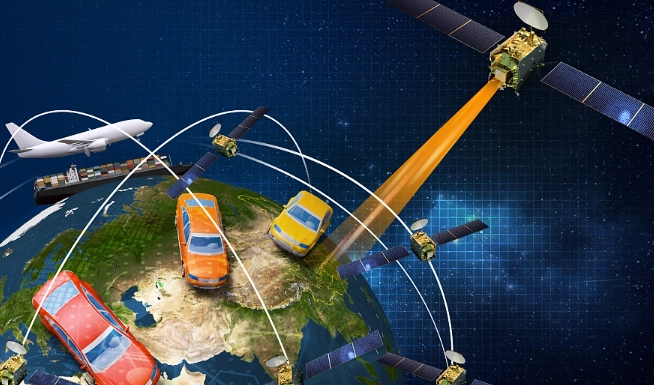
It's easy to take it for granted. We just say "GPS" for everything. But the reality is more complex and frankly, more interesting. It's not one system, but several, all humming along in a delicate orbital dance. This guide isn't about overly technical jargon. It's for anyone who's ever been curious about the invisible infrastructure that tells us where we are. How accurate is it really? Why does it sometimes get confused in cities? And what's the difference between all these systems with weird names like GLONASS and BeiDou?
Let's be honest, the technology is incredible, but it's not perfect. I've had my share of frustrating moments—like when it tried to send me down a one-way street the wrong way, or that time it insisted I was in the middle of a lake. We'll talk about those limitations too, because knowing why it fails is just as important as knowing how it works.
So, How Does a Satellite Navigation System Actually Work?
Forget the complex physics for a second. Think of it like this: you're in a huge, dark field, and you can hear three distinct foghorns. If you know exactly where each horn is located and the precise time each one sounded, you can triangulate your own position based on how long the sound took to reach you. A navigation system satellite network works on the same principle, but with radio waves and atomic clocks of insane precision.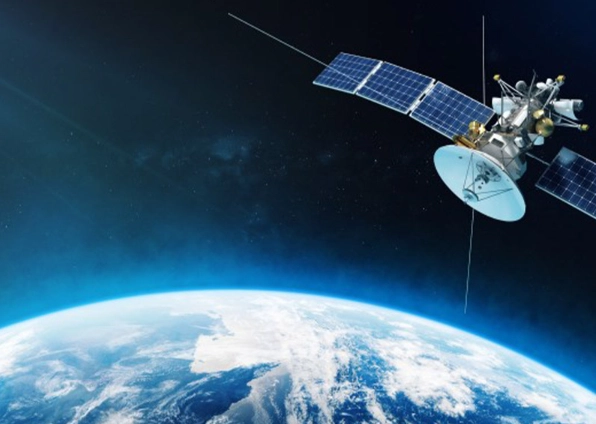
Here's the basic play-by-play. First, a constellation of satellites (usually 24-30 for global coverage) orbits the Earth. Each one is constantly broadcasting a signal that says, essentially, "This is Satellite ID#123, and at exactly 12:00:00.0000000 Universal Time, I was at these specific coordinates in space." Your receiver—whether it's in your phone, your car, or a hiking watch—picks up signals from at least four of these satellites.
The Magic Number is Four. You need four satellites for a basic 3D fix (latitude, longitude, and altitude). Why four? Three satellites can give you a 2D position, but the fourth is crucial to correct for the tiny timing error in your receiver's cheap clock compared to the satellite's multi-million-dollar atomic clock. That timing sync is everything.
The receiver measures the minuscule time delay for each signal to arrive. Since radio waves travel at the known speed of light, it can calculate the distance to each satellite. It then uses a process called trilateration to pinpoint where you must be, given those distances from known points in space. It's continuous, happening dozens of times per second as you move.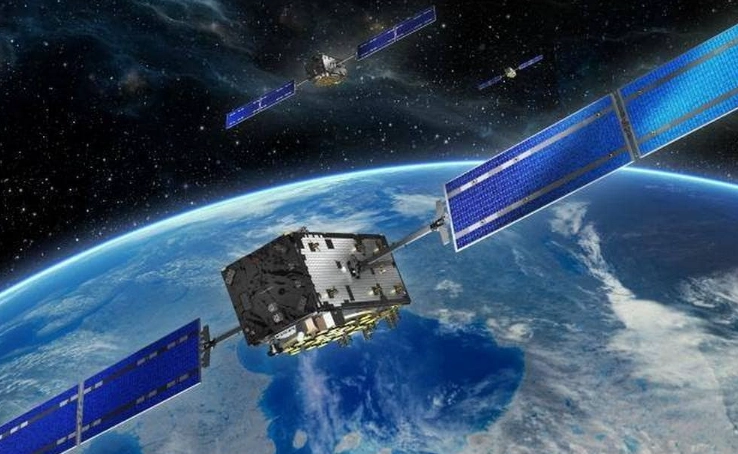
The Core Components: It's More Than Just the Satellites
People often think it's just the space segment. But a fully functional global navigation satellite system is a three-legged stool.
- The Space Segment: The constellation of satellites themselves. Their orbits are carefully designed so that at least four are "visible" from any point on Earth at any time.
- The Control Segment: The ground-based brain. This is a network of monitoring stations around the world that constantly track the satellites. They calculate their precise orbits (called ephemeris data) and clock corrections, then upload this data back to the satellites for them to broadcast to users. The master control facility for the U.S. GPS system is at Schriever Space Force Base in Colorado.
- The User Segment: That's you and me. Any device with a GNSS receiver chip—smartphones, car nav systems, aircraft, shipping containers, even some dog trackers.
The Major Players: A Tour of Global Satellite Navigation Systems
GPS might be the household name, but it's not the only game in town. Several countries have built or are building their own systems. This isn't just about national pride; it's about redundancy, accuracy, and strategic independence. Relying on one country's system for critical infrastructure is a risk.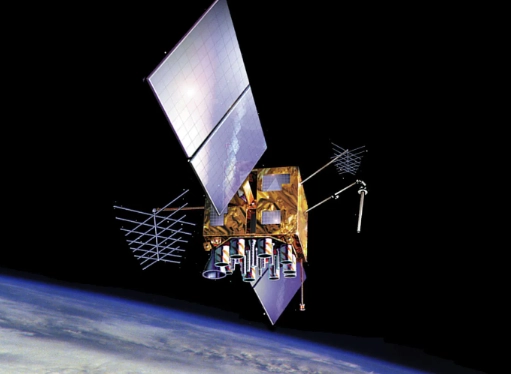
Let's break down the big four. This table gives you a quick, side-by-side look.
| System Name | Operator/Country | Full Constellation Size | Status & Key Feature | Typical Civilian Accuracy |
|---|---|---|---|---|
| GPS (Global Positioning System) | United States (Space Force) | 31+ satellites | Fully operational since 1995. The original and most widely used. Offers global service. | 3-5 meters (with standard signal) |
| GLONASS (Globalnaya Navigatsionnaya Sputnikovaya Sistema) | Russia | 24+ satellites | Fully operational. Known for better performance at high latitudes. | 5-10 meters |
| Galileo | European Union (ESA) | 26+ satellites | Fully operational. Designed as a civilian system, often touted for higher potential precision. | ~1 meter (with open service) |
| BeiDou (BDS - BeiDou Navigation Satellite System) | China | 35+ satellites | Fully operational globally as of 2020. Unique hybrid constellation with satellites in geostationary orbit. | 3-5 meters (global), sub-meter (Asia-Pacific) |
So, which one is best? That's the wrong question. Modern receivers are almost all multi-GNSS. My Garmin watch, for instance, can tap into GPS, GLONASS, and Galileo simultaneously. Why? More satellites in view means a faster, more reliable fix, especially in tricky environments like urban canyons or dense forests. If one system's signals are blocked, the receiver can lean on another.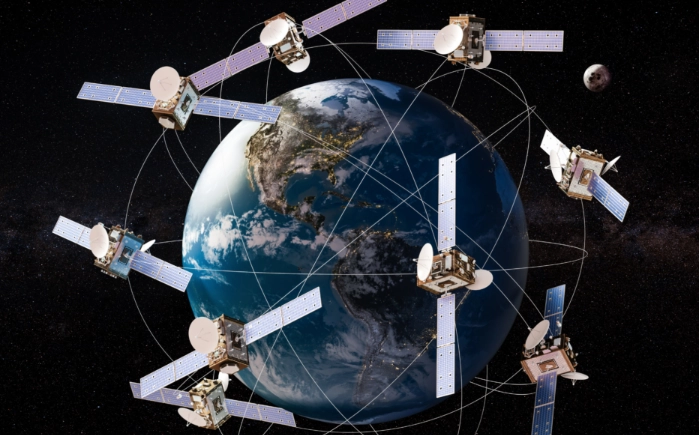
A Quick Reality Check on Accuracy: Don't get too hung up on those "typical accuracy" numbers. They're ideal, open-sky conditions. The moment you add buildings, trees, or atmospheric interference, real-world accuracy can drop to 10, 20, even 50 meters. That's why your pin sometimes jumps around on the map.
Beyond the Big Four: Regional and Augmentation Systems
Then you have regional systems that boost coverage and accuracy in specific areas. Japan's QZSS ("Michibiki") and India's NavIC are great examples. They aren't truly global, but they provide excellent service over Japan and India/Oceania respectively. They often act as an augmentation to the global systems, filling in gaps and improving performance.
And that brings us to augmentation. Systems like WAAS (in North America), EGNOS (Europe), and MSAS (Japan) use ground stations and geostationary satellites to correct errors in the core GNSS signals. They broadcast correction signals that can bring accuracy down to 1-2 meters or even better. If you've ever seen "GPS+WAAS" on an aviation or marine device, that's what it's using.
From Pixels to Pavement: How We Use This Tech Every Day
It's mind-blowing how many things now rely on a navigation system satellite signal. It's the invisible utility.
- Transportation & Logistics: This is the obvious one. Turn-by-turn navigation for cars, fleet management for trucks (saving companies millions in fuel and time), aviation navigation for en-route and precision approaches, and guiding massive container ships into port.
- Precision Agriculture: Tractors equipped with GNSS receivers can drive themselves with centimeter-level accuracy, applying seed, fertilizer, and pesticide only where needed. This boosts yield and cuts down on chemical use dramatically.
- Surveying & Construction: Forget theodolites and measuring tapes. Surveyors use high-end GNSS rovers to map land and stake out building sites with incredible precision. Bulldozers can now grade land to exact blueprints using GNSS guidance.
- Timing & Synchronization: This is a hidden killer app. The atomic clocks on the satellites provide a critical time reference. Financial networks use it to timestamp transactions. Power grids use it to synchronize phases. Even cellular networks rely on it to hand off your call between towers.
- Personal & Recreation: Our phones, fitness trackers, and handheld GPS units for hiking, geocaching, and boating. It's democratized exploration and fitness tracking.
Choosing and Using a System: What Really Matters
You're not choosing a satellite system directly. You're choosing a device, and the chip inside it dictates which signals it can use. Here's what to look for, stripped of marketing fluff.
For the Everyday User (Smartphones, Basic Car GPS)
Almost any modern smartphone (iPhone, Android) has a multi-GNSS chip. It'll use whatever signals are strongest. You don't need to configure a thing. The bigger factors affecting your experience are:
- The App Software: Google Maps, Waze, Apple Maps. Their map data, traffic algorithms, and user interface matter far more than the raw GNSS signal.
- Your Phone's Antenna: It's small and not ideal. Holding your phone horizontally (landscape) often gives the antenna a better view of the sky than holding it vertically. In a car, placement on the dashboard matters.
- Assisted GPS (A-GPS): This is a cheat code. Your phone uses cell tower and Wi-Fi data to get a rough location and download current satellite orbit data faster. This gives you a near-instant "cold start" fix, instead of waiting 30+ seconds for the chip to figure it out from scratch.
For the Enthusiast & Professional (Hiking, Surveying, Aviation)
This is where specs matter. You're buying a dedicated device.
- Multi-Band/Multi-Frequency Receivers: This is the gold standard for accuracy. Standard receivers use one frequency (L1). Multi-band receivers (like those using GPS L1 + L5) can actually measure and correct for signal delay caused by the ionosphere, the biggest source of atmospheric error. This is how you get sub-meter or even centimeter-level accuracy. Devices like the Garmin GPSMAP 66sr or high-end survey gear use this.
- Receiver Sensitivity: How well can it pick up a weak signal under tree cover or near buildings? Look for specs like "-147 dBm" or similar—the lower the number, the better.
- Support for Augmentation Systems: Does it use WAAS/EGNOS? For aviation or marine use, this is often mandatory.
- Antenna Quality: A larger, external antenna will always outperform a tiny chip antenna. For serious work, an external antenna mounted cleanly to a vehicle or backpack is a game-changer.
Pro Tip from a Hiking Mishap: I learned the hard way that a $100 handheld GPS often has a better, more sensitive antenna than a $1,000 smartphone when you're deep in a valley. For backcountry reliability, a dedicated device can be worth its weight.
The Future and the Challenges: Where is This All Heading?
The next decade is going to be interesting. Accuracy is moving from meter-level to centimeter-level for mass-market applications. How? Through dense networks of ground-based correction services, often delivered via the internet (NTRIP) or satellite (like commercial services from Trimble or Hexagon). Imagine your phone knowing which lane of the highway you're in.
Integration is key. Satellite navigation is fusing with other sensors. Your phone already uses its accelerometer and gyroscope to "dead reckon" your position in tunnels or parking garages where satellite signals are lost. Cars for autonomous driving combine GNSS with high-definition maps, LiDAR, cameras, and inertial sensors to create a fail-safe positioning system.
Real Problems We Can't Ignore
It's not all smooth sailing. The signals from space are incredibly weak—comparable to seeing a 25-watt lightbulb from 12,000 miles away. They're easily disrupted.
- Jamming and Spoofing: Jamming is broadcasting noise on the GNSS frequency to drown out the real signal. It's cheap and easy. Spoofing is more sinister—broadcasting fake GNSS signals to trick a receiver into showing a wrong location. There are worrying reports of spoofing affecting ships and aircraft near conflict zones. The official U.S. GPS.gov website has resources on these threats.
- Urban Canyon Effect: Tall buildings reflect signals (multipath) and block direct lines of sight. This is the main reason your location bounces around in a city center.
- Signal Fragility: Heavy foliage, your own car roof, even your body can attenuate the signal. Try getting a good fix while holding your phone low in a car with a heated windshield (which often has a metallic layer).
- Dependence and Vulnerability: Our entire modern infrastructure leans on this. A major, widespread disruption—whether from a massive solar storm or hostile action—would have catastrophic effects. The International Civil Aviation Organization (ICAO) constantly works on contingency procedures for this very reason.
Your Questions, Answered (The FAQ Section)
Let's tackle some of the common and not-so-common questions that pop up.
Do navigation satellites have cameras? Can they "see" me?
No, absolutely not. This is a huge misconception. GNSS satellites are signal broadcasters, like incredibly precise radio towers in space. They do not have imaging cameras pointed at Earth. They are not surveillance tools. They broadcast one-way signals that your device listens to. They have no idea who or what is receiving them.
Why do I need an internet connection for maps if GPS is free?
You're confusing two things. The satellite navigation system signal telling you your raw latitude/longitude is free and works without internet. The map images, street names, business listings, and traffic data are stored on servers online. Your app downloads that map data over the internet to visually display your position on it. Offline map apps (like OsmAnd or pre-loaded maps on Garmin devices) store the map data locally, so they work fully offline with just the satellite signal.
Is Galileo/GPS/BeiDou more accurate than the others?
For civilian use, under perfect conditions, Galileo's open service is often spec'd to be slightly more precise than the standard GPS civilian signal. BeiDou offers great accuracy in Asia. But in practice, with a multi-GNSS receiver using all of them together, you get the best of all worlds—more satellites, better geometry, and greater resilience. The difference for most users is negligible.
How do submarines or underground facilities use GPS?
They don't. The signals cannot penetrate water or significant earth. Submarines surface or use a buoyant antenna to get a fix. Underground, you're out of luck. These environments rely on inertial navigation systems (INS)—advanced gyroscopes and accelerometers that track every movement from a known starting point—which drift over time and need periodic correction from a satellite fix when possible.
What's the single best way to improve my phone's GPS accuracy?
Give it a clear view of the sky. Go outside, away from buildings. Hold it steady for 10-15 seconds. If you're in a car, put it on the dashboard near the windshield. And ensure Location Services/GPS is turned on (not just mobile data). Calibrating your compass in your phone's settings can also help mapping apps orient correctly.
The world of navigation system satellites is a testament to human engineering. It's a global, public utility that we've built in the most hostile environment imaginable—space. It has flaws and vulnerabilities, but its benefits are woven into the fabric of daily life. Understanding how it works, even just a little, makes you a more informed user. You'll know why it's amazing when it works, and you'll have a clue about what's going wrong when it doesn't. And maybe, next time you're guided smoothly home, you'll spare a thought for the silent constellation above, ticking away the nanoseconds, keeping us all found.