Key Takeaways
- Is Your Cabin Air Filter Screaming for a Change? Here's How to Tell
- What Exactly Are You Buying? A Cabin Air Filter Breakdown
- The Step-by-Step DIY Cabin Air Filter Replacement (For Most Cars)
- DIY vs. Pro: The Real Cost of a Cabin Air Filter Replacement
- Answers to the Questions You're Actually Asking
- Wrapping It All Up: Clean Air, Simple Job
Let's talk about something most of us ignore until it's too late. That little filter hidden behind your glovebox or under the hood. You know, the cabin air filter. It's out of sight, so it's out of mind. Right up until you turn on the AC on a hot day and get a face full of what smells like a damp basement mixed with old socks.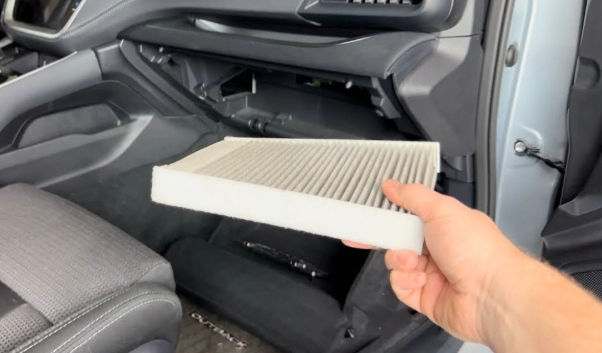
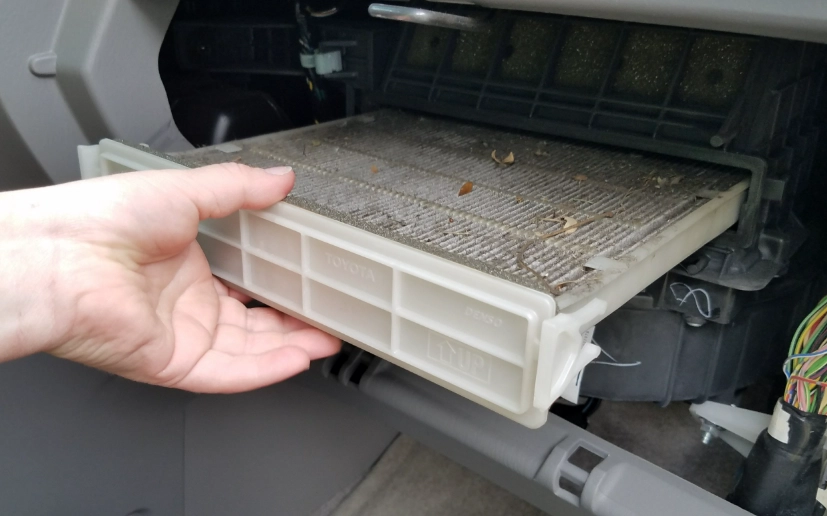
I learned this the hard way. My old sedan started blowing this musty odor every time I used the fan. I cleaned the car, checked for mold, nothing worked. Then a mechanic friend asked, "When did you last change your cabin air filter?" I stared blankly. I didn't even know my car had one. Turns out, it was so clogged with leaves, pollen, and general gunk it looked like a science experiment. A new filter fixed the smell in minutes. That experience got me digging, and what I found about cabin air filter replacement surprised me. It's one of the easiest, cheapest ways to make your car a healthier place to be.
So, what's the big deal? This filter is your car's first line of defense against the outside world. Every cubic foot of air you breathe inside your vehicle passes through it. It traps dust, pollen, smoke, soot, and even some bacteria. When it's dirty, it can't do its job. Your air quality plummets, your AC works harder, and if you have allergies, you're in for a rough ride.
Is Your Cabin Air Filter Screaming for a Change? Here's How to Tell
Your car won't flash a big "FILTER" light on the dash (though some luxury models do have a reminder). You have to be a bit of a detective. The signs are there if you know what to look for. And trust me, they're more obvious than you think.
The Top Signs You Need a Cabin Air Filter Replacement
- Weak Airflow: You crank the fan to max, but it feels like a timid breeze. A clogged filter physically blocks air from moving through the system.
- Strange Smells: Musty, moldy, or sour odors when you turn on the AC or heat. This is often moisture and organic matter (like leaves) decaying on the filter.
- Increased Dust: You see more dust settling on your dashboard and feel it in the air, even with the windows up. The filter is saturated and can't trap any more.
- Allergy Symptoms: Sneezing, itchy eyes, or a runny nose that seems to kick in as soon as you get in the car. A dirty filter is blowing pollen and spores right at you.
- Whistling or Unusual Noises: Sometimes, air forcing its way through a clogged filter can create a whistling sound from the vents.
- Foggy Windows: A severely blocked filter can disrupt proper airflow and moisture removal, leading to windows that fog up more easily.
How often should you actually do a cabin air filter replacement? This is where it gets interesting. The old rule of "every 15,000 miles or once a year" is a decent starting point. But it's not one-size-fits-all.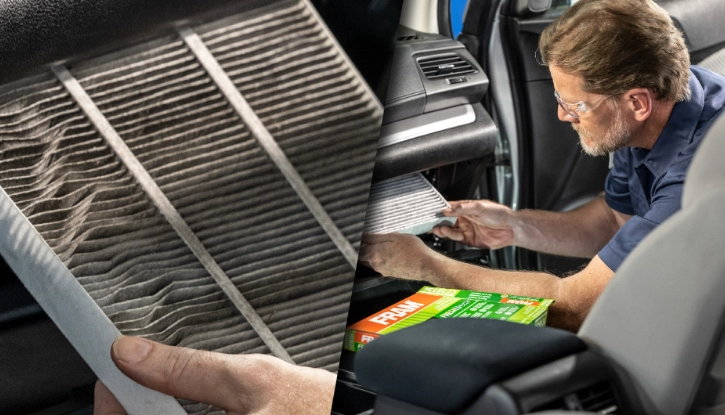
If you drive mostly on dusty dirt roads, live in a city with poor air quality, or your daily commute is through heavy pollen areas, you might need to change it every 6-12 months. My neighbor, who lives on a gravel road, checks his every six months without fail. It's usually filthy. Conversely, if you mostly drive on clean highways in a mild climate, you might stretch it to 2 years or 30,000 miles. The best advice? Check your owner's manual first. Then, do a visual inspection once a year. Pull it out (I'll show you how) and hold it up to the light. If you can't see light through it, it's time.
Here's a quick reality check. I looked up the maintenance schedule for a few popular cars on the National Highway Traffic Safety Administration (NHTSA) resources page, which often points to manufacturer guides. The recommendations vary wildly. Some European brands say every 20,000 miles, some Japanese brands say every 15,000. It really depends on the vehicle and the filter design.
What Exactly Are You Buying? A Cabin Air Filter Breakdown
Walk into an auto parts store and ask for a cabin air filter. You'll get hit with a wall of choices. Basic, carbon, allergen, HEPA-like... what's the difference? And more importantly, is the expensive one worth it?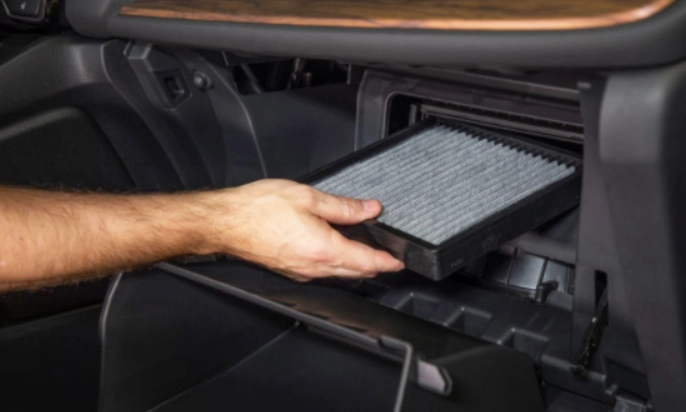
Let's break them down. This table should clear things up.
| Filter Type | What It Catches | Best For | My Take / Drawback |
|---|---|---|---|
| Basic Particulate (Pleated Paper) | Dust, pollen, soot, larger particles. | General use, budget-conscious drivers. Meets standard OEM specs. | It does the basic job. If you have no allergies and drive in clean areas, it's fine. Doesn't stop smells or tiny particles. |
| Activated Carbon | All of the above, PLUS odors, gases, and smog (like ozone, sulfur dioxide). | City drivers, people sensitive to smells (exhaust, industrial odors), anyone who wants a step up. | This is my go-to choice. The charcoal layer really knocks out traffic fumes. It costs a bit more but makes the cabin feel fresher. The carbon can get "full" over time, reducing its odor-fighting power. |
| Allergen Defense / Electrostatic | Ultra-fine particles, mold spores, pet dander, some bacteria. Often includes a carbon layer. | People with allergies, asthma, or respiratory issues. Families with young kids. | The best for air quality. Uses an electrostatic charge to grab microscopic junk. The most expensive option, but if you sneeze just thinking about pollen, it's worth every penny. |
| HEPA-Type (Note: Not True HEPA) | Claims to catch 99% of particles down to a very small size (e.g., 0.3 microns). | Those wanting the highest level of particulate filtration available for a car. | Be careful with marketing. True HEPA filters are thick and create high resistance, which most car blower motors can't handle. These are "HEPA-like" or "HEPA-style." They're very good, but check reviews. Some are great, some are just overpriced basic filters. |
Which one should you pick?
For most people, the activated carbon filter is the sweet spot. It offers a significant upgrade in air quality (killing smells) for a modest price increase over the basic filter. If you're on a tight budget, the basic one is perfectly adequate as long as you change it regularly. Never let a dirty basic filter go unchanged just to save money—you're breathing that gunk.
The Step-by-Step DIY Cabin Air Filter Replacement (For Most Cars)
Okay, let's get our hands dirty. This is the part that scares people, but it shouldn't. For about 80% of cars on the road, replacing a cabin air filter is a 10-minute job that requires zero mechanical skill. You just need to know where to look.
First, find your filter location. This is the only tricky part. In most cars, it's behind the glovebox. You open the glovebox, empty it, squeeze the sides or pop off dampeners to let it swing down fully, and there's a rectangular cover. In some cars (many Hondas, older Toyotas), it's under the hood, against the firewall on the passenger side. In a few others (some VWs), it's under the dashboard near the pedals. A quick YouTube search for "[Your Car Year Make Model] cabin air filter location" will show you exactly where it is. Seriously, use this trick.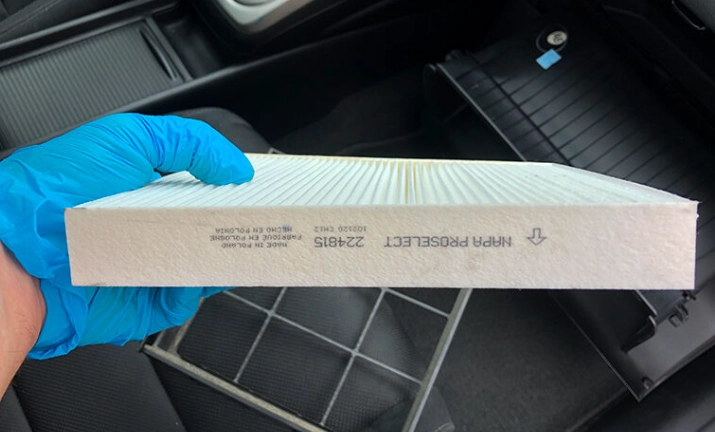
Your DIY Tool List (It's Short)
- The new filter. Get this first! The model number on the old filter or a lookup at the auto parts store.
- A flashlight. It's dark in there.
- A vacuum cleaner with a hose attachment (optional but recommended). To clean out the filter housing before inserting the new one.
- A screwdriver (maybe). Some filter covers are held by clips, some by screws. Usually, it's just clips.
The Universal Process:
- Park on a level surface, set the parking brake. Safety first, even for this.
- Locate and open the filter housing. If it's behind the glovebox, lower the glovebox. Remove the cover (clips or screws).
- Remove the old filter. Pay attention to the direction of the airflow arrows printed on its frame. Take a picture with your phone if you need to.
- Vacuum the housing. This is a pro tip. Get all the leaves, dead bugs, and dust out of the cavity. You don't want that blowing into your new filter.
- Insert the new filter. Make sure the airflow arrows point the same direction as the old one. This is crucial. If it goes in backwards, it won't filter properly. It should slide in smoothly. Don't force it.
- Replace the cover, re-secure the glovebox. Make sure all clips snap back into place to prevent rattles.
- Test it. Start the car, turn the fan on high. You should immediately notice better airflow and no old smells (unless they're in the ducts, which will clear out in a few minutes).
Watch Out For This!
Some European cars (looking at you, certain BMW and Mercedes models) have filters that are genuinely difficult to access, sometimes requiring the removal of trim panels under the windshield wipers. If a 10-minute search online shows people complaining about the difficulty for your specific model, it might be worth paying for the cabin air filter replacement this one time. My buddy's BMW required a special torx bit and contorting like a yogi. He paid the $50 labor and didn't regret it.
That's it. You've just saved yourself a significant chunk of money and learned a valuable skill. The feeling is pretty good.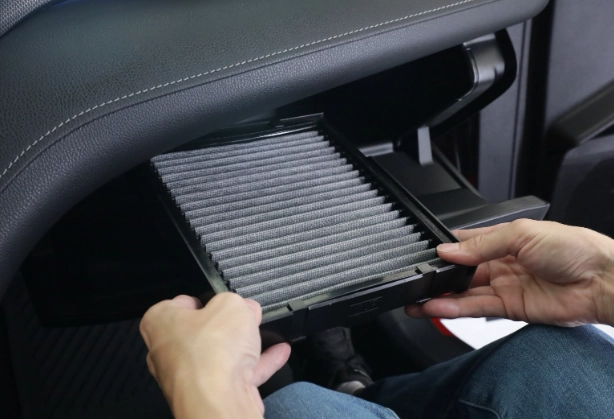
DIY vs. Pro: The Real Cost of a Cabin Air Filter Replacement
Let's talk numbers, because this is where DIY makes a massive difference. The price gap isn't just a few bucks.
The DIY Route: The filter itself costs between $15 and $50, depending on the type (basic to allergen) and your vehicle. Luxury or rare cars might be at the higher end. Your time: 10-30 minutes. Total cost: $15 - $50.
The Professional Route (Dealership/Shop): You're paying for the part and labor. Labor rates vary from $80 to $150+ per hour. This job is often billed as 0.3 to 0.5 hours (18-30 minutes). So, you're looking at:
- Part: $20 - $60 (they mark it up)
- Labor: $25 - $75
Total cost: $45 - $135+.
See the difference? You're often paying double or triple for a service you can easily do yourself. The markup on this simple part and the quick labor charge is a huge profit center for shops. Now, if your car is one of the difficult ones, or you simply don't want to mess with it, paying $50-$80 for the convenience and assurance is perfectly reasonable. But for the majority of cars, it's an easy win to do it yourself.
A quick story.
My sister took her SUV to a quick-lube place for an oil change. They came back with a "dirty cabin air filter" and quoted her $89 to replace it. She called me, skeptical. I told her to say no, then I drove over. We bought a $22 carbon filter from the parts store next door. I changed it in her parking lot in 7 minutes, using just my hands. She saved $67. That experience alone convinced her to learn other basic maintenance.
Answers to the Questions You're Actually Asking
I've gotten a lot of questions from friends and family since I started paying attention to this. Here are the real-world answers.
Can a dirty cabin air filter hurt my car's AC system?
Indirectly, yes. A clogged filter forces the blower motor to work much harder to pull air through. This can, over a very long time, potentially shorten the motor's life. The main issue is performance and air quality inside for you, not immediate damage to expensive AC components.
Will changing my cabin air filter improve my car's air conditioning cooling?
Not directly. The AC's cooling power comes from the refrigerant and condenser. However, a clean filter allows for maximum airflow over the cold evaporator coil. If your airflow was weak before, restoring it will make the cold air feel like it's blowing stronger and reaching the cabin faster. So, it feels more effective.
What's the difference between the engine air filter and the cabin air filter?
This is a common mix-up. The engine air filter cleans air going into your engine for combustion. It's under the hood in a big box. The cabin air filter cleans air going into the passenger cabin for you to breathe. Two completely different jobs, two different filters. Both are important.
I changed my filter, but there's still a musty smell. What gives?
Ah, the classic issue. The smell might not be on the filter itself, but on the evaporator coil (the part that gets cold) deep inside the HVAC system. Mold and mildew can grow there. Changing the filter is the first step. If the smell persists, you might need an AC system cleaner/deodorizer spray that you can often apply through the intake or drain tube. In stubborn cases, a professional HVAC cleaning might be needed.
Can I clean and reuse my cabin air filter?
Most are not designed to be cleaned and reused. Paper and carbon filters can't be washed. Some aftermarket "performance" filters made of cotton gauze (like for engines) claim to be cleanable, but they're rare for cabin use. My advice? Don't bother trying to clean it. You'll likely damage the media, and you'll never get it as clean as new. For a $20-$40 part that lasts a year or two, just replace it.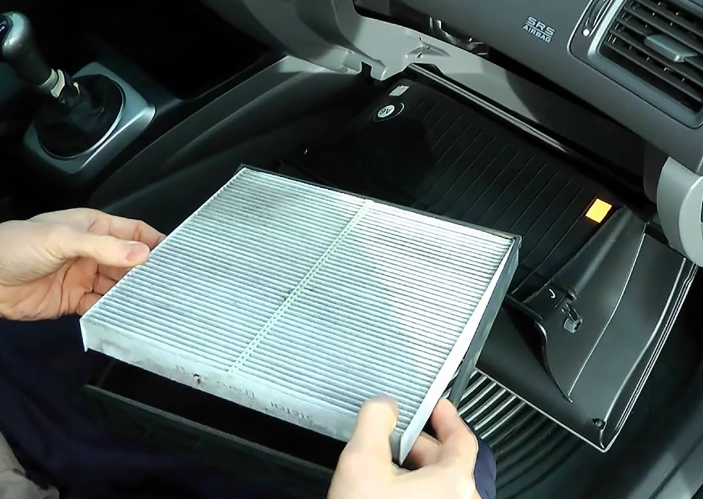
Wrapping It All Up: Clean Air, Simple Job
So, what's the final word on cabin air filter replacement? It's a no-brainer. It's a cheap, easy piece of maintenance that has a direct and immediate impact on your comfort and health while driving. You spend a lot of time in your car. The air you breathe there matters.
Think about it. For less than the cost of a tank of gas and 15 minutes of your time, you can have noticeably cleaner air, better airflow from your vents, and the satisfaction of knowing you didn't get overcharged for a simple service. You don't need to be a mechanic. You just need to be willing to open your glovebox or look under the hood once.
Your Action Plan
- Check your owner's manual for the recommended interval and filter location.
- Order the correct filter online or pick one up. Consider an activated carbon one for the upgrade.
- Watch a 2-minute YouTube video for your specific car. It demystifies everything.
- Set aside 30 minutes on a Saturday morning and do it. Use the vacuum trick.
- Breathe easy. Literally.
I'll leave you with this. The Environmental Protection Agency (EPA) notes that Americans spend about 90% of their time indoors, and they consider the interior of a vehicle an indoor space. Pollutants can be 2-5 times higher inside than outside. Your cabin air filter is your primary tool to control that environment. Keeping it fresh isn't just about car maintenance; it's about taking a small step for your own well-being.
Go check your filter. You might be surprised by what you find.