Quick Navigation
- What Does a Cabin Air Filter Actually Do? (It's More Important Than You Think)
- The Straight Answer: How Often Should I Change My Cabin Air Filter?
- Stop Guessing: The Tell-Tale Signs Your Filter Needs Changing NOW
- How to Check and Change Your Cabin Air Filter (It's Easier Than You Think)
- Choosing the Right Replacement Filter: Charcoal vs. Standard
- Your Top Questions About Cabin Air Filter Change Intervals, Answered
- The Bottom Line: Your Personal Cabin Air Filter Schedule
Let's be honest. When that "replace cabin air filter" reminder pops up on your dashboard, or you get a nudge from your mechanic, your first thought is probably, "Do I really need to do this right now?" It's not like a flat tire. The car still runs. But then you notice a faint musty smell when you turn on the AC, or the airflow feels weaker than it used to. That's when the question really hits you: how often should I change my cabin air filter, anyway?
I used to ignore mine for years. Literally. I figured it was just another upsell. That was until a road trip through a particularly dusty area left me sneezing for hours, even with the windows up. I finally pulled the filter, and it was a horror show—caked with dirt, leaves, and who knows what else. It was a wake-up call.
So, I dug in. I talked to mechanics, read manuals, and made more than a few mistakes myself. What I found is that the standard answer of "every 15,000 to 30,000 miles" is a decent starting point, but it's about as helpful as saying "eat healthy." It doesn't account for your specific life, your car, or where you drive. The real schedule depends on a bunch of things you see every day.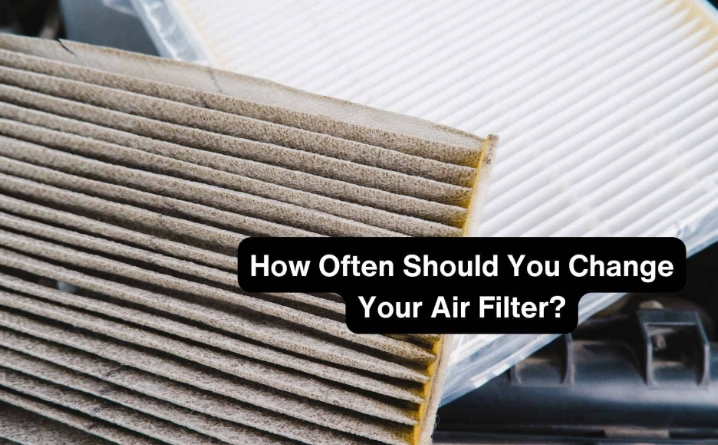
What Does a Cabin Air Filter Actually Do? (It's More Important Than You Think)
Think of it as your car's lungs. Every time you run the fan, heater, or air conditioner, outside air gets sucked in through vents usually near the windshield wipers. Before that air hits your face, it passes through the cabin air filter. Its job is to trap the junk: dust, pollen, mold spores, soot, bugs, and even some larger pollutants.
This isn't just about comfort. For people with allergies or asthma, a clean filter is a game-changer. But even if you don't, breathing in cleaner air is, well, better. A clogged filter also makes your HVAC system work harder. That can strain the blower motor and reduce the efficiency of your AC, potentially hitting your gas mileage a tiny bit and making the system noisier.
Why You Can't Just Ignore It
A dirty filter doesn't just stop working; it can become a problem itself. All that trapped moisture and organic material (like pollen and leaves) can become a breeding ground for mold and mildew. That's often the source of that nasty "dirty socks" smell when you first turn on the AC. Not exactly the fresh scent you were hoping for.
The Straight Answer: How Often Should I Change My Cabin Air Filter?
Alright, let's cut to the chase. Here's the breakdown, from the textbook answer to the real-world truth.
The manufacturer's recommendation is your first stop. Check your owner's manual. Most will suggest an interval between 15,000 and 30,000 miles, or sometimes every 12 to 24 months. Some luxury brands with fancy multi-layer filters might go longer. This is a safe, baseline schedule for "average" driving conditions.
But "average" is rare. Your life isn't average. So let's move past the generic advice.
The Factors That Actually Determine Your Change Interval
This is where you personalize the answer. Grab a mental picture of your daily drive. How many of these boxes do you tick?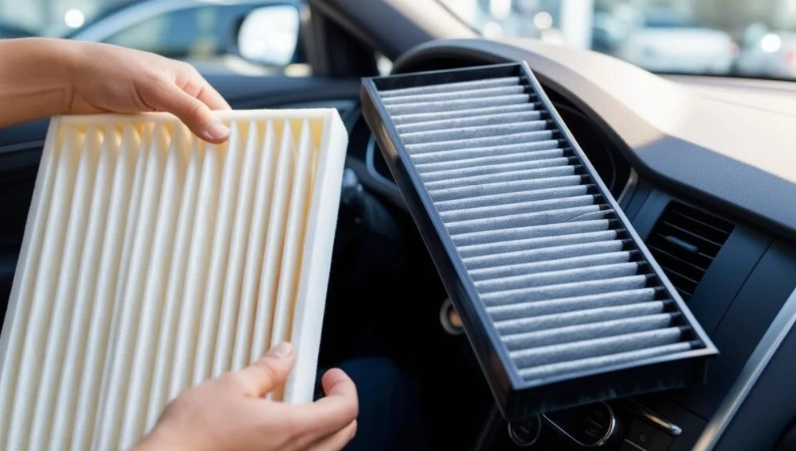
| Driving Condition / Factor | Impact on Filter Life | Recommended Check/Change Interval |
|---|---|---|
| Heavy City Traffic & Stop-and-Go | High exposure to exhaust soot, brake dust, and general urban grime. | Check every 10,000 miles. Change likely by 15,000 miles. |
| Dusty or Rural Roads (dirt roads, construction zones, farmland) | Extremely high particulate load. Filters clog very quickly. | Inspect every 5,000-7,500 miles. Change often, possibly every 10,000-12,000 miles. |
| High-Pollen Areas (Spring/Summer) | Filter can become saturated with pollen, reducing airflow and triggering allergies. | Consider a pre- and post-season check. May need changing seasonally. |
| Humid or Rainy Climate | Promotes mold and mildew growth inside a damp filter. | Stick to the lower end of the time-based interval (e.g., 12 months). |
| Heavy Smoker or Pet Owner (in the car) | Odors and pet dander get trapped and recirculated. | Change every 12-15 months for odor control, regardless of mileage. |
| "Garaged" vs. "Street-Parked" Vehicle | Street parking exposes the intake to more debris and pollution. | Street-parked cars need more frequent changes than garaged ones. |
See what I mean? If you live on a gravel road and have two dogs, your cabin air filter change schedule will look nothing like your cousin's who drives a garaged car on paved highways.
My own car is street-parked in a city with moderate pollen. I've found my sweet spot is around 18,000 miles or 18 months, whichever comes first. By then, I can usually smell a difference.
Stop Guessing: The Tell-Tale Signs Your Filter Needs Changing NOW
Don't wait for a mileage sticker. Your car (and your nose) will give you signals. Here's what to watch—and sniff—for:
- Reduced Airflow: This is the big one. You crank the fan to max, but the force coming out of the vents feels weak. The system is struggling to pull air through the clog.
- Persistent Musty or Moldy Odors: That damp, earthy smell when you first turn on the AC or heat is a classic sign of microbial growth on the filter.
- Increased Noise from the Blower: A whistling or straining sound from the dashboard when the fan is on high can mean air is forcing its way through a blockage.
- More Dust on the Dashboard: If you're wiping down your interior surfaces more often, the filter might be saturated and letting particles through.
- Allergy Symptoms Flare Up in the Car: If your sneezing or itchy eyes get worse during your commute, the filter is likely full of pollen or dust it can no longer trap.
A Quick Warning: Sometimes, a bad smell can also be from mold in the AC evaporator core. If you change the filter and the odor remains, that's a deeper (and more expensive) issue that needs a professional.
Honestly, the best practice is a quick visual check once a year. Which leads us to...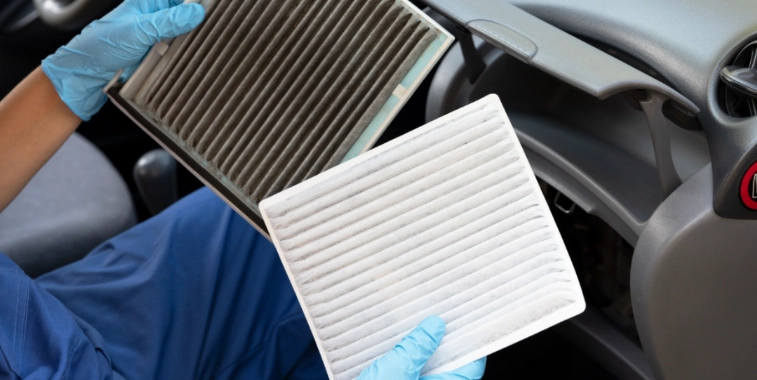
How to Check and Change Your Cabin Air Filter (It's Easier Than You Think)
Most people pay $50-$100 for a mechanic to do this 5-minute job. For many cars, it's shockingly simple. Here's a general guide, but always search for a video specific to your exact car model and year. The location varies wildly.
Step 1: Find the Darn Thing
Common locations include:
- Behind the glove compartment (you usually just squeeze the sides to drop it down).
- Under the dashboard on the passenger side.
- Under the hood, against the firewall near the windshield (often in a rectangular plastic box).
Step 2: The Visual Inspection
Pull the old filter out. Hold it up to a bright light. Can you see light passing through most of it? If it's dark, caked with debris, or you see visible leaves and bugs, it's toast. Compare it to your shiny new one. The difference is always startling.
Step 3: Installation Direction Matters!
This is the most common mistake. There's an airflow direction arrow on the frame of the filter. It must point toward the interior of the car (or in the direction indicated in the housing). Installing it backwards severely reduces its effectiveness. Double-check this.
Pro Tip: While the glove box is down or the housing is open, use a vacuum with a crevice tool to clean out any leaves or debris sitting in the filter chamber. It's a free extra step that makes a difference.
If your filter is in a tough spot under the hood and requires tools, don't be a hero if you're not comfortable. Knowing when to call it is smart. But for the 70% of cars with an easy-access design, doing it yourself is a no-brainer.
Choosing the Right Replacement Filter: Charcoal vs. Standard
You'll see two main types:
- Standard Particulate Filter: The basic one. It traps dust, pollen, and particles. Does the main job well and is usually cheaper.
- Activated Carbon (Charcoal) Filter: This has a layer of activated charcoal embedded in it. In addition to particles, it absorbs odors, gases, and some smog-related pollutants like ozone.
Is the charcoal worth it? In my experience, if you drive in heavy traffic (for fumes), live in a smoggy area, or want to minimize food or smoke odors, yes, it's a noticeable upgrade. If you mostly drive on open highways in clean air, the standard filter is perfectly fine. I spring for the charcoal one because of my city driving, and I do think it helps with that exhaust smell in traffic jams.
Your Top Questions About Cabin Air Filter Change Intervals, Answered
The Bottom Line: Your Personal Cabin Air Filter Schedule
So, after all this, how often should I change my cabin air filter? Forget the single number.
Start with your manual's suggestion. Then, adjust it downward based on your driving environment from the table above. Make a habit of a yearly visual check. And finally, let your senses be your guide—if the air smells off or feels weak, don't wait.
Changing it is a minor task with major benefits for your comfort, your health, and your car's HVAC system. It's one of those little pieces of knowledge that makes you a smarter car owner. You stop guessing and start knowing.
And hey, if you haven't checked yours in a while, maybe make this weekend the time. You might be surprised by what you find. I know I always am.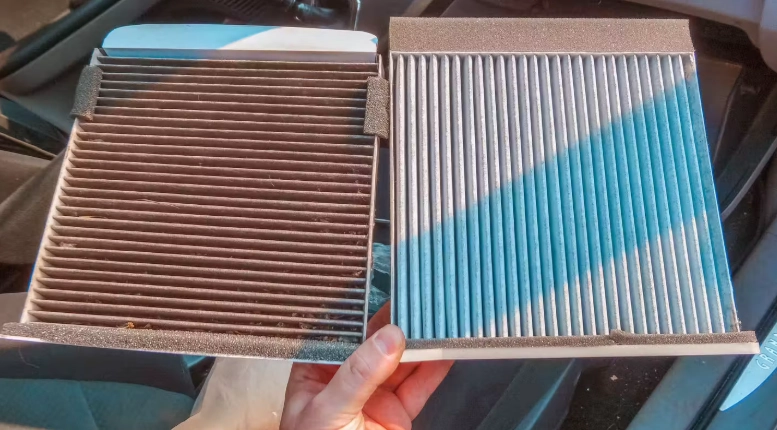
It's a small thing.
But it's your air. Breathe easy.