In This Guide
That high-pitched squeal when you start your car on a cold morning. The chirping sound that seems to get louder when you turn on the air conditioning. If you're hearing these noises, there's a good chance your car's serpentine belt is crying for attention. I remember ignoring a similar squeak in my old sedan for weeks, thinking it was just a passing thing, until one day the battery light came on and the steering got heavy—the belt had finally given up. Not a fun experience on a busy highway, I can tell you that.
Unlike the old days of multiple V-belts, most modern cars use a single, long, snaking belt called the serpentine belt (or drive belt) to power nearly all the engine's accessories. It's a workhorse, but it's also a wear item. Knowing when and how to deal with a serpentine belt replacement can save you from a sudden breakdown and some hefty repair bills.
What Does a Serpentine Belt Do, and How Do You Know It's Failing?
Let's get the basics out of the way. The serpentine belt is driven by the engine's crankshaft pulley. As it spins, it loops around and turns the pulleys for the:
- Alternator (charges the battery)
- Power Steering Pump (makes steering easy)
- Water Pump (circulates coolant to prevent overheating)
- Air Conditioning Compressor (cools the cabin)
- Sometimes the Air Pump or other accessories
It's under constant tension and deals with heat, friction, and chemical exposure. Over time, it wears out. Here’s how it tells you it's on its last legs. These are the classic serpentine belt replacement symptoms you shouldn't ignore.
Listen Up: The Sounds of a Dying Belt
Squealing or chirping, especially on startup, is the most common sign. This usually points to a loss of tension—the belt is slipping on the pulleys. The noise might go away after a few minutes as the belt warms up and grips better, but the problem is still there.
A constant squeal when using a high-load accessory like the AC or power steering (like when turning the wheel while parked) is another dead giveaway.
Take a Look: The Visual Check
Pop the hood. Find the belt (it's the long, ribbed one on the front/side of the engine). Look for:
- Cracks: Small, perpendicular cracks on the ribbed side are normal with age. But if you see deep cracks, chunks missing, or the belt looks “glazed” (shiny and smooth), it's time.
- Fraying or Separation: If the ribs are peeling off or you see threads (the belt's internal cords) poking out, don't wait. This belt could snap any moment.
- Missing Ribs: This one's obvious. If a section of the ribbed pattern is gone, the belt can't grip properly.
Feel the Problems: Performance Issues
The belt doesn't just make noise; its failure causes system failures.
If your power steering suddenly becomes very hard to turn, the belt may have slipped off the power steering pump pulley. A flickering or dimming dashboard battery light means the alternator isn't charging properly, often due to belt slip. Worst of all, if your temperature gauge starts climbing toward the red, the water pump has stopped—this is an immediate stop-the-car emergency to prevent engine damage. All of these can be the direct consequence of a failed serpentine belt.
So you've diagnosed a bad belt. Now comes the big question.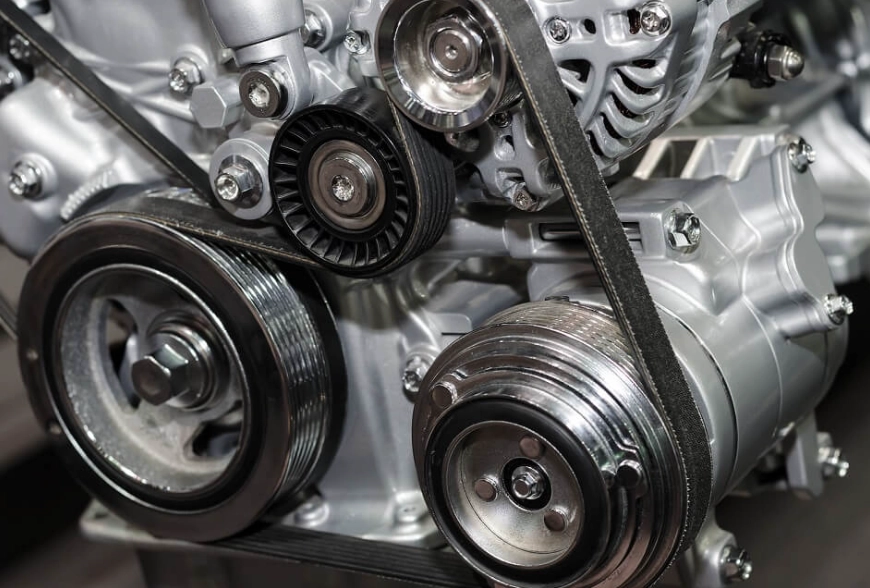
Should You Do the Serpentine Belt Replacement Yourself?
This is where opinions split. A serpentine belt replacement can be one of the easier DIY jobs... or a complete nightmare, depending entirely on your car. Let's break down the reality, not the hype.
The job itself is straightforward in theory: release tension, route the old belt off, route the new belt on following the diagram, reapply tension. The challenge is 100% in access.
The Good (DIY-Friendly Cars)
Many front-wheel-drive cars with transverse-mounted 4-cylinder engines have the belt right at the front of the engine bay. The tensioner is often easy to reach with a standard ratchet and socket. On my old Honda Civic, it was a 15-minute job. You might need to remove a plastic engine cover or an air intake tube, but that's usually it.
The Bad (The “Why Did They Design It This Way?” Cars)
This is where I've thrown my share of wrenches (not literally, but close). Some cars bury the belt deep in the engine bay. You might need to:
- Remove the front right wheel and the inner fender liner.
- Work from underneath the car on ramps or jack stands.
- Contort your arm around sharp brackets and hot components.
- Use a special, long, thin tool just to reach the tensioner pulley bolt.
If your car falls into this category, the frustration level and risk of injury (burning yourself on a hot engine part, pinching your hand) skyrocket. For these, paying for a professional serpentine belt replacement starts to look like a bargain for your sanity and skin.
Tools You'll Absolutely Need
If you decide to DIY, you'll need more than just the belt.
| Tool / Part | Purpose & Notes |
|---|---|
| New Serpentine Belt | Match the part number to your exact car's make, model, and engine. Don't guess. Auto parts stores can look it up. |
| Ratchet & Socket Set | Usually a 1/2" drive ratchet with a deep socket (common sizes: 14mm, 15mm, 3/8") to fit the tensioner pulley bolt. |
| Breaker Bar or Long Wrench | Often needed for extra leverage to move the stiff spring in the tensioner. |
| Serpentine Belt Tool | A lifesaver on tight engines. It's a long metal bar with a socket head, giving you reach and leverage. |
| Flashlight | To see the routing diagram (usually on a sticker in the engine bay) and to check belt alignment. |
| Gloves & Safety Glasses | Protect your hands from grease and sharp edges, and your eyes from debris. |
Some mechanics also recommend replacing the tensioner and idler pulleys at the same time, especially if the car has high mileage. A worn bearing in a pulley can destroy a new belt quickly. It adds to the cost and complexity but is often considered best practice.
The Step-by-Step DIY Serpentine Belt Replacement Process
Alright, you've got the tools, the new belt, and you've determined your car is accessible. Let's walk through it. Remember, your car's specific routing diagram is law—follow it exactly.
Step 1: Preparation and Diagram
Park on a level surface, set the parking brake, and let the engine cool completely. Open the hood and locate the serpentine belt routing diagram. It's often on the radiator support, strut tower, or fan shroud. No diagram? Take a picture with your phone before you remove anything. Draw a simple sketch if you have to. This is the most crucial step. Getting the routing wrong can lead to instant belt destruction or accessory damage.
Step 2: Releasing the Tension
Find the automatic tensioner pulley. It's usually the one that isn't directly attached to an accessory (alternator, pump, etc.). There will be a square hole or a bolt head in the center of the pulley. Insert your ratchet/socket or special tool and rotate it firmly in the direction indicated on the tensioner (often a directional arrow). You'll feel the spring tension release, creating slack in the belt.
Hold it there.
Step 3: Removing the Old Belt
With the tension off, carefully slip the old belt off one of the accessory pulleys (usually the easiest one to access, like the alternator). Then work it off the remaining pulleys and the tensioner. Don't let the tensioner snap back yet. Take the old belt out.
Step 4: Installing the New Belt
Route the new belt according to your diagram or photo. Start by getting it seated on all the main accessory pulleys first. The last step is to slip it onto the tensioner pulley. Double-check every single groove is seated perfectly on every single pulley rib. A single rib off-track will cause a failure in seconds.
Step 5: Releasing the Tensioner and Final Check
Slowly release the pressure on your tensioner tool. The spring will pull the tensioner back, taking up the slack and applying the correct tension to the new belt. Give the belt a visual once-over. Then, start the engine (with the hood still open and clear of tools) and let it run for a minute. Listen for any squeals. Turn on the AC and turn the steering wheel lock-to-lock. If all is quiet, you've successfully completed your serpentine belt replacement.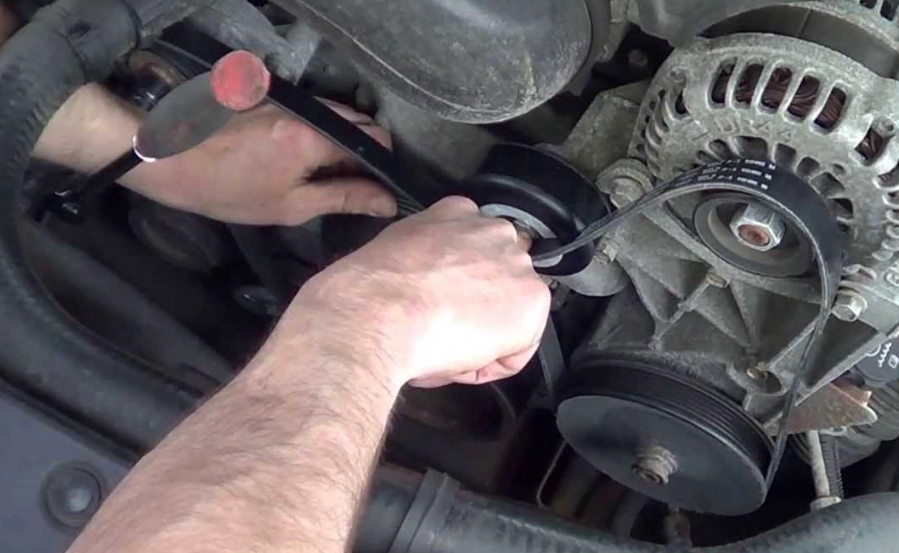
When to Hand It Over: Finding a Pro for Serpentine Belt Replacement
If the DIY route looks too tight, too dirty, or just too intimidating, there's zero shame in hiring a professional. In fact, for many people, it's the smarter choice. The key is finding a good one.
Searching for "serpentine belt replacement near me" will flood you with options. How do you choose?
What Should a Professional Serpentine Belt Replacement Cost?
The total serpentine belt replacement cost has two parts: parts and labor. The belt itself is usually $25-$80. Labor is the big variable.
- Simple Job (easy access): 0.5 to 1.0 hours of labor. Total cost: $150 - $300.
- Complex Job (requires wheel/fender removal): 1.5 to 2.5+ hours of labor. Total cost: $250 - $500+.
Always ask for an estimate that includes the belt, any recommended pulleys (tensioner/idler), and labor as a total price. A surprisingly low quote might mean they're using a cheap, off-brand belt.
How to Vet a Mechanic or Shop
Don't just pick the first result. Look for shops with strong, detailed online reviews that specifically mention belt work, honesty, and clear communication. Independent mechanics often provide better value than dealerships for this specific job. Call them. Ask if they inspect the tensioner and idler pulleys for wear as part of the service. A good shop will recommend replacement if they feel play or roughness in the bearings, and explain why.
For authoritative guidance on vehicle maintenance schedules and safety, you can refer to resources from the National Highway Traffic Safety Administration (NHTSA), which sometimes issues maintenance-related consumer advisories. While they don't specify belt intervals, they emphasize the importance of following manufacturer maintenance to prevent failures. Furthermore, the American Automobile Association (AAA) provides extensive car care guides and can help you find approved repair facilities, adding a layer of trust to your search.
Once the job is done, whether by you or a pro, you're not quite finished.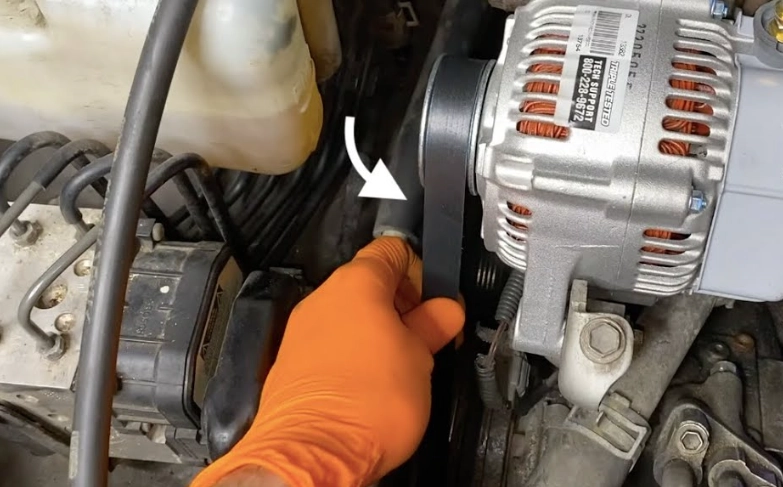
Post-Replacement: What to Expect and Check
A new belt should be silent. The annoying squeals and chirps are gone. Your accessories should work perfectly. But it's wise to do a quick follow-up check after about 100 miles of driving.
Pop the hood again and visually inspect the belt. It should still be sitting perfectly on all pulleys with no signs of fraying or misalignment. Listen for any new noises. Sometimes a new belt needs a very short “break-in” period where a minor noise disappears, but it shouldn't be loud or persistent.
Your Serpentine Belt Replacement Questions, Answered

So, there you have it. From the first suspicious squeak to the final turn of the tensioner, dealing with a serpentine belt replacement is a manageable part of car ownership. The key is not to ignore the early warnings. Whether you grab your toolbox or your phone to call a trusted mechanic, addressing it proactively is always cheaper and less stressful than waiting for it to strand you. Trust me, I learned that one the hard way.
Your car's serpentine belt is a simple part with a critical job. Giving it the attention it deserves is one of the easiest ways to ensure your next drive is a smooth and quiet one.