In This Guide
Let's be real. When I first started looking at electric cars, the whole charging thing seemed like a secret club with its own language. Level 2, DC fast charging, kilowatt-hours, connectors that look like they're from a sci-fi movie... it was overwhelming. I spent hours piecing information together from forum posts and confusing manufacturer websites.
Now, after living with an EV for a few years and helping several friends make the switch, I want to lay it all out for you in plain English. No jargon, no hype, just the practical stuff you need to know. Because understanding electric car charging is the single most important part of EV ownership, way more than 0-60 times or how many screens the car has.
If you're thinking about an EV, or you just got one and feel a bit lost, this is for you.
The Three Flavors of Electric Car Charging: Slow, Fast, and "Give Me Coffee Now"
This is the core of it all. Think of charging speeds like internet connections: dial-up, broadband, and fiber. They all get you online, but the experience is wildly different.
Level 1 Charging: The Overnight Tortoise
Every electric car comes with a Level 1 charger. It's a cord you plug into a standard 120-volt household outlet, the same one you use for a lamp or your phone charger. It's painfully slow. We're talking about adding 3 to 5 miles of range per hour of charging.
Is it useless? Not at all. If you have a plug-in hybrid with a small battery (like 20-40 miles of electric range) and you drive less than 30 miles a day, this might be all you ever need. Plug in when you get home, and you're full by morning.
But for a full battery-electric car? Forget it. Trying to recharge a 300-mile battery from empty on Level 1 would take days. I tried it once when my Level 2 charger was being installed. It felt like watching grass grow. For most EV owners, Level 1 is a last-resort backup, not a primary solution.
Level 2 Charging: The Home Base Hero
This is where life gets good. Level 2 charging uses a 240-volt circuit, like what your dryer or oven uses. It's the upgrade that makes daily EV ownership seamless. Speeds range from about 12 to 60 miles of range added per hour, depending on your car and the charger's power.
Most people get a Level 2 station installed at home. You plug in at night, and every morning you have a "full tank." It completely changes the game. Range anxiety? What's that? You start every day with 200, 300, or 400 miles ready to go.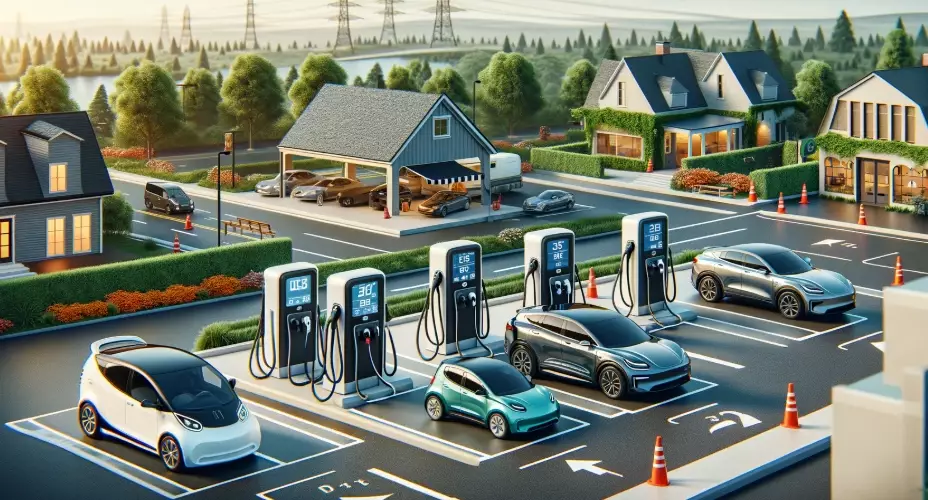
Public charging stations at workplaces, shopping malls, and parking garages are also mostly Level 2. They're perfect for topping up while you're busy doing something else for a few hours.
DC Fast Charging (Level 3): The Road Trip Lifeline
This is the gas station equivalent. DC fast chargers (DCFC) pump high-voltage direct current straight into your battery, bypassing the car's onboard converter. They're fast. We're talking about adding 100-200 miles of range in 15-30 minutes.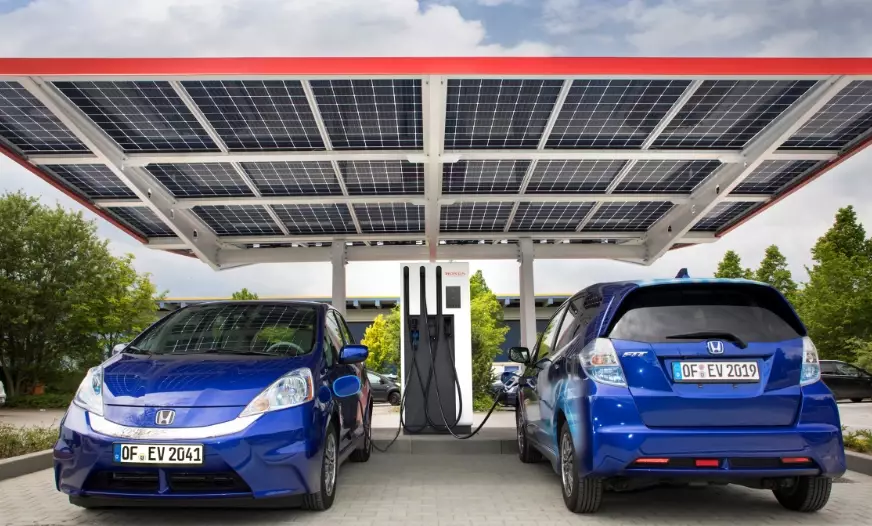
You'll find these along highways, at rest stops, and sometimes in city centers. They're not for daily use—it's more expensive than home charging, and frequent super-fast charging isn't ideal for long-term battery health. Their sole purpose is to enable long-distance travel.
Here's the thing that confused me at first: not all EVs can use all fast chargers at their maximum speed. Your car has a maximum acceptance rate. If your car tops out at 50 kW, plugging into a 350 kW charger won't make it charge any faster. It's like trying to fill a small hose from a fire hydrant.
| Charging Type | Voltage / Power | Typical Location | Miles Added Per Hour | Best For... |
|---|---|---|---|---|
| Level 1 | 120V AC / 1.4-1.9 kW | Any standard wall outlet | 3-5 miles | Plug-in hybrids, very low daily mileage, emergency backup |
| Level 2 | 240V AC / 3.7-19.2 kW | Home, work, shopping centers | 12-60 miles | Daily charging for all EVs, overnight fills, destination charging |
| DC Fast Charging | 400-900V DC / 50-350 kW | Highway corridors, select public hubs | 100-300 miles in 15-30 mins | Long road trips, quick mid-journey top-ups |
Getting a Home Charger: The Real-World Process and Costs
This is where most of your questions probably are. Let's break it down, because the salesperson at the dealership often glosses over the details.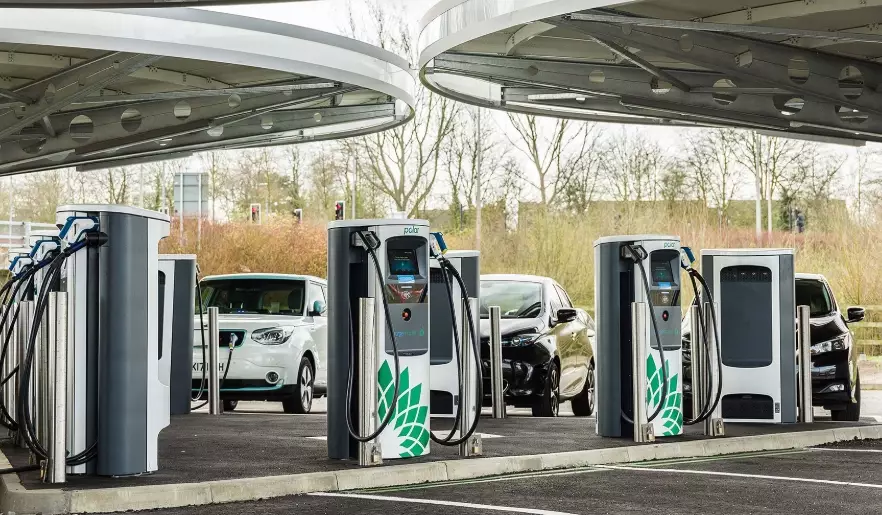
The Hardware: Buying the Charging Station
You need to buy the actual charging unit (often called EVSE - Electric Vehicle Supply Equipment). Prices range from about $400 to $700 for a good, smart Wi-Fi-enabled Level 2 charger. Brands like ChargePoint, Grizzl-E, and JuiceBox are popular. Some carmakers sell their own, but they're often just rebranded versions of these.
What do you get for the money? A faster, more reliable charge than the mobile charger that comes with the car. Smart features like scheduling (charge when electricity is cheap), usage tracking, and sometimes integration with your utility company for rewards.
The Installation: Hiring an Electrician
This is usually the bigger cost. You need a licensed electrician to run a new 240-volt circuit from your electrical panel to your garage or driveway. The price depends entirely on the distance and complexity.
- Simple job (Panel in the garage, charger right next to it): Maybe $300-$600.
- Moderate job (Panel on the other side of the house, need to run conduit through a crawlspace): $800-$1,500.
- Complex job (Old panel needs an upgrade to support the new load): $1,500-$3,000+.
You must get multiple quotes. I got three, and they varied by almost $1000 for the same job. Also, ask if they have experience installing EV chargers specifically. It matters.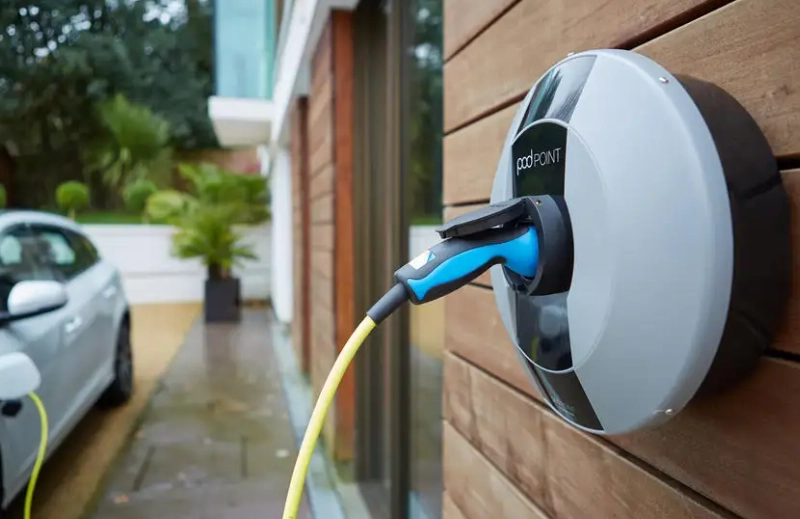
Incentives and Rebates: Free Money!
This is the good news. Many states, local utilities, and even the federal government offer rebates or tax credits to offset the cost. For example, the U.S. federal government offers a tax credit for 30% of the cost of the charger and installation, up to $1,000 (check the latest rules on the IRS website). My local utility gave me a $500 rebate. Always, always check with your utility company first.
You can often find a database of state and local incentives on the U.S. Department of Energy's Alternative Fuels Data Center website. It's a fantastic resource.
The Wild World of Public Electric Car Charging
Okay, home charging is sorted. But what about when you're out and about? This ecosystem is growing fast, but it's still a bit of a mess with different networks and payment systems.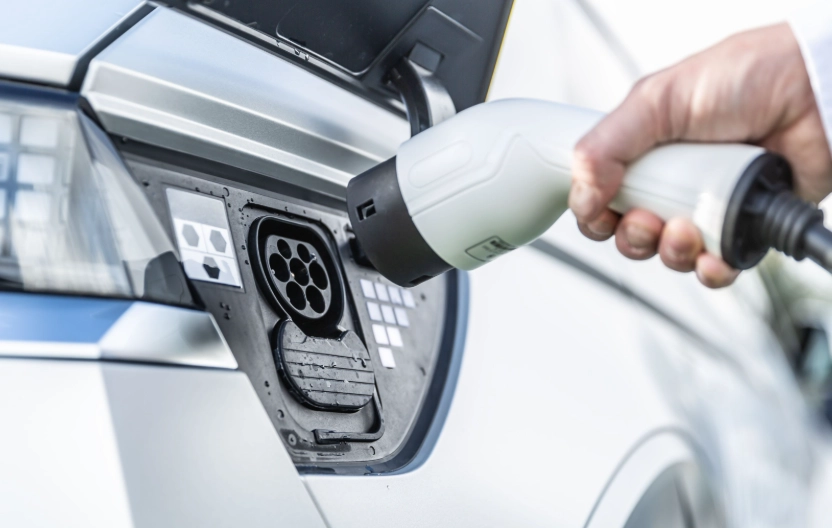
The Major Players and Apps
You'll need a few apps on your phone. Unlike gas stations, you can't just roll up and pay with a credit card at many spots (though this is improving).
- Electrify America: The largest open DC fast charging network in the US, built as part of the Volkswagen diesel settlement. They have high-power chargers (150-350 kW) all over the highway system.
- EVgo: Another major player with both fast and Level 2 chargers, often in urban and suburban locations.
- ChargePoint: The world's largest network, but they mostly operate Level 2 chargers. They're everywhere—at grocery stores, hotels, offices. You'll use this app a lot for destination charging.
- Tesla Supercharger: The gold standard for reliability and ease of use, but historically only for Teslas. This is changing! Tesla is now opening many of its Superchargers to non-Tesla EVs. This is a huge deal for public electric car charging access.
My advice? Download the apps for Electrify America, EVgo, and ChargePoint. Set up an account and add a payment method before you need them. The last thing you want on a road trip is to be fiddling with account setup in a parking lot with 10% battery.
Payment and Pricing: It's Confusing
Pricing models are all over the place. Some charge by the minute, some by the kilowatt-hour (kWh), and some have a hybrid model. This often depends on state regulations.
Generally, public Level 2 charging is relatively cheap, sometimes even free (at hotels or stores trying to attract customers). DC fast charging is more expensive—often 2-4 times the cost of home electricity. You're paying for the speed and convenience. For a long trip, expect to pay roughly what you would for gas in an efficient hybrid car, but never more than a gas-guzzler.
Answering the Big Questions (The Stuff You're Actually Worried About)
Let's tackle the common fears and curiosities head-on.
This is the best part. Let's do the math with real numbers. The national average for electricity is about 16 cents per kWh. My car has a 75 kWh battery.
- Full charge at home: 75 kWh x $0.16 = $12.00 for about 300 miles of range.
- Cost per mile: $12.00 / 300 miles = 4 cents per mile.
Now compare that to a gas car getting 30 MPG with gas at $3.60/gallon. That's 12 cents per mile. I'm saving 8 cents per mile. On 12,000 miles a year, that's $960 in fuel savings. It adds up fast, and that's before considering much lower maintenance costs (no oil changes, fewer brake jobs due to regen braking).
This is a valid concern. Lithium-ion batteries don't like extreme heat or being constantly charged to 100%. Fast charging generates more heat than slow charging.
The consensus from battery experts and long-term data (like from studies by firms like Geotab) is clear: Using DC fast charging as your primary method will accelerate degradation slightly. But using it occasionally for road trips? The impact is minimal. Modern battery management systems are very good at protecting the pack.
The bigger tips for battery longevity are simple: don't charge to 100% every day unless you need it (set the limit to 80-90%), and try not to let it sit at a very low or very high state of charge for long periods. Your car's manual will have specific guidance.
Yes. But it requires a different mindset than a gas car trip. You don't drive until empty and then look for a station. You plan your stops around charging hubs, often near amenities like restaurants or shopping.
Apps like A Better Routeplanner (ABRP) are magic. You tell it your car model, starting charge, and destination. It plots the optimal route, telling you exactly where to stop, for how long, and what you'll have when you leave. It turns a source of anxiety into a solved math problem.
The stops are longer—20-40 minutes instead of 5. But you know what? I've come to enjoy them. It forces a break. Get a coffee, walk the dog, check emails. You arrive less fatigued. For a 500-mile trip, you might add 60-90 minutes of charging time compared to a gas car. For me, the trade-off in fuel cost savings and a more relaxed pace is worth it.
This is the most annoying part of the whole EV world. In North America, there are three main types:
- J1772: The standard plug for all Level 1 and Level 2 charging. Every non-Tesla EV in the US uses this. Teslas come with an adapter.
- CCS (Combined Charging System): This is the J1772 plug with two extra big pins on the bottom. It's the standard for DC Fast Charging for all non-Tesla EVs. If you see a public fast charger, it's almost certainly a CCS plug.
- NACS (North American Charging Standard): This is Tesla's plug. It's sleeker and combines AC and DC charging into one connector. Here's the huge news: almost every major automaker (Ford, GM, Rivian, Volvo, etc.) has announced they are switching to the NACS port in their new cars starting around 2025. Why? Because they want access to Tesla's superior Supercharger network. This is a massive step towards simplifying the public electric car charging experience.
For now, if you buy a non-Tesla, it will have a CCS port. You'll use CCS for fast charging and J1772 for Level 2. If you buy a Tesla, it uses NACS. With an adapter, a Tesla can use CCS and J1772 stations. Soon, with an adapter, a CCS car will be able to use many NACS (Tesla) stations. The future is (thankfully) moving towards one dominant plug.
The Bottom Line: Is It All Worth It?
Let's cut to the chase. After all this talk about amps, volts, connectors, and apps—is dealing with electric car charging worth ditching the gas pump?
For me, absolutely. The convenience of waking up to a full charge every single day outweighs any occasional hassle on a road trip. The fuel savings are real and substantial. The driving experience is smoother and quieter.
But it's not for everyone yet. If you...
- Live in an apartment or condo without dedicated parking and charging access.
- Take frequent, spontaneous, very long drives (think sales rep covering rural areas all day).
- Just really, really hate planning ahead for the handful of road trips you take each year.
...then an EV might be more frustration than it's worth right now. The infrastructure is growing exponentially, but it's not quite everywhere for everyone.
For the vast majority of people who have a house, a driveway or garage, and drive less than 100 miles on a typical day? It's a no-brainer. The electric car charging ecosystem, centered on a home Level 2 station, is not just adequate—it's superior to the gas station ritual. You fuel up where your car sleeps. It's one less errand in your life.
The public network is the safety net, and it's getting stronger and more reliable every month. The move towards a single plug standard (NACS) and the opening of Tesla's network are game-changers. The days of charging being a confusing hurdle are rapidly coming to an end.
So, take a deep breath. It looks complicated from the outside, but once you're in, it just... works. Start by figuring out your home charging situation. Everything else flows from there.