Quick Navigation
- Why Bother? The Real Job of Your Fuel Filter
- Is It Time? Top Signs You Need a New Fuel Filter
- When Should You Actually Replace It? The Schedule vs. Reality
- The Big Decision: DIY Fuel Filter Replacement or Hire a Pro?
- A Step-by-Step Walkthrough for a Typical Inline Filter Replacement
- What's This Going to Cost Me?
- After the Swap: What Changes Should You Feel?
- Clearing the Air: Your Fuel Filter Questions Answered
- Wrapping It Up: Don't Wait for the Sputter
Let's talk about something most of us ignore until it's too late. You change your oil, you rotate your tires, maybe you even check your air filter. But the fuel filter? Out of sight, out of mind. I get it. It's a small part tucked away somewhere in the fuel line or the tank. It doesn't make any noise when it's working right. But when it starts to fail, boy, does it make its presence known in all the wrong ways.
I remember helping a friend whose truck would just die at random intersections. We checked everything – battery, spark plugs, you name it. After a weekend of frustration and a lot of coffee, we finally swapped out the old fuel filter. The thing was practically clogged shut with gunk. The truck ran like new. That was the moment I stopped taking this little component for granted.
So, what's the big deal? A fuel filter replacement is one of those preventative maintenance jobs that can save you a world of headache and a ton of money down the road. It's not just about keeping your engine running; it's about protecting expensive parts like your fuel injectors and fuel pump from premature death. This guide is going to walk you through everything – why it matters, how to know when it's time, whether you should tackle it yourself, and what to expect afterwards.
Why Bother? The Real Job of Your Fuel Filter
Think of your fuel filter as the bouncer at the exclusive club that is your engine's combustion chamber. Its one job is to keep the riff-raff out. Modern fuel, even from reputable stations, isn't perfectly clean. Over time, microscopic particles of rust (from the gas station's tanks or your own car's tank), dirt, and other debris can find their way into your fuel system. The fuel filter traps this junk before it can reach the precision parts of your engine.
Without a functioning filter, that gunk flows straight towards your fuel injectors. These are the components that spray a fine, atomized mist of fuel into your cylinders. The holes in these injectors are incredibly tiny. A small piece of debris is all it takes to clog one, leading to a misfire, rough idle, and poor fuel economy. Let it go long enough, and you could be looking at a fuel pump failure, which is a much more involved and expensive repair than a simple fuel filter replacement.
It's a classic case of a small, inexpensive part protecting much larger, costly ones. Neglecting it is a false economy.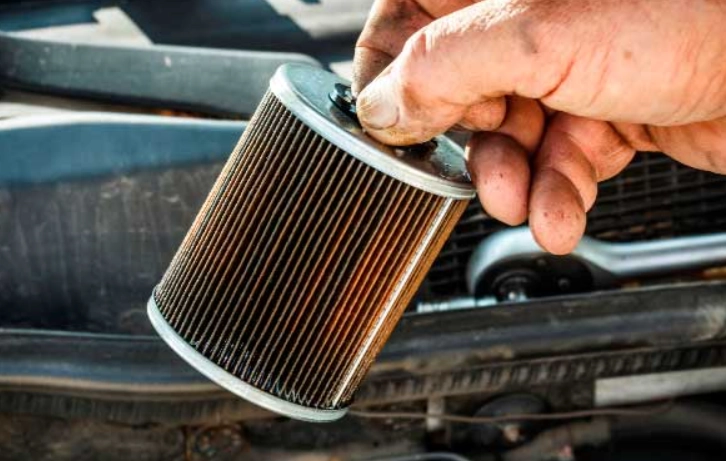
Is It Time? Top Signs You Need a New Fuel Filter
Cars don't usually have a dashboard light that says "Change Fuel Filter." You have to listen to what the car is telling you. The symptoms can be subtle at first, then become impossible to ignore. Here are the big ones:
Your Car is Hard to Start (Especially When Warm)
This is a classic. You turn the key, the engine cranks and cranks, but it just won't fire up. A severely restricted filter can't let enough fuel through to start the engine, especially when the engine is warm and needs a richer mixture. It might start fine when cold but throw a fit after a trip to the grocery store.
It Hesitates or Stumbles During Acceleration
You step on the gas to merge onto the highway or pass someone, and instead of a smooth surge of power, the car feels like it's choking. It might hesitate, stumble, or even jerk. This happens because when you demand more fuel (accelerating), the clogged filter can't supply it fast enough. The engine starves for a split second. It's not just annoying; it can be dangerous in traffic.
Rough Idle or Frequent Stalling
Your car should idle smoothly, like a quiet purr. If it feels rough, shaky, or the RPMs dip erratically at a stoplight, a dirty fuel filter could be the culprit. In severe cases, the engine might just stall out completely when idling because it's not getting a consistent fuel supply.
A Noticeable Drop in Fuel Economy
This one sneaks up on you. You might notice you're filling up more often for your usual commute. A clogged filter messes with the air-fuel ratio. The engine's computer tries to compensate, often leading to an inefficient burn and wasted gas. It's not the most common symptom, but it's a possible one.
Honestly, waiting for symptoms is a reactive strategy. A better approach is to be proactive.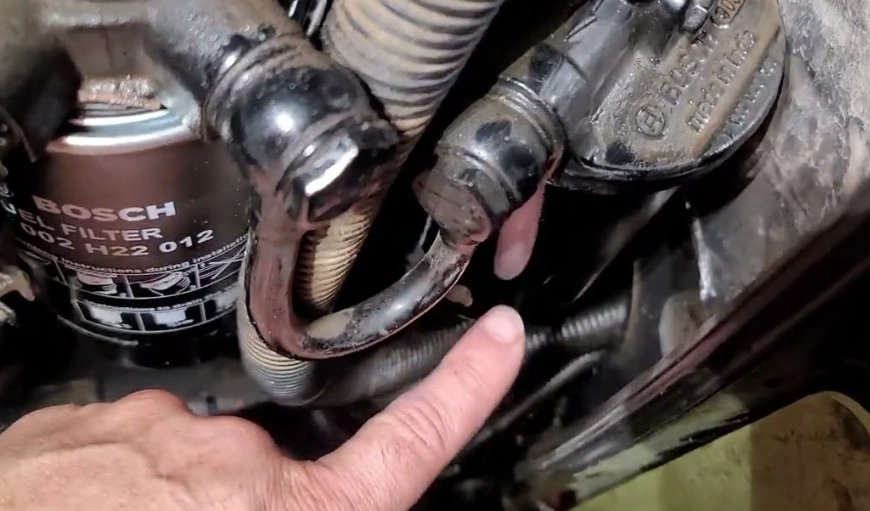
When Should You Actually Replace It? The Schedule vs. Reality
Open your car's owner's manual. It will have a maintenance schedule, and somewhere in there, you'll find a recommendation for fuel filter service. For most modern cars, it's usually somewhere between 30,000 and 60,000 miles.
But here's the thing I've learned from talking to mechanics: that interval is a best-case scenario. It assumes you always buy clean, high-quality fuel from top-tier stations. Real life is messier.
- You frequently buy gas from stations that look... questionable. You know the ones.
- You've accidentally put contaminated fuel in the tank.
- Your car is older, and there's a chance of rust flaking off from inside the fuel tank itself.
- You do a lot of stop-and-go city driving, which puts more cyclic stress on the fuel system.
I tend to lean towards the conservative side. For me, 30,000 miles is a good mental checkpoint. It's a manageable interval that prevents problems before they start. Replacing a $30 filter is always cheaper than fixing a $300 fuel pump.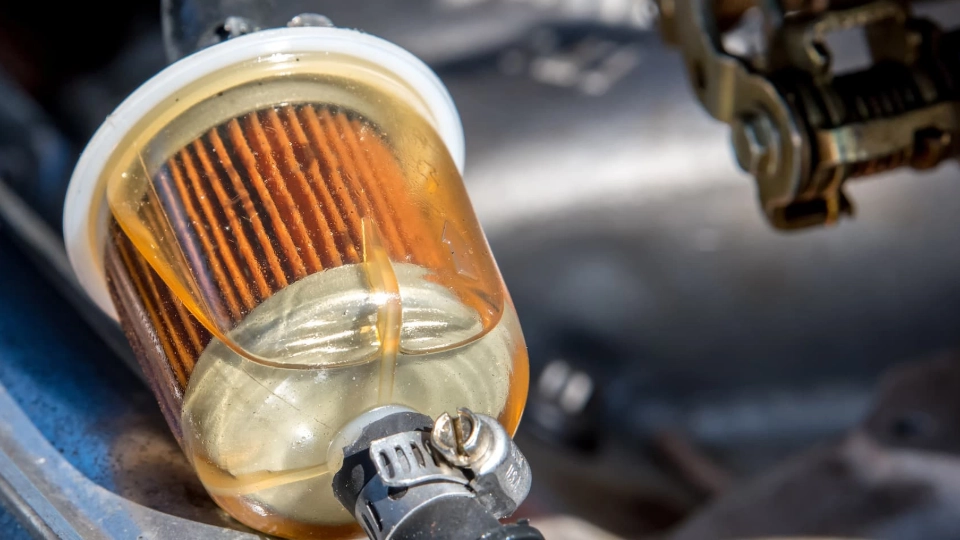
The Big Decision: DIY Fuel Filter Replacement or Hire a Pro?
This is where many people get stuck. Is this a job you can do in your driveway on a Saturday afternoon? The answer is a firm... maybe. It depends almost entirely on your car.
The difficulty of a fuel filter replacement varies wildly. On some older cars with carburetors or early fuel injection, the filter is an inline canister mounted right along the frame rail, easily accessible. On many modern vehicles, however, the filter is part of the fuel pump assembly, located inside the fuel tank. That job involves dropping the fuel tank, which is a whole different ball game.
| Factor | DIY Route | Professional Mechanic Route |
|---|---|---|
| Cost | Low. You pay for the part ($15-$50) and maybe some basic tools. | Higher. Parts plus labor ($100-$300+ total), depending on location. |
| Time & Convenience | Can take 30 mins to several hours. Requires planning, tools, and a workspace. | Drop it off, pick it up. Usually done in under an hour for simple jobs. |
| Skill Level Required | Moderate for inline filters. You need basic mechanical aptitude, ability to follow instructions, and respect for fuel system safety. | None required from you. The mechanic has the training and experience. |
| Risk & Safety | HIGH. You're working with flammable fuel under pressure. Risk of fire, injury, or causing a fuel leak if done incorrectly. | Low for you. The shop assumes liability and has proper safety equipment. |
| Tool Requirement | Specific wrenches, line disconnect tools, safety glasses, fire extinguisher nearby. | None for you. Shop has a full toolset and lifts. |
| Best For... | Inline filters on older/ simpler vehicles. Hands-on hobbyists with a safe workspace. | In-tank filters, luxury/complex vehicles, or anyone uncomfortable with fuel system work. |
My personal rule?
If the filter is an inline type under the car or in the engine bay, and I can find a clear tutorial for my specific make and model, I'll consider doing it myself. But if the manual says it's part of the fuel pump module in the tank, I'm calling my mechanic. That job involves dealing with fuel tank seals, electrical connectors, and a high likelihood of breaking delicate plastic parts. The potential savings aren't worth the headache and risk of creating a bigger problem for me.
A Step-by-Step Walkthrough for a Typical Inline Filter Replacement
Let's say you've decided to tackle an inline filter. Here's a general overview of what you're in for. This is not a substitute for your vehicle's specific repair manual. Always, always consult the manual or a reliable source for your exact car.
Step 1: Safety First (No, Really)
This isn't like changing a headlight. Fuel is dangerous. Work in a well-ventilated area, outdoors is best. Have a Class B fire extinguisher within reach. Don't smoke, and keep any open flames or sparks far away. Relieve the fuel system pressure before you disconnect anything (usually by pulling the fuel pump fuse and running the engine until it dies). Wear safety glasses.
Step 2: Locate and Access the Filter
The filter is usually a cylindrical metal or plastic component somewhere along the fuel line, running from the tank to the engine. Common spots are under the car along the frame rail, or in the engine bay. You might need to remove plastic underbody panels or other components to get to it.
Step 3: Disconnect the Fuel Lines
This is the trickiest part. Most modern cars use quick-connect fittings. You'll need a special plastic tool (a few dollars at any auto parts store) to depress the tabs inside the fitting to release the line. Do not just pry at it with a screwdriver—you'll break it. Have a small container and rags ready, as some fuel will spill out.
Step 4: Remove the Old Filter and Install the New One
The filter is often held by a bracket with a clamp or bolt. Note the direction of flow – there's usually an arrow on the filter housing pointing towards the engine. This is critical. Installing it backwards will block fuel flow completely. Transfer any brackets or clips from the old filter to the new one. Make sure the new filter's connections are clean.
Step 5: Reconnect Everything and Test
Push the fuel lines onto the new filter until they click securely. Reinstall any brackets or shields you removed. Reinstall the fuel pump fuse. Turn the key to the "ON" position (but don't start the engine) for a few seconds, then off, then on again. This primes the system and builds pressure. Listen for the fuel pump humming and check for leaks at the connections. If all looks good, start the engine. It might crank a little longer than usual as the system primes fully. Let it idle and check again for leaks.
See? For an inline job, it's straightforward but demands respect for the process. The first time I did one, I spent more time psyching myself up about the fuel lines than actually doing the work.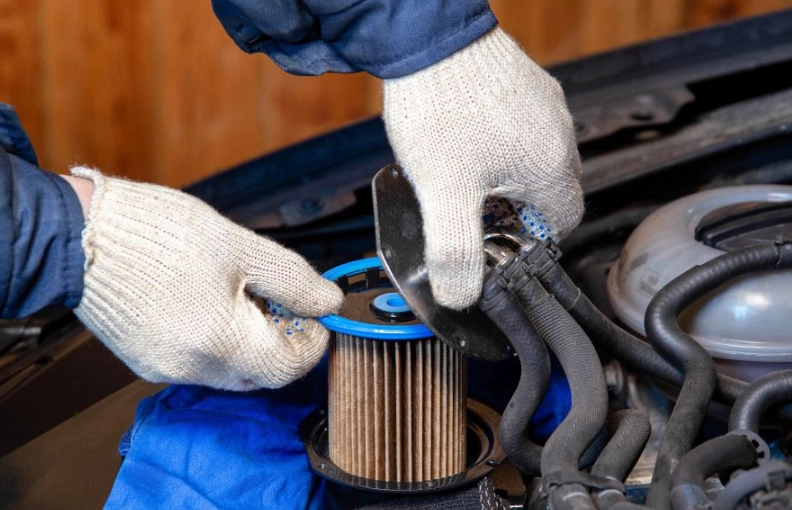
What's This Going to Cost Me?
Let's break down the fuel filter replacement cost, because that's usually the next question.
The Part Itself: This is the easy part. A basic inline fuel filter typically costs between $15 and $50. High-performance filters or OEM (Original Equipment Manufacturer) parts from the dealer will be on the higher end. An entire fuel pump module with an integrated filter (for in-tank jobs) can range from $150 to $500 or more, depending on the vehicle.
Labor Costs: This is where the variance happens. For a simple inline filter replacement, a shop might charge 0.5 to 1.0 hours of labor. At a rate of $100-$150 per hour, that's $50-$150 in labor. For an in-tank fuel filter/fuel pump assembly replacement, the labor time can jump to 2-3 hours because of the complexity, pushing labor costs to $200-$450.
So, a ballpark total?
- Simple DIY (inline filter): $15 - $50.
- Professional simple replacement: $100 - $250.
- Professional in-tank module replacement: $350 - $900+.
It's always worth getting a quote. Call a few independent repair shops (they're often cheaper than dealerships for this kind of work) and describe your car and the job. A good shop will be able to give you a rough estimate over the phone.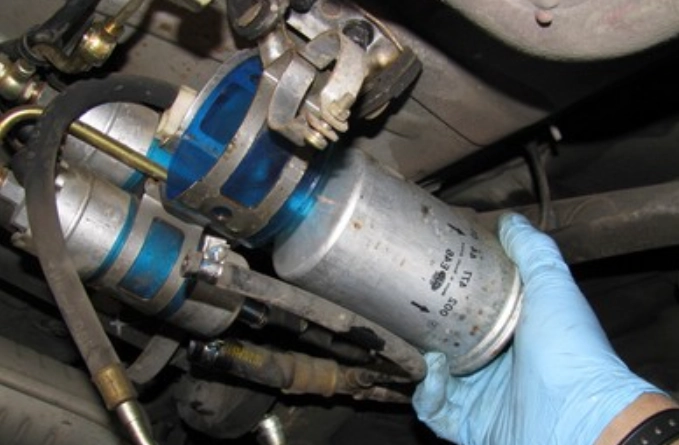
After the Swap: What Changes Should You Feel?
You've just completed your fuel filter replacement. You turn the key... now what?
Sometimes the improvement is dramatic and immediate. That hesitation during acceleration is gone. The car starts right up. The idle is smooth as glass. It feels like you unlocked hidden power. This is especially true if the old filter was severely clogged.
Other times, the change is subtle. The car just feels... healthier. More responsive. More predictable. If your old filter was only partially blocked, you might notice a slight improvement in throttle response and maybe a small bump in fuel economy over the next few tanks.
And then there are times when you feel nothing at all. Don't be disappointed! This is actually a good outcome. It means you caught the problem early, during preventative maintenance, before it could cause noticeable symptoms. You've successfully avoided a future breakdown. That's a win.
The main thing to do after any fuel system work is to monitor for leaks for the first day or so of driving. Park over a clean piece of cardboard overnight and check for fresh drips.
Clearing the Air: Your Fuel Filter Questions Answered
Can a dirty fuel filter cause a check engine light?
It can, but it's not the most common trigger. If the filter restriction is severe enough to significantly alter the air-fuel mixture or cause a persistent misfire, the engine computer might throw a code (like P0171 - System Too Lean). However, many other things cause those codes first. The check engine light is more of a "maybe" than a definitive sign.
What's the difference between an inline filter and an in-tank filter?
It's all about location and serviceability. An inline filter is a separate component spliced into the fuel line, designed to be serviced on its own. An in-tank filter is usually a sock or screen attached to the fuel pump intake inside the tank. To replace it, you almost always have to replace the entire fuel pump assembly, which is why it's so much more expensive. Many modern cars have moved to in-tank designs for packaging and noise reasons, which is a bit of a pain for maintenance, honestly.
Are fuel filters universal, or do I need a specific one?
You always need the specific filter for your car's year, make, model, and engine. Fuel line diameters, connection types, pressure ratings, and flow rates are all different. Using the wrong filter can lead to leaks, poor performance, or even a fuel fire. Always cross-reference the part number with your vehicle. A good parts store website or employee can help you get the right one.
Can I clean a fuel filter instead of replacing it?
No. Just no. Modern fuel filters are designed to trap particles as small as 10-20 microns (smaller than a human hair). This debris is embedded in the filter media. You cannot effectively or safely clean it out. Attempting to do so will likely damage the filter and send all that trapped gunk straight into your engine. Fuel filters are a wear item, meant to be replaced. Don't try to cheap out here.
How does fuel quality affect my filter's life?
Massively. Top-tier gasoline retailers (the major brands) add more detergent additives that help keep your entire fuel system, including the tank, cleaner. They also generally have better filtration at their storage tanks and pumps. Consistently using lower-quality fuel from less-regulated stations means more contaminants entering your tank, which clogs the filter faster. It's one of those things where paying a few extra cents per gallon can save you money on maintenance. The U.S. Environmental Protection Agency (EPA) sets standards for fuel, but quality beyond those minimums can vary. Organizations like the SAE International publish extensive research on fuel system components and contamination that underscores why filtration is so critical.
Wrapping It Up: Don't Wait for the Sputter
Look, car maintenance is full of boring, unglamorous tasks. The fuel filter replacement is the poster child for that. There's no shiny new part to show off, no instant horsepower gain to brag about. But its value is in what it prevents.
Think of it as dental floss for your engine. It's a small, simple, inexpensive habit that protects you from much larger, painful, and expensive problems down the road. Whether you check your manual and stick to the schedule, or decide to change it based on the symptoms we talked about, just make a decision to not ignore it completely.
If your car is running fine, mark your calendar or set a mileage reminder for its next scheduled change. If you're experiencing any of those hesitations or hard starts, get it checked out. A quick fuel filter replacement might be the simple fix that gets your ride back to feeling smooth and reliable. And isn't that what we all want from our cars?