Let's get this out of the way first. If you've ever searched for "rims and tires," you probably wanted to change the look of your car, fix a busted wheel, or just get better performance. You weren't looking for a dictionary definition. You wanted to know what to buy, what fits, how much it costs, and how to not mess it up. I've been installing, swapping, and regretting wheel choices on my own cars and for friends for over a decade. This guide cuts through the jargon and gives you the real-world advice you need.
What You'll Learn in This Guide
Rims vs. Wheels: Getting the Terms Straight
Okay, semantics time. Purists will tell you the "rim" is just the outer lip of the wheel. The whole thing is the "wheel." In the real world, at the custom shop or on forums, everyone says "rims." They mean the entire metal part. If you walk into a tire shop and ask for "rims," they'll know you mean wheels. For this guide, I'll use "wheels" when talking about the metal component and "rims" when it fits the common phrasing, but know they're functionally the same thing in everyday talk. The tire is the rubber part. Together, they're a "wheel and tire package" or just "rims and tires."
Why does this matter? When you're searching online, use both terms. You might find better deals or more selection under "wheels." Knowing the difference just keeps you from sounding like a total newbie when you're trying to negotiate a price.
How to Choose the Right Rims and Tires for Your Vehicle
This is where most people get overwhelmed. You see a sweet set of wheels on another car, order the same size, and then they don't fit. It's a headache. Choosing isn't just about looks; it's a puzzle with four critical pieces that must fit together.
The Four Non-Negotiable Specs
1. Wheel Diameter & Width: This is the "20-inch" part. Diameter must match your tire. Width (like 8.5 inches) determines how wide a tire you can mount. Go too wide, and the tire might bulge or stretch.
2. Bolt Pattern (PCD): This is how many lug nuts you have and the circle they form. A 5x114.3 pattern means 5 lugs on a 114.3mm circle. Get this wrong, and the wheel literally won't bolt on. Your car's pattern is fixed.
3. Offset (ET): This is the killer. It's how far the wheel's mounting surface is from its centerline. A +35 offset means the mounting surface is 35mm toward the outside (face) of the wheel. A lower or negative offset pushes the wheel out, giving a more aggressive "flush" look. Change the offset too much, and you'll get rubbing against the fender or suspension. This spec is often overlooked with disastrous results.
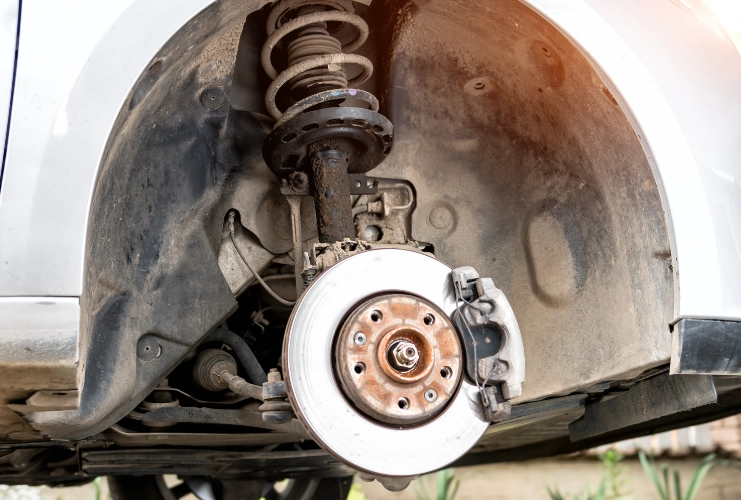
4. Center Bore: The hole in the middle. If it's larger than your car's hub, you need hub-centric rings (plastic or metal rings) to fill the gap. Without them, the weight of the car rests solely on the lug nuts, which can cause vibration and is unsafe.
Where do you find your car's specs? Look at three places: the sticker inside your driver's door jamb, your owner's manual, or the wheel itself (take off a stock wheel and look on the back). Then, use a fitment calculator like the one on Tire Rack's website. Plug in your car's details and play with sizes. It'll show you clearances.
Pro Tip: Don't just trust online listings that say "fits your 2018 Honda Civic." Double-check the exact bolt pattern and offset against your factory specs. I've seen too many "universal fit" wheels that required expensive adapters to actually work.
Material Matters: Alloy vs. Steel
| Feature | Alloy Wheels (Cast, Flow-Formed, Forged) | Steel Wheels |
|---|---|---|
| Weight | Lighter (improves handling, acceleration, braking) | Heavy |
| Looks | Varied, stylish designs | Basic, often requires hubcaps |
| Heat Dissipation | Better (cools brakes faster) | Poorer |
| Cost | Moderate to Very High | Very Low |
| Durability | Can crack on hard impacts | Usually bends, can be hammered back |
| Best For | Most cars, performance, aesthetics | Winter tires, off-road beaters, extreme budget |
Forged alloy wheels are the top tier—incredibly strong and light, but the price is astronomical. For 99% of drivers, a good quality cast or flow-formed alloy wheel is perfect. I run flow-formed alloys for summer and cheap steelies with winter tires. The steel wheels get beaten up by salt and potholes, and I don't care.
Picking the Right Tire
The wheel is the jewelry; the tire is the shoe. It's the only part touching the road. Your choice here affects noise, comfort, wet grip, and how long they last. Don't cheap out on tires to afford fancier wheels. That's backwards.
- All-Season: The default. Good at nothing, okay at everything. Fine for most daily driving in moderate climates.
- Summer/Performance: Softer rubber for max grip in warm, dry conditions. They turn hard and useless below 45°F (7°C).
- Winter: Made for snow, ice, and cold temps. The rubber compound stays pliable. If you see temps consistently below freezing, get these. A front-wheel-drive car with winter tires is safer than an all-wheel-drive car with all-seasons in snow.
- All-Terrain (A/T): For trucks and SUVs. More aggressive tread for light off-roading, louder on pavement.
Check the Uniform Tire Quality Grade (UTQG) ratings on the sidewall for treadwear, traction, and temperature. A 400 treadwear rating will last roughly twice as long as a 200 rating, but grip will likely be lower. It's a trade-off.
The Real Deal on Installation and Ongoing Maintenance
You've got your box of shiny new wheels and tires. Now what?
Mounting and Balancing: This is not a DIY job for most. You need a tire machine and a balancer. A local tire shop will charge $20-$30 per wheel for mount, balance, and new valve stems. Worth every penny. Tell them you have new wheels and to use a touchless tire machine if possible. The claws on old machines can scratch your brand-new finish.
Tire Pressure Sensors (TPMS): If your car has a tire pressure monitoring system (most post-2008 models do), you need to deal with the sensors. You can often move your old sensors to the new wheels, or buy a new set programmed for your car. Ignoring this means a constant warning light on your dash.
The Maintenance Most People Forget:
Wheels and tires aren't install-and-forget.
- Torque Your Lug Nuts: After installation, drive about 50 miles and re-torque the lug nuts to the factory spec (find it in your manual, often 80-100 ft-lbs). Use a torque wrench, not an impact gun set to "rip." Overtorquing can warp brake rotors.
- Clean Them Properly: Brake dust is acidic. For alloy wheels, use a pH-neutral wheel cleaner. Don't use harsh acids or abrasive brushes on clear-coated wheels. Clean them regularly, or the dust etches itself into the finish.
- Rotate, Rotate, Rotate: Every 5,000-8,000 miles. This evens out wear and can double your tire life. If you have directional tires or a staggered setup (wider in back), rotation patterns are limited—check your manual.
- Alignment Check: Get an alignment after installing a new wheel and tire set, especially if you've changed sizes. A bad alignment will chew through a new set of tires in 10,000 miles.
Costly Mistakes Most Beginners Make (And How to Avoid Them)
I've made some of these. Let's save you the money and embarrassment.
Mistake 1: Buying Wheels Based Only on Diameter. "I have a 5-lug car, these are 5-lug 19-inch wheels, they'll fit!" Not necessarily. The bolt pattern circle diameter must match exactly. A 5x114.3 is NOT the same as 5x115, even though they look close. It won't fit.
Mistake 2: Ignoring Offset for the Look. You want that "hellaflush" stance, so you buy wheels with a super low offset. They stick way out. Now your tires rub on the fender liner every time you hit a bump or turn. The fix? Roll or cut your fenders (expensive, risky) or buy different wheels. Research the "aggressive fitment" that works for your specific car model before buying.
Mistake 3: Not Considering the Total Diameter. If you go from a 17-inch wheel to a 20-inch wheel, you need a lower-profile tire so the overall tire diameter stays roughly the same. If the overall diameter changes too much, your speedometer will be wrong (you'll be going faster than it says), and you might have clearance issues. Online tire size calculators are your friend here.
Mistake 4: Mixing and Matching Tires. Never mix different tire models or significant tread depths on the same axle. It can cause handling instability. For all-wheel-drive vehicles, the tread depth on all four tires must be very close (often within 2/32nds of an inch) or you can damage the drivetrain. Check your owner's manual—it's strict.
The Big One: Buying Used Wheels Without Inspection. The deal on Facebook Marketplace seems too good to be true. Here's what to do: meet in person. Run your fingers along the inside and outside barrel of the wheel. Feel for any bumps or waves, which indicate a bend. Look for any hairline cracks, especially around the lug holes or spokes. A bent wheel can sometimes be repaired; a cracked wheel is junk. Put it on the ground and spin it. Does it wobble? If you're not sure, walk away. The cost of repairing a bent wheel often negates the "deal."
Let's say your budget is $1500. I'd spend $1000 on great tires and $500 on decent, lightweight used name-brand wheels rather than $1200 on flashy new cheap wheels and $300 on mediocre tires. The tire is where your safety lives.
Questions You're Probably Asking
What's the difference between rims and wheels?
Technically, 'rim' refers only to the outer edge of the wheel that holds the tire bead. In common usage, especially in custom car circles, 'rims' is often used interchangeably with 'wheels' to mean the entire metal part. When shopping, you're almost always looking for 'wheels,' but vendors and enthusiasts will know what you mean if you say 'rims.'
How do I know what size rims will fit my car?
You need to match four key specs: diameter (e.g., 18"), width (e.g., 8.5J), bolt pattern (e.g., 5x114.3), and offset (e.g., +35). The safest bet is to check your owner's manual or the sticker inside your driver's door jamb for OEM sizes, then use a fitment calculator online, factoring in your vehicle's make, model, and year. A small change in offset can mean the difference between a perfect fit and a wheel that rubs against your suspension or fender.
Can I put larger rims on my car without any issues?
You can, but it's a system. Going up in rim diameter usually means using a lower-profile tire to keep the overall tire diameter nearly identical. This is critical for your speedometer accuracy and anti-lock brake system. The bigger issue is width and offset. A wider wheel with the wrong offset might not clear your brake calipers or suspension struts. Always test-fit a single wheel before committing to a full set.
How often should I rotate my tires?
Most manufacturers recommend every 5,000 to 8,000 miles. For performance cars or if you have a staggered setup (wider tires in the rear), rotation might not be possible or recommended in a traditional pattern. Check your manual. I do mine every other oil change, which lands right in that 6,000-mile sweet spot. Consistent rotation is the cheapest way to extend your tire life by thousands of miles.
The world of rims and tires is deep, but it doesn't have to be confusing. Start with your factory specs, use the tools available online, and prioritize tire quality over wheel bling. Do that, and you'll end up with a setup that looks great, performs safely, and lasts. Now go check your tire pressure. Seriously, when's the last time you did?