Quick Guide to Georgia Tint Laws
- The Core of Georgia Tint Law: Understanding VLT Percentage
- What is the Legal Tint in Georgia? The Numbers Broken Down
- Why These Laws Exist (It’s Not Just Police Whim)
- The Medical Exemption: Can You Get a Waiver for Darker Tint?
- Reflectivity and Color Restrictions
- Enforcement and Penalties: What Happens If You’re Too Dark?
- Choosing a Tint Shop: What to Ask
Let’s cut right to the chase. You’re probably here because you just got a new car, your old tint is peeling, or maybe you got a warning from a friendly Georgia State Patrol officer. You type that question into Google: “What is the legal tint in Georgia?” And you’re met with a mess of forum posts from 2010, conflicting advice, and legalese that makes your head spin.
I get it. I’ve been there. A few years back, I bought a used car here in Atlanta that came with what I can only describe as “limo tint.” It looked cool for about a week, until I realized I was squinting to see my side mirrors at night. Worse, I spent every drive glancing in the rearview, waiting for those blue lights. It wasn’t worth the anxiety.
So I dug in. I read the actual Georgia Code, talked to a few tint shop owners who’ve been in business for decades, and even chatted with a retired trooper to get the real-world scoop. What I found is that the rules are actually pretty straightforward once you cut through the noise. But get them wrong, and it’s a surefire way to get a ticket, fail your vehicle inspection, or even get pulled over for something else.
Here’s the thing a lot of sites get wrong: Georgia’s tint law isn’t just one number. It’s a set of rules for different windows, with different allowances for sedans versus multi-purpose vehicles (like SUVs and vans). And the most common mistake people make? They only think about the side windows.
This guide is going to walk you through exactly what is legal, what isn’t, and all the little exceptions and enforcement details you need to know. We’ll skip the fluff and give you the plain-English facts.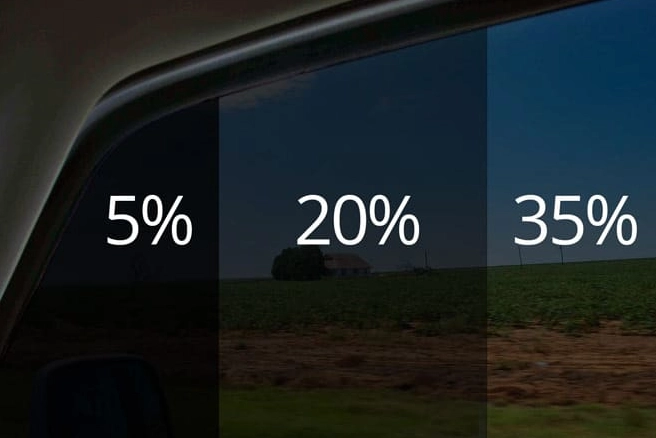
The Core of Georgia Tint Law: Understanding VLT Percentage
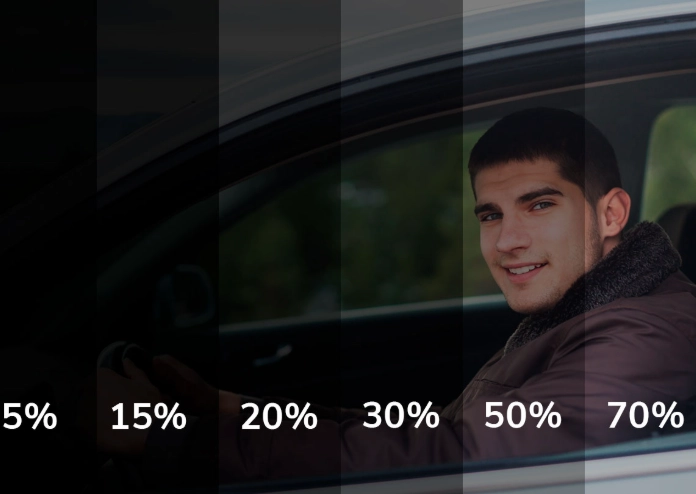
Before we get to the numbers, you need to understand what they’re measuring. The law is all about VLT – Visible Light Transmission. This isn’t how dark the film looks on a roll; it’s the percentage of visible light that gets through the glass and the tint film combined.
Lower VLT percentage = darker tint. Higher VLT percentage = lighter tint.
So a 5% VLT is basically limo tint (letting in only 5% of light), while a 70% VLT is very light, almost clear. When the law says your front side windows must allow more than 32% of light in, it’s talking about the combined VLT of your factory glass plus any added film.
Pro Tip from a Tint Installer: Your car’s factory glass already has a slight tint. Most door windows block about 15-20% of light on their own. This means if you apply a 50% VLT film to a window that already blocks 20% light, your final VLT might be around 40% (50% of the 80% light coming through). Always ask your installer to measure the final, combined VLT with a meter after application. A good shop will do this automatically.
Now, let’s answer the big question.
What is the Legal Tint in Georgia? The Numbers Broken Down
Georgia’s law, specifically O.C.G.A. § 40-8-73.1, sets different limits for passenger cars and multi-purpose passenger vehicles. The table below is the simplest way to see the difference. Bookmark this.
| Window | Passenger Cars (Sedans, Coupes) | Multi-Purpose Vehicles (SUVs, Vans, Trucks) |
|---|---|---|
| Windshield | Non-reflective tint allowed on top 6 inches (AS-1 line). | Non-reflective tint allowed on top 6 inches (AS-1 line). |
| Front Side Windows (Driver & Front Passenger) | Must allow more than 32% light in (VLT >32%). | Must allow more than 32% light in (VLT >32%). |
| Back Side Windows | Must allow more than 32% light in (VLT >32%). | Any darkness can be used. |
| Rear Window | Must allow more than 32% light in (VLT >32%). | Any darkness can be used. |
See the big difference? If you drive a sedan, your back windows and rear windshield have the same 32% VLT limit as your front sides. But if you drive an SUV, minivan, or pickup truck classified as a “multi-purpose vehicle,” you can go as dark as you want on all windows behind the driver. This is the single most important thing to know when figuring out what is the legal tint in Georgia for your specific vehicle.
Is My Car an SUV or a Sedan? The Classification Trap
This trips up a lot of folks. Your vehicle’s classification is on its title and registration, not necessarily what you call it. A crossover like a Toyota RAV4 or a Honda CR-V is almost always classified as a multi-purpose vehicle (MPV/SUV). A station wagon might be classified as a passenger car. The best way to be sure? Check your registration document or your vehicle’s door jamb sticker/model information. When in doubt, assume the stricter passenger car rules to avoid trouble. I’ve heard stories of people with wagon-style vehicles getting tickets because they assumed they were “like an SUV.”
Why These Laws Exist (It’s Not Just Police Whim)
I used to think tint laws were just about giving cops a reason to pull people over. But after understanding the reasons, it makes more sense (even if I still think the 32% rule for sedan rear windows is a bit strict).
Primarily, it’s about safety – for you, other drivers, and law enforcement.
- Driver Visibility: This is the big one. Tint that’s too dark severely reduces visibility at night, in rain, or in low-light conditions. It’s dangerous. My old “limo tint” car was a hazard in parking garages.
- Law Enforcement Safety: When an officer approaches a vehicle during a traffic stop, they need to see the occupants’ hands and movements inside the car for their own protection. Excessively dark windows create a dangerous unknown.
- Other Drivers’ Safety: Being able to make eye contact or see a driver’s head turn at an intersection is a key part of non-verbal communication on the road. Dark tint eliminates that.
The Medical Exemption: Can You Get a Waiver for Darker Tint?
Yes, but it’s a real process, not just a note from your eye doctor. Georgia allows for a medical exemption if a licensed physician or optometrist certifies that you have a condition requiring you to be shielded from sunlight.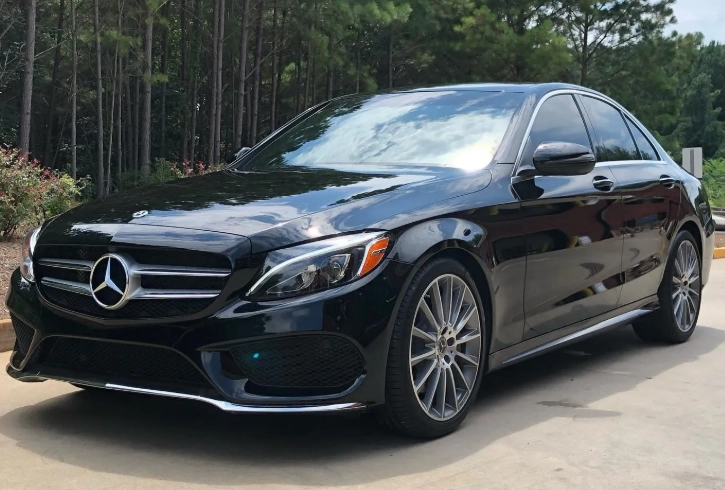
Common qualifying conditions include lupus, melanoma, photophobia (light sensitivity), or certain eye disorders. The key steps are:
- Get the official DS-142 form (“Medical Exemption for Window Tinting/Sun Screening Devices”) from the Georgia Department of Driver Services (DDS) website or office.
- Have your doctor complete and sign it, specifying the exact windows and the recommended VLT percentage. They don’t just sign off on “as dark as possible.”
- Submit the form to DDS for approval. Once approved, you’ll receive a certificate or endorsement.
- You must carry this certificate in your vehicle at all times and be prepared to present it to law enforcement.
Warning: The medical exemption does NOT allow you to tint your windshield below the AS-1 line (except for the top strip). The front side windows can go darker than 32%, but the exact limit is up to what your doctor specifies and DDS approves. Don’t let a tint shop tell you otherwise.
Reflectivity and Color Restrictions
VLT isn’t the only rule. Georgia law also states that window tint must be non-reflective. You can’t have mirror-like, metallic tint that reflects light outward. A slight metallic look within the film for heat rejection is usually okay, but if it acts like a mirror, it’s illegal.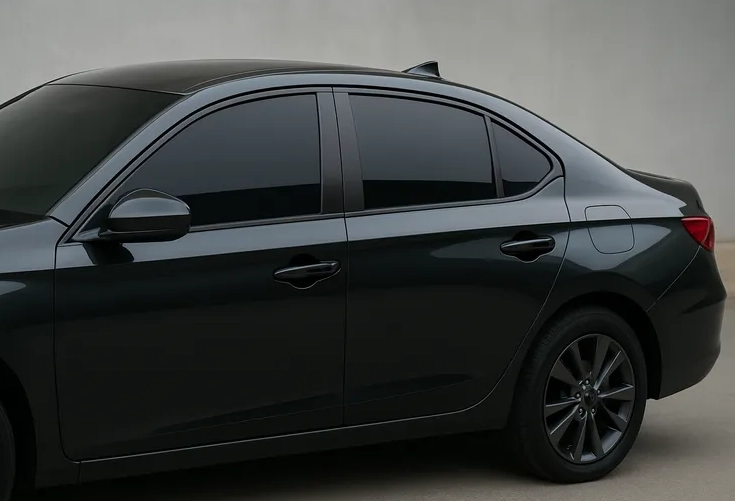
As for color, the law is less specific but generally prohibits red, amber, and blue tints. These can be confused with emergency vehicles. Stick with neutral shades like gray, charcoal, or a light black.
Enforcement and Penalties: What Happens If You’re Too Dark?
Okay, let’s talk about the scary part. How is the legal tint in Georgia actually enforced?
Most often, you’ll get pulled over for it directly if an officer notices your windows are too dark. They’re trained to spot it. They may also use a handheld light meter to measure your VLT on the spot. But here’s the kicker – tint can also be a secondary reason for a stop. If you have a tail light out and your windows look illegal, you’re likely getting cited for both.
The penalty is a misdemeanor. That means a fine (typically $100-$200 for a first offense, but it varies by county) and possibly court costs. The real pain is the “fix-it” ticket aspect. You’ll be ordered to remove the illegal tint and provide proof to the court (often a receipt from a tint removal service or a re-inspection). If you don’t, your license could be suspended.
I know someone in Cobb County who got a $150 fine plus $50 in court fees, and he had to pay a shop $80 to strip the tint. That’s a nearly $300 lesson.
Will You Fail Inspection for Illegal Tint?
In the metro Atlanta counties (Cherokee, Clayton, Cobb, Coweta, DeKalb, Douglas, Fayette, Forsyth, Fulton, Gwinnett, Henry, Paulding, and Rockdale) that require annual emissions testing, they also do a safety inspection. Part of that inspection is checking window tint VLT with a meter. If your windows are too dark, you will fail. No pass, no registration renewal. So even if you avoid police, the annual inspection will catch you.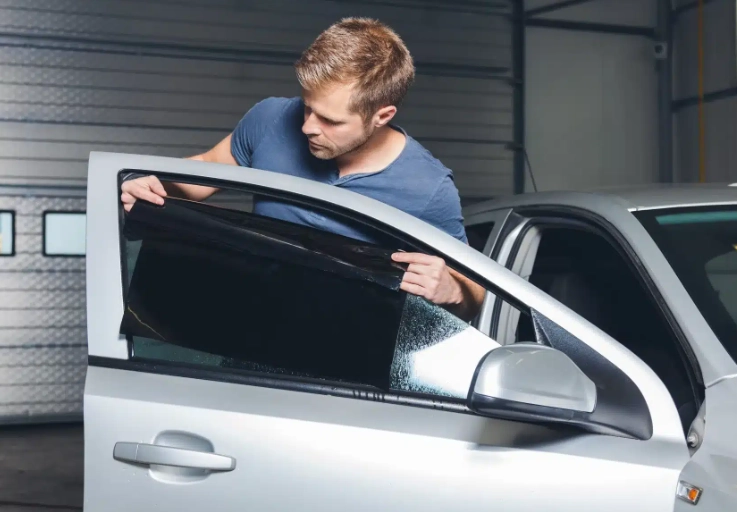
Common Questions (The Stuff You Actually Want to Know)
This is the most common confusion. 35% tint film is usually NOT legal for front side windows on any vehicle. Remember, the law requires a combined VLT of more than 32%. If you apply a 35% film to factory glass that already blocks 15-20% light, your final VLT will be in the 28-30% range – which is under 32% and illegal. Most reputable shops will recommend a 50% film for the front sides to ensure you stay legal after accounting for the factory glass. 20% film is only potentially legal on the rear windows of an SUV/truck, and even then, the final combined VLT will be darker.
You can only have non-reflective tint on the top 6 inches (down to the AS-1 line, which is usually marked on the windshield). Applying any tint over the entire windshield is illegal in Georgia, even if it’s a 90% VLT “clear” ceramic tint for heat rejection. Some people do it and claim it’s undetectable, but if you’re in an accident, an insurance adjuster or police officer could notice and flag it, potentially complicating a claim. It’s a risk.
With a device called a tint meter. It’s a small gadget with two parts: a light emitter placed on the outside of the window and a sensor placed on the inside. It measures how much light passes through. They’re fairly accurate when calibrated.
Yes. Unfortunately, ignorance isn’t a defense. The law applies to the vehicle’s current state, regardless of who installed the tint. Your best move is to get it removed or brought into compliance as soon as possible.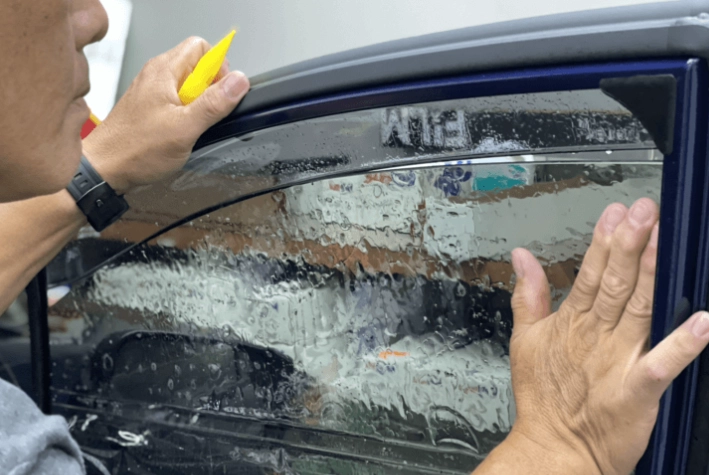
Choosing a Tint Shop: What to Ask
Don’t just go for the cheapest quote. A bad install with bubbles or peeling is the least of your worries if they use illegal film.
- Ask for their recommendation to stay 100% Georgia legal. A good shop will immediately ask, “Sedan or SUV?” and explain the 32% VLT rule, factoring in factory glass.
- Ask about the film’s specifications. Get the brand, series, and its stated VLT percentage in writing.
- Ask if they use a tint meter to verify the final product. They should measure the glass before and after.
- Check reviews specifically for mentions of legality and inspections.
- Avoid any shop that says, “Oh, the cops don’t check this dark around here,” or “You’ll be fine with 20%.” They’re prioritizing a sale over your compliance.
The Bottom Line on Georgia Tint Law
Figuring out what is the legal tint in Georgia boils down to a few key points. For all vehicles, your windshield can only have a top strip, and your front side windows must measure more than 32% VLT after installation. The major split is for the rear windows: sedans must also stay above 32%, while SUVs/trucks/vans can go as dark as they like in the back. Always account for your factory glass when choosing film. Get a medical exemption if you need one, and choose your tint shop wisely. The goal is to get the heat and UV protection you want without the hassle of tickets and inspection failures. It’s better to be slightly lighter and completely worry-free than to constantly be looking for police in your rearview.
Hopefully, this clears up the confusion. Drive safe out there.