Your Fuel Efficiency Navigator
I remember filling up my first car, an old hand-me-down truck that guzzled gas like it was going out of style. Watching the numbers on the pump spin faster than my college budget could handle was a genuine kind of panic. That's when fuel efficiency stopped being a boring term from a brochure and became real. It was about how far I could drive on twenty bucks, about whether I could afford that weekend trip. Maybe you've felt that too.
But what exactly is it? In the simplest terms, fuel efficiency measures how far a vehicle can travel on a given amount of fuel. In the U.S., you see it as MPG—miles per gallon. Elsewhere, it's often liters per 100 kilometers. Higher MPG or lower L/100km means better efficiency. It's the core metric for figuring out how much a drive will cost you and, let's be honest, how often you'll be visiting the gas station.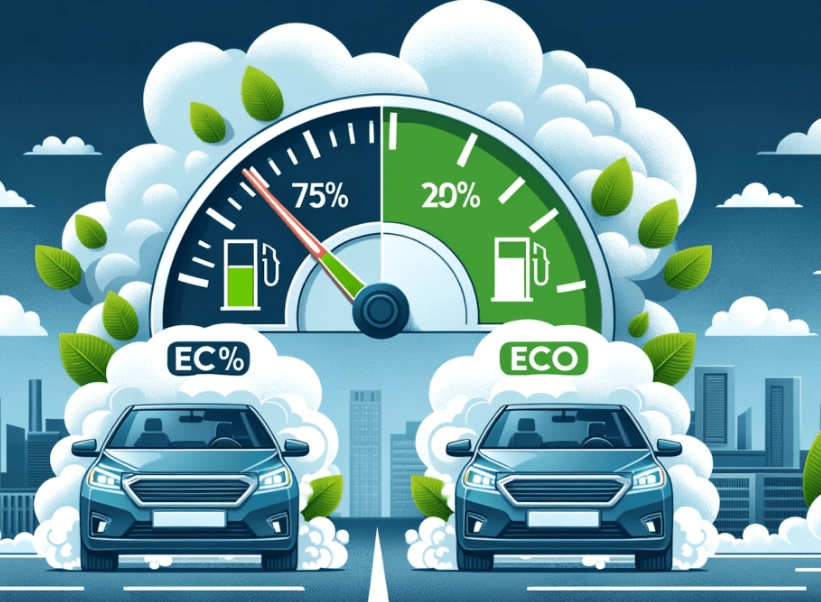
Why should you care beyond your wallet? Well, it's a bigger picture thing. Better fuel economy directly means lower carbon dioxide emissions. The U.S. Environmental Protection Agency (EPA) has tons of data showing this direct correlation. So, chasing better fuel efficiency isn't just penny-pinching; it's one of the most direct ways an average driver can reduce their environmental footprint. It's practical activism.
The Core Idea: Think of fuel efficiency as your car's "gas mileage diet." A more efficient car does the same work (getting you from A to B) while consuming less "energy food" (gasoline or diesel). The benefits are a slimmer fuel bill and a lighter load on the environment.
What Actually Dictates Your Car's Fuel Economy?
It's not magic. Your car's fuel efficiency is the end result of a battle between physics and engineering. A bunch of factors are constantly at play, and knowing them is the first step to beating them. I used to think it was all about the engine, but I was wrong.
Let's break down the big players. Some you can change, some you can't, but knowing helps you make smarter choices.
The Things You're Stuck With (When You Buy the Car)
These are the baked-in factors determined by the vehicle's design.
- Engine Size and Type: Generally, smaller engines are more efficient. But turbocharging has changed the game, allowing smaller engines to perform like bigger ones when needed. Diesel engines traditionally offer higher fuel efficiency for highway cruising but have their own trade-offs. Hybrids pair a gas engine with an electric motor for city-driving wins, while plug-in hybrids and electric vehicles (EVs) shift the equation entirely.
- Weight: This is a huge one. Heavier vehicles require more energy to get moving and to stop. It's basic physics. That's why a massive SUV will almost always have lower MPG than a compact sedan, even with similar engines. Manufacturers are using more aluminum and high-strength steel to fight this.
- Aerodynamics (Drag): Your car is fighting the air. The smoother and sleeker the shape, the less energy it takes to push through the air at speed. That's why sports cars are low and swoopy, and why big, boxy trucks have a harder time on the highway. Features like active grille shutters help by smoothing airflow when extra cooling isn't needed.
- Transmission: Modern automatic transmissions, especially continuously variable transmissions (CVTs) and those with 8, 9, or even 10 gears, keep the engine in its most efficient rev range better than older automatics or manuals. Though, a skilled manual driver can sometimes eke out a bit more.
The Things You Control Every Day
This is where you have the power. Your driving habits and how you maintain your car can swing your actual fuel efficiency by a shocking amount—sometimes 30% or more compared to the EPA sticker rating.
Quick Reality Check: The EPA's fuel economy estimates on the window sticker are a standardized test. Your real-world MPG will vary. Aggressive driving alone can lower your highway gas mileage by up to 30% and city mileage by 40%. That's like throwing a gallon of gas out the window every few fill-ups.
So what habits are the killers?
- Aggressive Driving: Jackrabbit starts and hard braking are the absolute worst. Rapid acceleration demands a huge, inefficient burst of fuel. Smooth and gradual is the key.
- Speed: This one surprised me when I first learned it. Fuel economy generally peaks between 50-60 mph for most cars. Once you go above 65 mph, air resistance increases dramatically. According to the U.S. Department of Energy, every 5 mph you drive over 50 mph is like paying an extra $0.20-$0.30 per gallon for gas. On a long trip, driving 75 vs. 65 can cost you a full extra stop for fuel.
- Excess Idling: Sitting with the engine running gets you 0 MPG. Modern engines don't need a "warm-up" period in mild weather. If you're stopped for more than about 30 seconds (except in traffic), it's often more efficient to turn the engine off and restart it.
- Cargo on the Roof: That roof rack or cargo box you leave on for convenience? It murders aerodynamics. Removing it when not in use can improve your highway fuel economy by a noticeable margin.
- Tire Pressure: Under-inflated tires increase rolling resistance. It's like riding a bike with a flat tire—you have to work much harder. The U.S. Department of Energy states that keeping tires properly inflated can improve your gas mileage by about 3% on average. It's the easiest fix in the book.
See the pattern? It's mostly about reducing waste—wasted energy from fighting air and friction, wasted fuel from pushing the pedal too hard.
Your Action Plan: How to Actually Improve Fuel Efficiency
Okay, theory is fine, but what do you actually DO on Monday morning? Here’s a no-nonsense plan, sorted from the easiest wins to the bigger commitments.
Step 1: The Maintenance Non-Negotiables (Low Effort, High Return)
Think of this as the foundation. Skip these, and you're sabotaging everything else.
- Check Tire Pressure Monthly: Use the pressure listed on the sticker in your driver's door jamb, not the max pressure on the tire sidewall. Do it when the tires are cold (before driving).
- Use the Right Motor Oil: Always use the grade of oil recommended by your manufacturer. Using a higher-viscosity oil than required (like 10W-40 instead of 5W-30) can increase engine friction. Look for oils labeled "Energy Conserving" on the API performance symbol.
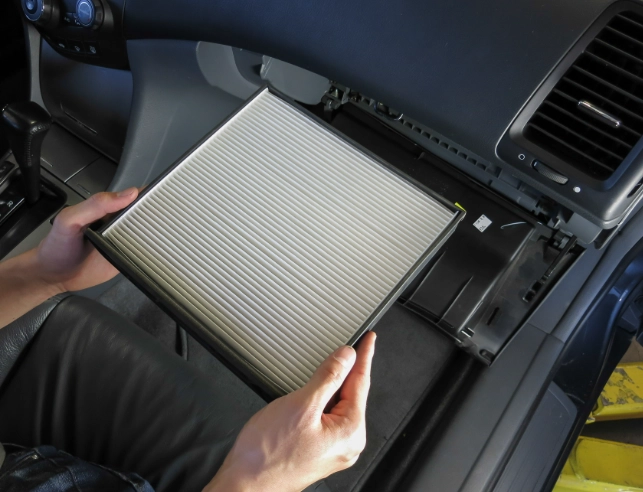
- Replace Air Filters: A clogged air filter restricts airflow to the engine, making it run less efficiently. It's a cheap and easy replacement. The old advice was to change it often, but many modern cars have long-life filters. Check your manual, but if it looks dirty, change it.
- Stay On Top of Engine Tune-Ups: A misfiring spark plug or a faulty oxygen sensor can drastically hurt fuel economy. If your check engine light is on, get it diagnosed. The fix often pays for itself in fuel savings. The Society of Automotive Engineers (SAE) publishes standards and research on how proper maintenance preserves engine efficiency.
Watch Out For: "Miracle" fuel additives. The FTC has cracked down on many companies making exaggerated claims. Most top-tier gasoline already has a robust detergent package. A bottle of cheap injector cleaner once a year might not hurt, but don't expect it to transform your gas mileage. Your money is better spent on a proper tune-up.
Step 2: Master the Art of Smart Driving
This is free and has the biggest potential impact. It's about driving with foresight.
- Accelerate Gently: Imagine there's a raw egg between your foot and the pedal. Pretend you're trying not to spill a cup of coffee on the dashboard. It feels slow at first, but you'll get to the same speed just a few seconds later, using far less fuel.
- Anticipate Traffic and Coast: Look way ahead. If you see a red light or slowing traffic, take your foot off the gas early and coast. Let the car's momentum carry you. Why speed up just to brake?
- Use Cruise Control on the Highway: On flat, open roads, it eliminates the tiny, wasteful speed variations we all make unconsciously. It's a robot foot that's perfectly steady.
- Limit AC Use, But Be Smart: Yes, AC puts a load on the engine. At low speeds (under 40 mph), opening the windows is often more efficient. But at highway speeds, the aerodynamic drag from open windows can cost more fuel than running the AC. My rule of thumb: windows down in the city, AC on recirculate on the highway.
- Plan and Combine Trips: A cold engine is at its least efficient. Several short, cold-start trips can use twice as much fuel as one longer, multi-stop trip covering the same distance once the engine is warm.
I started using a simple driving scorecard on my phone's notes app for a week. Just noting when I braked hard or accelerated too fast. It was eye-opening and made me a calmer, more efficient driver.
Step 3: The Big Decisions (When You Buy or Change Vehicles)
This is the long game. When it's time for a new (or new-to-you) car, fuel efficiency should be a top-tier priority.
Don't just look at the MPG sticker. Think about your actual life.
- Do you mostly drive in the city? A traditional hybrid (like a Toyota Prius) will likely give you the best real-world fuel efficiency because it uses the electric motor at low speeds and recaptures energy during braking.
- Is it mostly highway miles? A modern, efficient diesel or a turbocharged gasoline engine with a high-gear transmission might be optimal. Aerodynamics matter more here.
- Can you charge at home or work? If yes, a plug-in hybrid (PHEV) or a battery electric vehicle (BEV) changes the math completely. Your "fuel" cost plummets to electricity rates, and for daily commuting, you might use no gas at all in a PHEV. The U.S. Department of Energy's Alternative Fuels Data Center is an incredible, unbiased resource for comparing energy costs and vehicle options.
Here’s a quick comparison of different powertrains, based on typical use cases:
| Powertrain Type | Best For... | Fuel Efficiency Consideration | The Trade-Off (My Honest Take) |
|---|---|---|---|
| Conventional Gasoline | Low upfront cost, long highway trips, simplicity. | Varies widely. Look for turbocharged small engines and 8+ speed automatics. | You're playing the old game. It's familiar but offers the least potential for savings. |
| Traditional Hybrid (HEV) | City/suburban driving, stop-and-go traffic, not plugging in. | Excellent city MPG, often surpassing EPA estimates in real-world urban driving. | The most hassle-free efficiency. No plug, just save gas. But highway MPG is just "very good," not magical. |
| Plug-in Hybrid (PHEV) | Daily commute | Potential for near-zero gas use for daily needs. Long electric-only range is key. | If you don't plug it in regularly, you're just carrying heavy batteries for no benefit, hurting your efficiency. Requires habit change. |
| Diesel | Long-distance highway towing, high annual mileage. | Superior highway cruising efficiency and torque. Higher energy density per gallon. | Diesel fuel is often more expensive, and modern emissions systems can be finicky and costly to repair. Not great for short trips. |
| Battery Electric (BEV) | Home charging, environmental focus, low "fueling" cost, quiet operation. | Measured in MPGe (Miles Per Gallon Equivalent). Extremely high efficiency and low per-mile energy cost. | Upfront cost, charging time on road trips (though improving fast), and the very real concern of range anxiety in some areas or for some lifestyles. The infrastructure isn't perfect yet. |
Choosing a car is a balance. There's no single "best" for everyone, only the best for you right now.
Busting the Biggest Fuel Efficiency Myths
You've probably heard these. Let's clear the air with some facts.
Myth: Premium gas improves fuel economy in any car.
Fact: Only if your car's manufacturer requires it (often for high-performance turbocharged engines). If your manual says "regular unleaded is recommended," using premium provides exactly zero benefit to fuel efficiency or performance. You're just paying more. It's a total waste of money.
Myth: It's more efficient to let the car idle than to turn it off and restart.
Fact: This was true for old carbureted engines. Modern fuel-injected engines use a tiny amount of fuel to restart—far less than idling for more than about 30 seconds. Start-stop technology in new cars is built on this exact principle.
Myth: Manual transmissions are always more fuel-efficient than automatics.
Fact: This is largely outdated. Modern automatics, CVTs, and dual-clutch transmissions have more gears and are controlled by computers that shift at the optimal time. They often match or beat the fuel efficiency of a manual version of the same car, especially with an average driver.
Myth: You need to "warm up" your engine for several minutes in cold weather.
Fact: Idling is an ineffective way to warm an engine. The best way to warm it up is to drive it gently. Most manufacturers recommend driving off gently after about 30 seconds, even in cold weather. You'll get heat faster and waste less fuel.
Your Fuel Efficiency Questions, Answered
Let's tackle the specific stuff people are typing into Google.
Q: Does using the air conditioning really use more fuel?
A: Yes, it does. It can reduce fuel economy by 1-4 MPG, depending on the conditions. The compressor puts a load on the engine. The trade-off is aerodynamic drag from open windows at high speed. Use the AC judiciously, and use the "recirculate" mode so it's not constantly cooling hot outside air.
Q: Is it true that fuel efficiency decreases as a car gets older?
A: It can, but it's not an inevitable law. The decrease is usually due to wear and tear and deferred maintenance—dirty fuel injectors, worn spark plugs, a dragging brake caliper, old oxygen sensors. A well-maintained older car can still get very close to its original fuel efficiency. Neglect is the real killer.
Q: What's the single best thing I can do to improve my MPG right now?
A> Check your tire pressure. It takes 5 minutes, costs nothing, and has an immediate, measurable effect. After that, focus on smoothing out your acceleration and braking. Those two things will make the biggest dent for most drivers.
Q: Are electric cars (EVs) really more energy efficient overall?
A: Overwhelmingly, yes. Even accounting for electricity generation and transmission losses, EVs convert over 77% of the electrical energy from the grid to power at the wheels. A conventional gasoline vehicle only converts about 12-30% of the energy stored in gasoline. The U.S. Department of Energy's fueleconomy.gov site has a great "Find a Car" tool where you can directly compare the annual fuel costs of any EV to any gasoline car, which makes the savings starkly clear.
Q: I have a truck/SUV. Am I just doomed to bad fuel economy?
A> Not doomed, but you're playing on hard mode. The laws of physics (weight, aerodynamics) are against you. Your gains will come from being extra diligent about maintenance, tire pressure, removing unnecessary weight (get that sandbag out of the bed in July!), and, most critically, moderating your speed on the highway. A truck doing 75 mph is paying a massive aerodynamic penalty.
Wrapping It Up: It's a Marathon, Not a Sprint
Chasing perfect fuel efficiency can drive you crazy if you let it. Don't. The goal isn't to hypermile your way to misery. It's to be aware, to make smarter choices where they're easy and painless, and to let those choices compound over time.
Start with the tire pressure. Next time you drive, try coasting to one red light instead of speeding up to it. On your next highway trip, set the cruise at 65 instead of 75 and see if the travel time is really that different. When it's time for your next car, make fuel economy a primary filter in your search, not an afterthought.
Every little bit adds up. Over a year, a 10% improvement in your fuel efficiency could save you hundreds of dollars. It reduces demand on oil, and it cuts emissions. It's a personal win that's also a collective one.
My old gas-guzzling truck is long gone. The lesson it taught me, though—that the numbers on the pump are directly connected to my choices behind the wheel—stuck around. It turned fuel efficiency from a boring spec into a daily game of skill. A game where you, your wallet, and frankly, the planet, come out ahead.
That's a game worth playing.