Let's cut through the noise. If you're like me, you've seen the headlines – "Cybertruck Production Soars!" one week, "Cybertruck Faces Manufacturing Delays" the next. It's confusing. As someone who's followed Tesla's quarterly reports like a hawk since the Model 3 ramp, I've learned that the real story is never in the single, shiny number. The true meaning of Cybertruck production numbers lies in the trends, the bottlenecks, and the silent data between the lines. Right now, the signal is clear: production is climbing a steep hill, but if you're holding a reservation, patience is still the name of the game.
This isn't just about how many trucks roll off the line each week. It's about what that means for your delivery window, the truck's long-term viability, and even your potential investment. We're going to piece together the puzzle from Tesla's official statements, observable data, and the less-discussed challenges of building something as radical as the Cybertruck.
What's Inside?
Decoding the Numbers: What Tesla Actually Tells Us
First, a reality check. Tesla is famously selective with its production data post-launch. Unlike the constant updates during the Model Y ramp, Cybertruck specifics are often bundled into broader statements. You won't find a live counter on their website. So, we become data detectives.
The primary sources are:
- Quarterly Production & Delivery Reports: These are gold. Tesla lists total vehicle production, and while they don't always break out Cybertruck separately anymore, significant changes in the "Other Models" category (where Cybertruck sits alongside S and X) often tell the tale. A sudden jump? That's likely Cybertruck scaling.
- Earnings Calls & Shareholder Letters: This is where executives drop hints. Phrases like "continued ramp," "focus on cost reduction," or "supply chain challenges" are coded messages about production health. Listen for comparisons to previous quarters.
- Observational & VIN Data: Enthusiast trackers and reports from Giga Texas provide clues. A steady increase in vehicles on carrier trucks or in delivery centers suggests a rising output. The National Highway Traffic Safety Administration (NHTSA) VIN decoder can also show how many Cybertrucks have been registered for sale, offering a proxy for production.
Here's what the synthesized data has shown recently: After a painfully slow start in late 2023—more of a trickle than a flow—2024 saw the line genuinely move. By the middle of the year, analysts and observers estimated a weekly run rate in the low thousands. That's a massive improvement, but context is crucial. Tesla's Fremont factory can spit out over 10,000 Model Ys a week. The Cybertruck is still in its infancy by comparison.
The annual target, often discussed before launch, was 250,000 units. We are nowhere near that annualized pace yet. The current focus is on reaching a stable, high-quality production cadence, not hitting a peak number.
The Real Bottlenecks Nobody Talks About
Everyone points to the stainless steel exoskeleton. It's hard to stamp and form. But after talking to a few folks in manufacturing, I think the obsession with the steel is only half the story. The bigger, quieter hurdle might be the 4680 battery cells.
The Cybertruck, especially the tri-motor Cyberbeast, is a power-hungry beast. It needs a lot of these new-format cells. Tesla's 4680 production has had its own, separate ramp-up challenges. If the battery line stutters, the vehicle line stops. It's that simple. This interdependence is a classic bottleneck that doesn't make for a flashy headline but fundamentally dictates the maximum possible output.
Then there's the complexity of a ground-up new product. It's not just a new body on an old platform.
Every component—the steer-by-wire system, the 48-volt architecture, the mega-wiper—needs its own supply chain to be established and smoothed out. A delay from a single, small supplier of a specialized seal or sensor can ripple through the entire process. This is the unglamorous reality of manufacturing that Elon Musk's "production hell" phrase captures perfectly.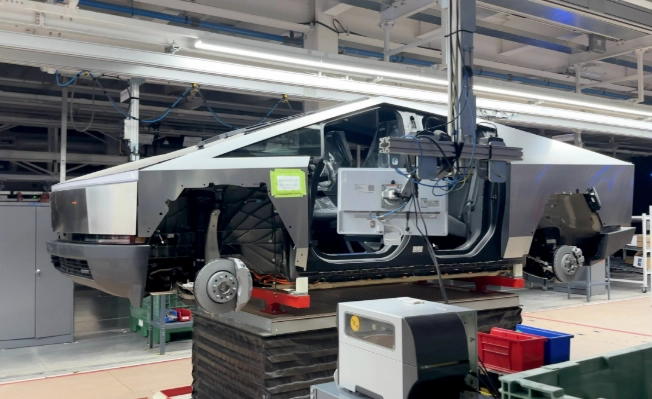
The Ramp Curve Isn't Straight
Newcomers often expect a smooth, linear increase: 100 per week, then 500, then 1000, and so on. It rarely works like that. The ramp looks more like a staircase with occasional stumbles.
A week might see fantastic output, followed by a week of near-zero as they pause to fix a tooling issue or recalibrate a robot. The average goes up over a month, but the day-to-day is volatile. This is why judging production on a single data point is a mistake. You need to look at the quarterly average.
From Line to Driveway: Your Realistic Timeline
This is what most reservation holders truly care about. When will I get my truck? The production numbers directly feed into this answer, but the math isn't as simple as "total production divided by reservations."
Let's break down the queue:
- Foundation Series Orders: These limited, higher-priced editions are being fulfilled first. If you ordered one, you're at the front of the line, and your wait is primarily about production sequencing and your geographic location relative to Texas.
- Early Reservation Holders (2019-2020): You're next in line. Your delivery window is a function of how quickly production climbs and which trim (single, dual, tri-motor) you chose. Higher-priced trims may be prioritized for margin reasons.
- Recent Reservations (2021-Present): Here's the hard truth. If you put down a $100 deposit last year, you are looking at a potentially multi-year wait, assuming production continues to scale as planned. Tesla has over one million reservations. At a rate of even 5,000 trucks a week (a future target), that's 200 weeks of work—nearly four years—just to clear the backlog, not counting new orders.
My advice? Don't trust the generic estimate in your Tesla account just yet. It's often optimistic. Use the public production estimates as a gauge. Once Tesla is consistently reporting high quarterly output for Cybertruck (e.g., 50,000+ per quarter), then the wait times for later reservations will start to become meaningful.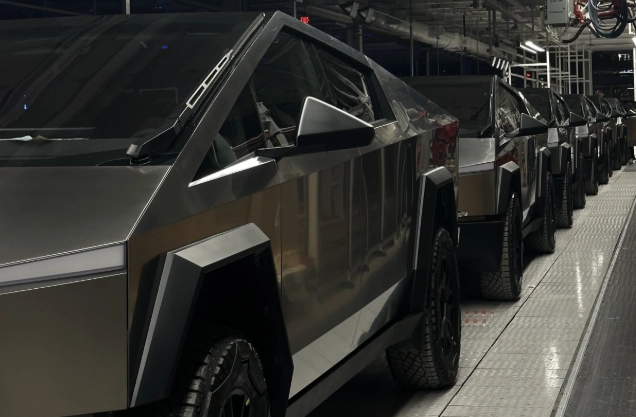
Why Production Rate Matters More Than a Total
For investors and industry watchers, the slope of the production ramp is infinitely more important than the total number built so far. A steep, consistent upward slope shows Tesla is solving problems quickly. A flattening curve signals persistent issues.
This rate determines:
- Profitability: The Cybertruck is likely still loss-making per unit at low volumes. Fixed costs (factory, robots, engineering) are spread over few trucks. The faster they reach high volume, the sooner they hit economies of scale and positive margins.
- Market Impact: Ford, Rivian, and GM are watching. A sluggish Cybertruck ramp gives their electric trucks (F-150 Lightning, R1T, Silverado EV) more breathing room to establish themselves. A tsunami of Cybertrucks hitting the market changes the competitive landscape overnight.
- Supply Chain Confidence: Suppliers commit capacity based on projected volumes. Meeting ramp targets assures them and secures better pricing for Tesla, creating a virtuous cycle.
So, when you read a news piece, don't just look for "X number of Cybertrucks produced." Look for the trend. Is the rate accelerating? That's the billion-dollar question.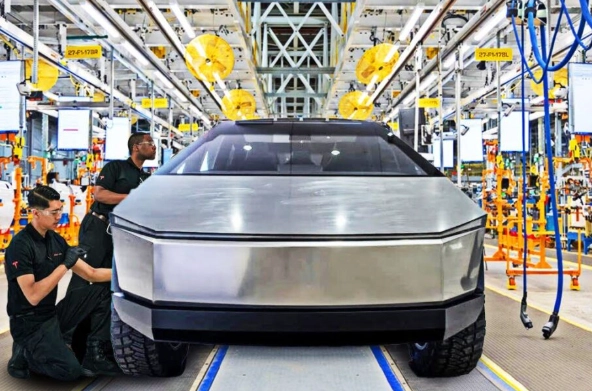
Your Burning Questions, Answered Straight