Let's cut through the noise. You've probably heard "every 12,000 to 15,000 miles" or "once a year" as the golden rule for changing your car's air filter. I'm here to tell you that blindly following those numbers is a great way to waste money or, worse, damage your engine. The real answer to "how often should air filters be changed?" is frustratingly simple: it depends. But don't worry, by the end of this guide, you'll know exactly what it depends on for your specific situation. I've seen engines choked by filters changed "on schedule" in clean environments and filters lasting years past their supposed date in harsh conditions. The interval isn't a timer; it's a condition check.
What You'll Learn in This Guide
Why Bother? The Real Cost of a Dirty Filter
Think of your engine air filter as your car's lungs. A clogged filter starves the engine of clean air. The computer compensates by injecting more fuel to keep the air-fuel mixture balanced. This isn't a slight dip in efficiency.
We're talking about a 10% drop in fuel economy, easily. On a 20-gallon tank, that's two gallons gone. Multiply that over a year.
Performance suffers. Acceleration feels sluggish. In severe cases, unburned fuel can contaminate the oil or damage oxygen sensors and catalytic converters – repairs that make a $20 filter look like a bargain.
The cabin air filter is for you. A dirty one means you're breathing pollen, dust, and pollutants directly. For allergy sufferers, it's miserable. It also makes your A/C work harder, reducing its cooling power.
The Standard Advice (And Why It's Flawed)
Manufacturers and quick-lube shops love clear intervals. It's easy to sell. "Your manual says 30,000 miles!" The problem is, your car's manual is written for a hypothetical average driver in a hypothetical average environment. That driver doesn't exist.
My father drove a 1998 pickup on paved country roads in a dry climate. He changed the air filter maybe every 50,000 miles, and it was never truly clogged. I once had a client in Chicago who commuted daily on dusty construction routes. His filter was done at 8,000 miles.
Blind adherence to mileage or time is the most common mistake I see. It's either wasteful or negligent. You need to move from a schedule-based mindset to a condition-based one.
What Actually Determines Your Change Interval
Forget the single number. Your filter's lifespan is a cocktail of these factors. Judge your own driving against this table.
| Driving Environment / Condition | Impact on Filter Life | Practical Advice |
|---|---|---|
| Dusty, Sandy, or Unpaved Roads | Severely Reduces. This is the #1 killer. Constant fine particulate matter clogs the paper media rapidly. | Check every 5,000-7,500 miles. Be prepared to change at 10,000-12,000 miles, or sooner. |
| Heavy Stop-and-Go City Traffic | Moderately Reduces. Not just dust, but higher concentrations of brake dust, tire rubber, and soot. | Lean towards the lower end of "standard" intervals (e.g., 15,000 miles). |
| High-Pollen or Agricultural Areas | Reduces. Pollen, seeds, and chaff can coat the filter. Crucial for cabin air filters and allergies. | Inspect cabin filter every spring. Engine filter may need more frequent checks. |
| Humid Coastal Climate | Can Reduce. Moisture can cause the filter media to degrade or promote mold/mildew (cabin filter). | Visual checks for deterioration are key. Don't just rely on dirt accumulation. |
| Clean, Dry, Highway-Only Driving | Extends. The ideal scenario. Air is relatively clean and flow is consistent. | You can safely follow or even exceed the upper end of manufacturer intervals (e.g., 20,000-25,000 miles) with regular checks. |
| Owning Pets | Major Impact (Cabin Filter). Pet hair and dander are a cabin filter's worst enemy. | Change the cabin air filter every 6-12 months, without fail. |
See how one-size-fits-all fails? A highway commuter in Arizona and a farm vehicle in Iowa have completely different needs.
The 60-Second DIY Check Anyone Can Do
This is the skill that saves you money. You don't need tools for most modern cars.
Step 1: Locate the Airbox
Open your hood. Look for a large black plastic box (usually rectangular) connected to a big intake hose. It's often on the top or side of the engine bay. Consult your owner's manual if unsure – it's faster than guessing.
Step 2: Open the Airbox
Most use metal clips or a few screws. Unclip or unscrew, and lift the top half off. Don't force it.
Step 3: The "Light Test"
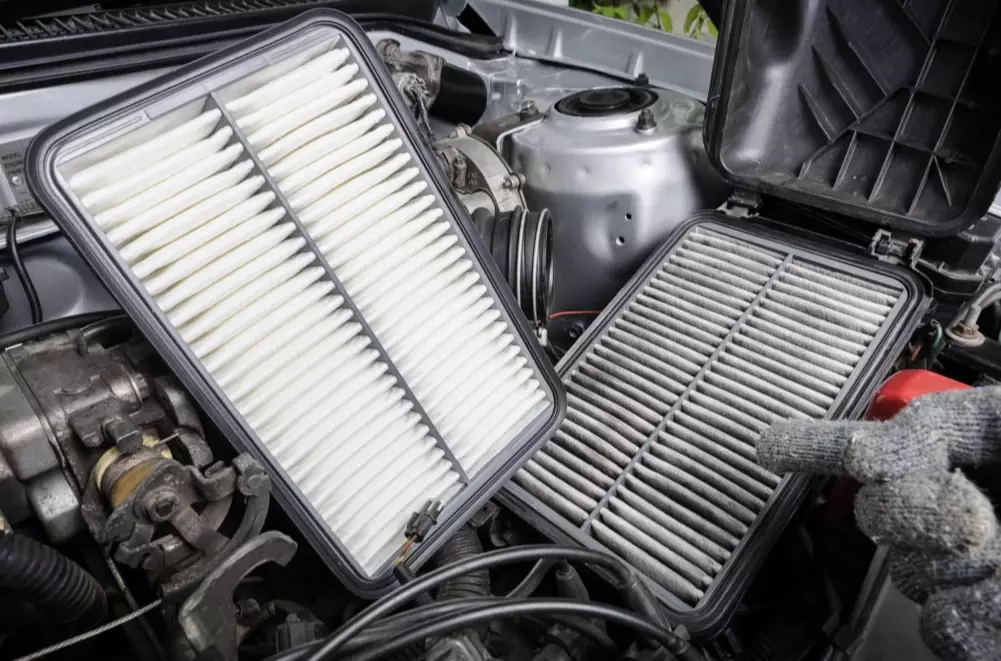
Lift the filter out. Hold it up to a bright light source – the sun, a garage light, your phone's flashlight. Look through the filter pleats (the folded paper). Can you see light clearly through most of it? Or is it completely blocked by a mat of gray/black debris?
The Judgment Call:
Change it if: Light is significantly blocked (more than 50% of the surface looks opaque). The filter is oily to the touch (indicates other engine issues). There's visible damage, holes, or the rubber sealing gasket is cracked.
Keep it if: Light passes through easily and the pleats look a light gray or off-white color. A little dirt on the "upstream" side is normal – that's its job.
Tap it gently on a hard surface to dislodge loose debris. Never use compressed air to clean a paper filter – you'll blow holes in the media.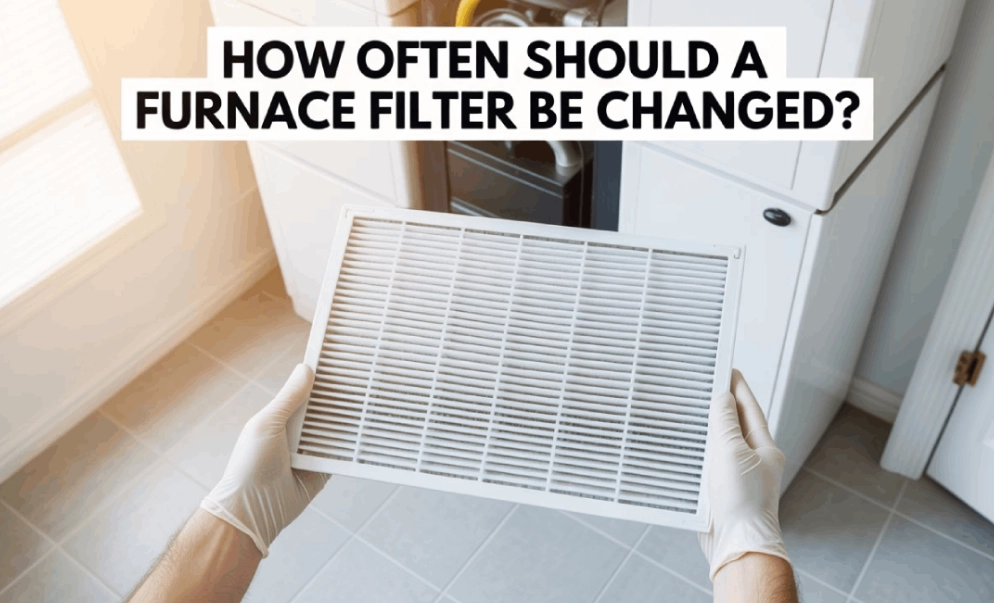
Cabin Air Filter vs. Engine Air Filter: A Crucial Distinction
People mix these up constantly. They are different parts with different jobs.
Engine Air Filter: Protects the engine. Made of thick, porous paper or cotton gauze. Handles massive airflow volumes. Fails slowly, affecting performance and economy.
Cabin Air Filter: Protects you. Filters the air coming into the passenger compartment. Traps pollen, dust, spores, and sometimes includes a charcoal layer for odors. Made of finer, often multi-layered material. When it fails, you smell it and feel it (sneezing, weak airflow from vents).
The Key Difference in Schedule: The cabin air filter almost always needs changing more often than the engine air filter, especially if you have allergies, live in a city, or have pets. A yearly check/replacement is a very good rule of thumb for the cabin filter, regardless of mileage.
How to Change an Air Filter Yourself (It's Easier Than You Think)
If you passed the "light test" and need a new one, here's the process. For most cars, this is a 5-minute, zero-tool job.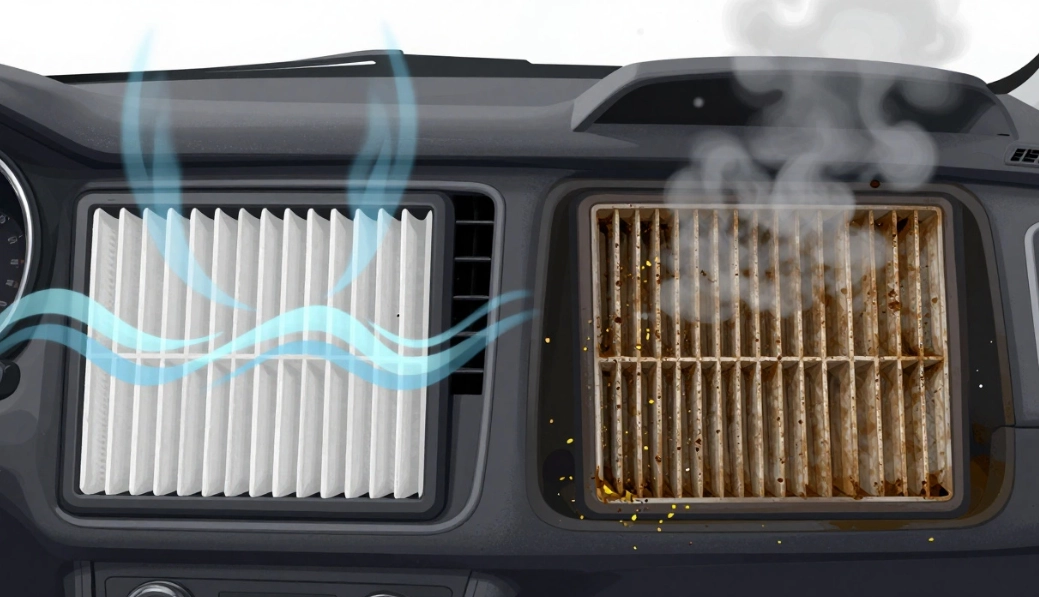
1. Buy the Right Filter. Use your car's year, make, model, and engine size at any auto parts store or online. Don't guess. A poorly fitting filter lets dirty air bypass it entirely.
2. Open the Airbox. Just like during the inspection.
3. Remove the Old Filter. Note its orientation. Which way does the rubber seal face? Often there's an arrow on the frame pointing in the direction of airflow. Take a photo with your phone.
4. Clean the Airbox. This is the step most people skip. Use a vacuum cleaner or a damp rag to wipe out any dirt, leaves, or debris that settled in the bottom of the airbox. You don't want that getting sucked in first thing.
5. Install the New Filter. Place it exactly as the old one was, ensuring the seal is seated evenly all around. A misaligned filter is useless.
6. Close the Airbox. Make sure the lid is fully sealed and all clips/screws are secure. Listen for a positive "click."
That's it. For a cabin air filter, the location varies (often behind the glovebox or under the dashboard). A quick YouTube search for "[Your Car Year Model] cabin air filter replacement" will show you the exact steps, which are usually still very simple.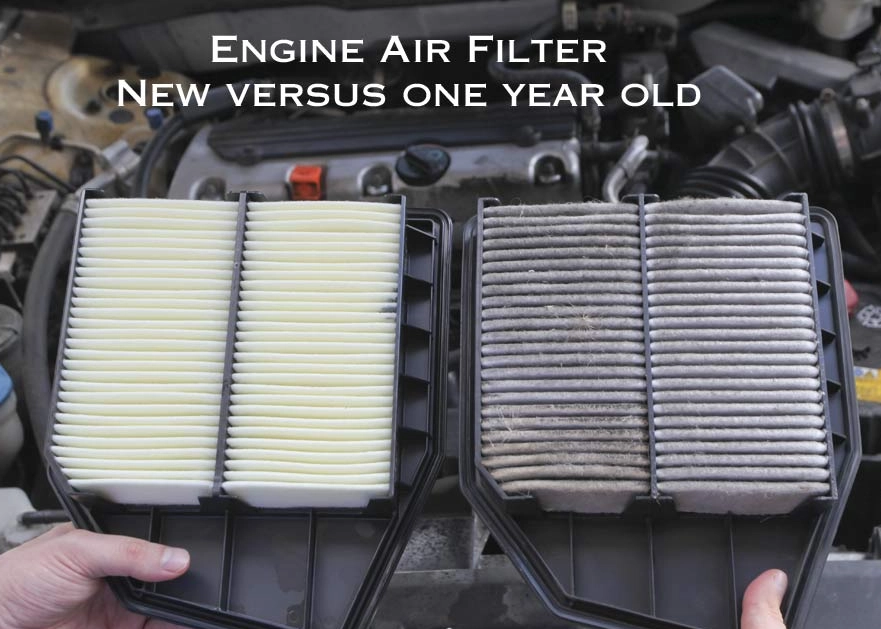
Your Questions, Answered
 I drive a performance car. Should I use a different type of filter?
The bottom line is this: stop thinking about time or mileage alone. Get to know your car and your environment. Perform the simple light check once or twice a year when you check your tire pressure. It takes a minute, costs nothing, and saves you from guessing, wasting money on premature changes, or paying the hidden cost of a filter that's been dirty for the last 10,000 miles. Your engine – and your wallet – will breathe easier.