Quick Navigation
- Why Front Shocks Matter More Than You Think
- Signs You Need a Front Shocks Replacement
- DIY vs. Professional Replacement: The Real Cost Breakdown
- How to Choose New Front Shocks: A Buyer's Guide
- The Replacement Process: A Step-by-Step Walkthrough
- Common Questions About Front Shocks Replacement
- Making the Decision and Moving Forward
Let's be honest, a car that bounces like a low-rider on every bump isn't just annoying—it's a safety hazard. You feel every crack in the pavement, the nose dives when you brake, and taking a corner feels a bit... loose. That sinking feeling? It often points straight at your front suspension, specifically the shock absorbers. Knowing when and how to tackle a front shocks replacement can save you money, keep you safe, and totally transform how your car drives.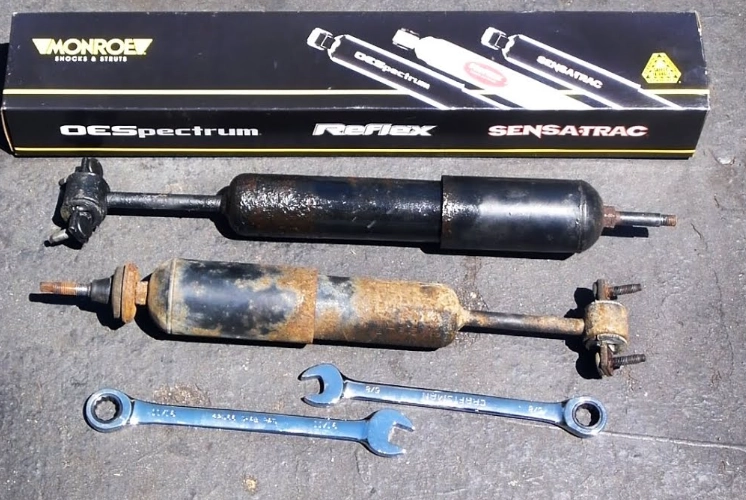
I remember putting off replacing the shocks on my old truck for way too long. I told myself it was just getting older, that the ride was supposed to be stiff. Then I hit a series of potholes on a rainy highway and the front end just felt completely disconnected from the road. It was a scary few seconds that convinced me to stop ignoring the problem. This guide is the one I wish I'd had back then.
Why Front Shocks Matter More Than You Think
Most folks think shocks are just for comfort. Wrong. Their main job is to keep your tires planted firmly on the road. Think about it. When you hit a bump, the spring compresses and then wants to bounce back. Without a shock absorber to control that energy, your tire would bounce up and lose contact with the asphalt. No tire contact means no steering, no braking, no control.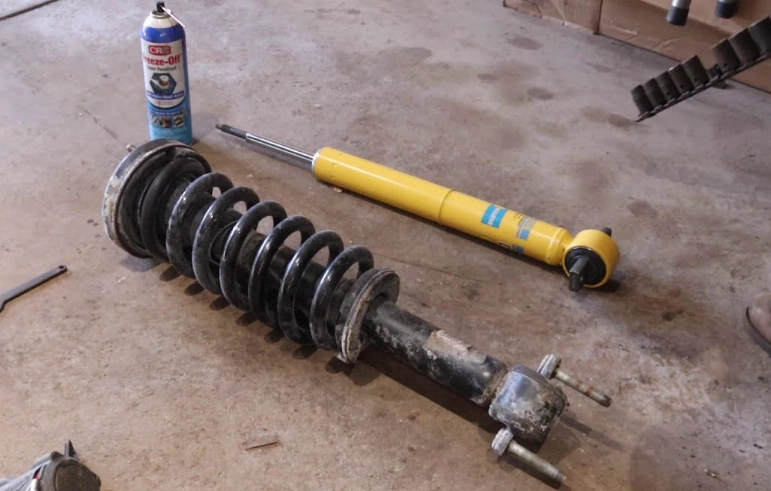
A proper front shock replacement restores that critical control. It's not a luxury item; it's a core safety component. The National Highway Traffic Safety Administration (NHTSA) doesn't have a specific mileage mandate for shocks, but they consistently list suspension failure as a contributing factor in loss-of-control accidents. Worn shocks increase stopping distance significantly, especially on uneven surfaces.
Signs You Need a Front Shocks Replacement
Shocks wear out gradually, so it's easy to get used to a deteriorating ride. Here's how to spot the trouble before it spots you.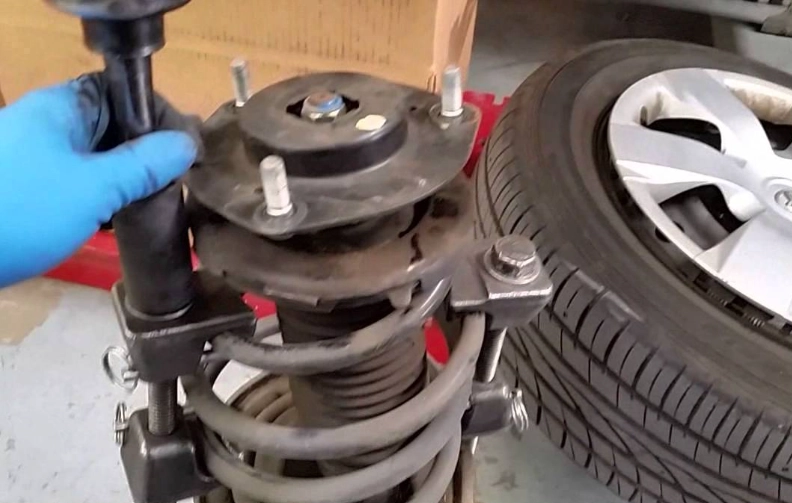
The Obvious Red Flags
- Excessive Bouncing: Push down hard on the front corner of your car. Release it. If it bounces more than once or twice before settling, your shocks are likely toast. This is the classic test for a reason—it works.
- Nosediving and Squatting: The front end dives sharply when you brake hard. The rear end squats down when you accelerate. This is the shocks failing to control the weight transfer.
- Leaking Fluid: See a dark, oily fluid streaking down the side of the shock body? That's the hydraulic fluid leaking out. It's a dead giveaway. The seal is gone, and the shock is just a hollow tube at this point.
- Uneven or Cupped Tire Wear: Worn shocks cause the tire to chatter and skip on the road. Check your front tires for patches of wear that look like scallops or cups. This is expensive—you'll need new tires soon after a front shocks replacement if you ignore it.
The Subtle Clues
These are the ones that creep up on you.
- Vague Steering: The steering wheel feels less precise, especially on the highway. You're making more small corrections to stay in your lane.
- Body Roll in Corners: The car leans over more than it used to when you take a turn, even at moderate speeds. It feels tippy.
- Knocking or Clunking Sounds: You hear a distinct *clunk* from the front end when going over bumps. This could be the worn shock allowing metal components to bang together, or it might be a related bushing. Either way, it needs attention.
DIY vs. Professional Replacement: The Real Cost Breakdown
This is the big question for most people. Can you do it yourself, or should you pay a mechanic? Let's break it down without the fluff.
| Aspect | DIY Front Shocks Replacement | Professional Mechanic |
|---|---|---|
| Cost (Parts Only) | $80 - $250 per pair (for decent quality shocks) | Part cost + 100-150% markup (standard practice) |
| Labor Cost | Your time (3-6 hours for a first-timer) | $200 - $500 (2-3 hours of shop labor) |
| Total Estimated Cost | $80 - $250 | $400 - $900+ |
| Tools Needed | Jack, jack stands, socket set, wrenches, spring compressor (for struts), torque wrench. This is a big one—the right tools are non-negotiable. | You pay for their expertise and $20,000 toolboxes. |
| Skill Level | Intermediate to Advanced. If you've done brakes, you can probably do shocks. Struts are harder. | You're paying for their experience and speed. |
| Biggest Risk | Personal injury (from the jack, or a compressed spring), improper installation leading to failure. | Finding an untrustworthy shop that cuts corners or uses cheap parts. |
| Warranty | Usually just the parts warranty from the store. | Full labor and parts warranty from the shop (peace of mind). |
| Best For... | Savvy hobbyists with tools, time, and a willingness to learn. Older, simpler vehicles. | Anyone who values time, convenience, and guaranteed results. Complex modern cars with integrated strut assemblies. |
See the gap? The professional front shocks replacement cost is easily triple the DIY route. But that labor fee isn't just profit—it's insurance against you getting hurt or messing it up. I've done it both ways. On my old pickup, DIY was a sweaty, satisfying Saturday. On my newer car with a fancy strut-top bearing, I gladly wrote the check to my local trusted mechanic.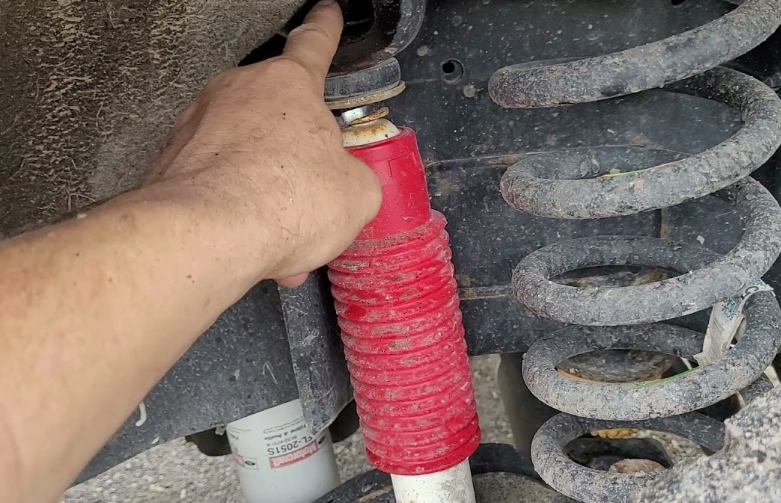
How to Choose New Front Shocks: A Buyer's Guide
Walk into an auto parts store or shop online, and you'll be bombarded with choices. OEM, premium, performance, loaded struts... what's the difference?
The Main Types of Shocks & Struts
- OE (Original Equipment) Replacement: These match the ride quality and performance of what your car came with. Think brands like Monroe OESpectrum or KYB Excel-G. They're a safe, no-surprises choice for most drivers. Perfect if you just want your car to feel like it did when it was new.
- Premium/Gas-Charged: A step up. They use high-pressure nitrogen gas to reduce foaming and provide more consistent damping, especially when they get hot. The ride might be slightly firmer but more controlled. Monroe Reflex or KYB Gas-a-Just are classics here.
- Performance/Sport: Firmer damping for reduced body roll and sharper handling. The trade-off is a noticeably stiffer ride on rough roads. Brands like Bilstein B6 or Koni STR.T are popular. Only go this route if you actually want a sportier feel.
- Coilover Kits: These are complete, adjustable units for serious enthusiasts. Not typically part of a standard front strut replacement discussion for daily drivers.
Loaded Strut Assembly vs. Bare Strut
This is critical. Many modern cars use a MacPherson strut design, where the shock is inside a coil spring. To replace it, you have to disassemble the whole unit with a dangerous spring compressor.
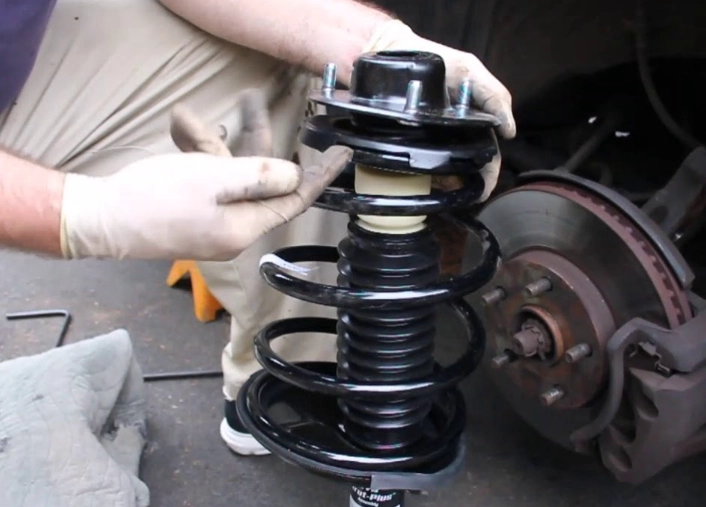
Or, you can buy a loaded strut assembly or quick strut. This comes as a complete, pre-assembled unit: new shock, new spring, new upper mount, new bump stop. You just unbolt the old one and bolt in the new one. It's more expensive for the part, but it saves hours of labor and eliminates huge safety risks. For a DIYer, it's often worth every extra penny.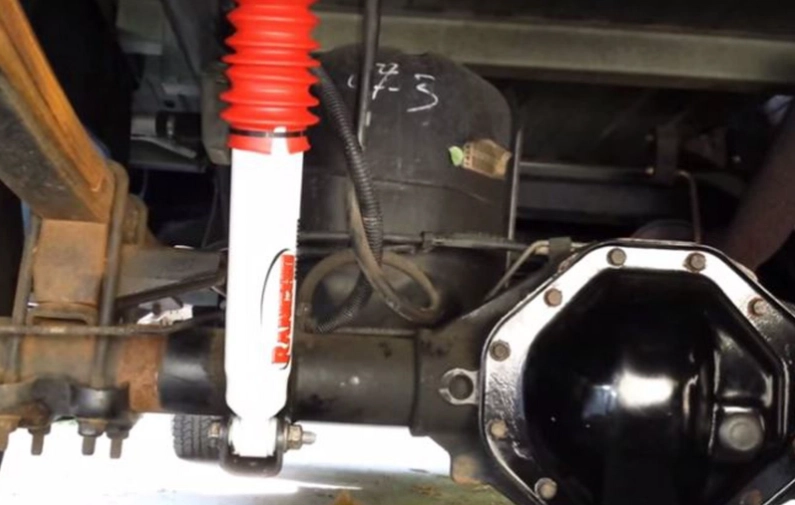
Some budget shocks I've tried in the past wore out way too fast. It's tempting to grab the $40 special, but you'll likely be doing the job again in 20,000 miles. Mid-range options from reputable brands offer the best value for most people.
The Replacement Process: A Step-by-Step Walkthrough
Okay, you've decided to DIY. Let's walk through what a typical front shocks replacement looks like. This is a general overview—always, always consult a vehicle-specific repair manual or a trusted resource like Monroe's installation guide library for your exact car.
Before You Turn a Single Wrench
- Gather Tools & Parts: Jack, jack stands (never work under a car supported only by a jack!), socket set, penetrating oil (like PB Blaster), torque wrench, safety glasses. And your new shocks, of course.
- Safety First: Park on level, solid ground. Engage the parking brake and chock the rear wheels.
- Soak the Bolts: The night before, spray the upper mounting nuts (under the hood) and the lower mounting bolt with penetrating oil. These are often rusted solid.
The General Flow of the Job
- Loosen Lug Nuts: While the car is on the ground, slightly loosen the lug nuts on the front wheel.
- Lift and Secure: Lift the front of the car and place it securely on jack stands. Remove the wheel.
- Disconnect the Top: Open the hood. You'll see the top of the shock or strut tower. There's usually a large nut in the center, sometimes covered by a plastic cap. You may need to hold the shaft from spinning with an Allen key while you loosen the nut. Disconnect any electrical connectors for electronic ride control if equipped.
- Disconnect the Bottom: Underneath, you'll find where the shock bolts to the steering knuckle or control arm. Remove this bolt. You might need a pickle fork or ball joint separator to free it.
- Remove the Old Unit: Maneuver the old shock absorber or strut assembly out. This can be a puzzle, wiggling it past brake lines and other components.
- Install the New Unit: Reverse the removal process. For struts, if you bought a loaded assembly, just bolt it in. If you're rebuilding a bare strut, this is where you very carefully use a spring compressor to transfer the old spring to the new shock.
- Torque Everything: This is crucial. Use your torque wrench to tighten all fasteners to the manufacturer's specification. Guessing can lead to parts falling off or premature failure.
- Repeat on the Other Side: Do the exact same thing on the opposite front corner.
- Lower the Car & Final Check: Put the wheels back on, lower the car, and do a final torque on the lug nuts. Take it for a slow, careful test drive to listen for noises. A professional alignment is highly recommended after any front strut replacement, as the geometry can shift.
It sounds straightforward, but step 5 (getting the old unit out) can be a real fight on rusty cars. Patience and more penetrating oil are your friends.
Common Questions About Front Shocks Replacement
A professional shop will typically quote 2-3 hours for both sides. For a DIYer with all the right tools and no seized bolts, plan for a full afternoon (4-6 hours). If it's your first time and you're dealing with rust, clear your whole Saturday. Rushing leads to mistakes.
Technically, yes. Practically, it's a terrible idea. You want even damping and handling across the front axle. Replacing just one is like wearing a running shoe on one foot and a dress shoe on the other. Always do them in pairs.
Almost always, yes. Especially if you replaced a full strut assembly. You've unbolted critical parts of the suspension that affect camber and toe angles. Driving without an alignment can cause rapid, uneven tire wear. It's not an optional upsell; it's part of the job. The Specialty Equipment Market Association (SEMA) provides resources on proper installation procedures that often stress post-repair alignment.
This confuses everyone. A shock absorber is a standalone component that controls spring movement. A strut is a major structural part of the suspension—it combines the shock and a spring into a single unit, and often serves as the upper pivot point for steering. Many people use "shocks" colloquially to refer to both, but when you're buying parts, knowing which one your car has is essential. A front strut replacement is generally a bigger, more involved job than a simple shock swap.
There's no fixed mileage. Most manufacturers and mechanics suggest inspecting them every 50,000 miles and expecting replacement somewhere between 50,000 and 100,000 miles. But it totally depends on how and where you drive. A car that sees mostly smooth highways might go longer than one that lives on pothole-ridden city streets. Let the symptoms (the bounce test, leaking, handling) be your guide, not just the odometer.
Making the Decision and Moving Forward
So, you've got the signs, you know the costs, and you understand the work involved. What's next?
If you're leaning DIY, start by researching your specific vehicle. Watch a few YouTube videos for your exact make and model. See what tools they use, where the tricky bolts are. Then, price out the parts—both bare shocks/struts and loaded assemblies. Honestly assess your tool collection and your comfort level. There's no shame in getting a quote from a mechanic.
If you're going to a shop, get at least two written estimates. Ask what brand of parts they use. A reputable shop will be happy to tell you. Ask if the price includes an alignment and a warranty. Don't just go for the cheapest bid; a botched front shocks replacement can have real consequences.
Whichever path you choose, addressing worn front shocks is one of the most impactful repairs you can make. The moment you drive away after a proper replacement, you'll feel it. The steering is tight again. The car stays flat in corners. It stops with confidence. That pothole you always cringe at? You'll barely notice it. You're not just fixing a rattle; you're restoring the fundamental connection between your car and the road. And that's something worth investing in.
Don't ignore that floaty, bouncy feeling. It's your car's way of asking for help. Listen to it.