Quick Navigation
- It All Boils Down to the DOT Rating. What Does That Even Mean?
- How to Actually Choose the Right Brake Fluid for Your Specific Car
- The Step-by-Step Guide to Finding and Confirming Your Fluid
- Top Mistakes People Make (And How to Avoid Them)
- Your Brake Fluid Questions, Answered
- The Final Verdict: Making Your Decision
Let's be honest. Most of us open the hood to check the oil or top up the washer fluid. That little plastic reservoir marked "brake fluid" often gets ignored until a warning light comes on, or worse, the pedal starts feeling spongy. Then the panic question hits: which brake fluid for my car is the right one? You can't just grab any bottle off the shelf. Pour in the wrong type, and you're not just risking poor performance – you're compromising the single most important safety system in your vehicle.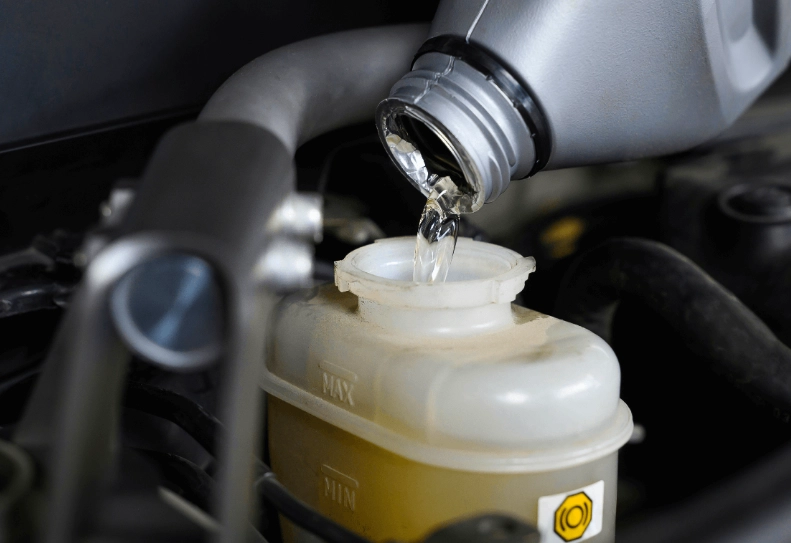
I learned this the hard way years ago with an old project car. I assumed all brake fluid was basically the same. A cheap bottle of the most common type later, and I had a brake system with corroded seals and a repair bill that made me wince. It was a stupid, avoidable mistake. So let's make sure you don't repeat it.
The Core Answer (Before We Dive Deep): For 99% of drivers, the correct answer to "which brake fluid for my car" is printed in two places – your vehicle's owner's manual and on the cap of the master cylinder reservoir. It will say something like "DOT 4" or "Use only DOT 3." That's your gospel. But understanding why it says that is what makes you an informed car owner.
It All Boils Down to the DOT Rating. What Does That Even Mean?
DOT stands for the U.S. Department of Transportation. They don't make the fluid, but they set the minimum performance standards that all brake fluid sold in the U.S. must meet. The number (DOT 3, DOT 4, DOT 5, DOT 5.1) tells you about the fluid's chemical base and, more importantly, its boiling point.
Why does boiling point matter? Imagine coming down a long, steep mountain pass. You're riding the brakes, and that creates immense heat. If the brake fluid boils inside your calipers or lines, it turns into gas. Unlike liquid, gas is compressible. The result? Your brake pedal sinks to the floor with little to no braking force. It's called "brake fade," and it's terrifying. The higher the DOT rating's boiling point, the more resistant the fluid is to this.
The Society of Automotive Engineers (SAE) works alongside these standards, and you can dig into the nitty-gritty technical specs on the SAE International website if you're an engineering buff. For us regular folks, the table below breaks down the key differences.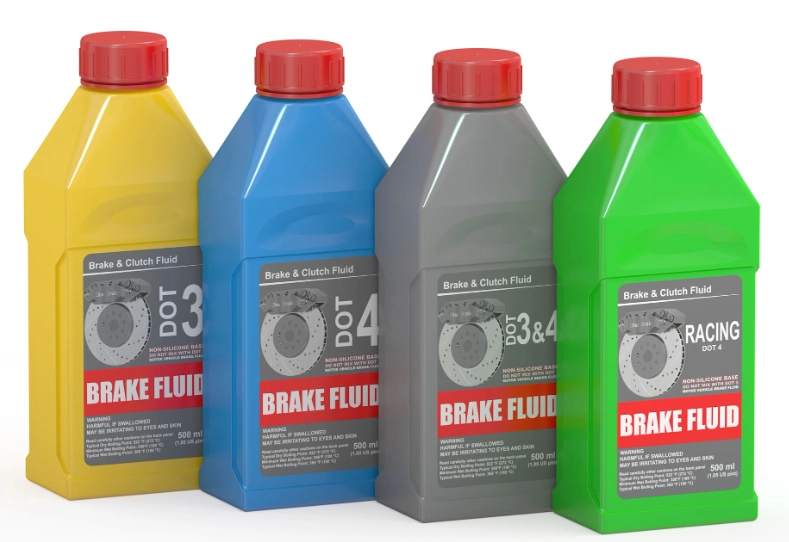
| DOT Type | Chemical Base | Key Characteristic | Dry Boiling Point (Min.) | Wet Boiling Point (Min.) | Common Use & Notes |
|---|---|---|---|---|---|
| DOT 3 | Glycol Ether | Hygroscopic (Absorbs water) | 401°F (205°C) | 284°F (140°C) | Most common in older and standard passenger cars. Requires regular replacement. |
| DOT 4 | Glycol Ether/Borate Ester | Hygroscopic, Higher Boiling Point | 446°F (230°C) | 311°F (155°C) | Modern standard for most cars, SUVs, light trucks. Better performance than DOT 3. |
| DOT 5 | Silicone | Hydrophobic (Repels water) | 500°F (260°C) | 356°F (180°C) | Used in classic cars, military, some motorcycles. NOT compatible with DOT 3/4/5.1. Causes major issues if mixed. |
| DOT 5.1 | Glycol Ether/Borate Ester | Hygroscopic, Highest Boiling Point (Glycol-based) | 500°F (260°C) | 356°F (180°C) | Used in high-performance cars, heavy-duty, ABS systems. Compatible with DOT 3 & 4. |
See those "Wet Boiling Point" numbers? That's critical. "Hygroscopic" means the fluid absorbs moisture from the air over time through microscopic pores in brake hoses and reservoir seals. This water contamination lowers the fluid's effective boiling point dramatically. That's why even if you don't drive much, your brake fluid still needs changing every 2-3 years – it's degrading just sitting there.
How to Actually Choose the Right Brake Fluid for Your Specific Car
Okay, you've found the recommended DOT rating. Sometimes the manual might list two, like "DOT 4 recommended, DOT 3 acceptable." Here's where the real decision-making starts, based on your car and how you drive.
Scenario 1: The Daily Commuter / Standard Family Car
You drive a typical sedan, SUV, or minivan to work, school, and the grocery store. No track days. For you, the answer to which brake fluid for my car is straightforward: use exactly what the manufacturer specifies. If it says DOT 4, use a reputable brand of DOT 4. There's no need to "upgrade" to DOT 5.1. A high-quality DOT 4 fluid from brands like ATE, Brembo, or Motul (their DOT 4 offerings) is more than sufficient and designed for the specific materials in your car's braking system. The goal here is reliable safety and OEM compatibility.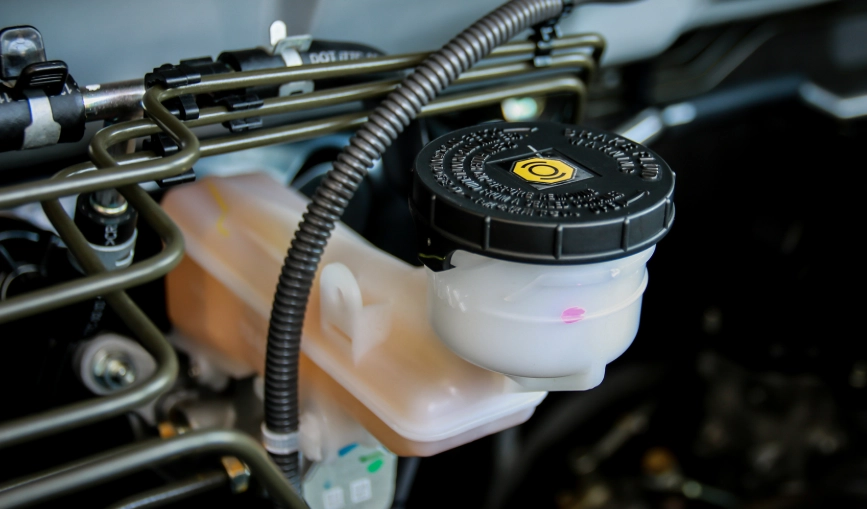
My daily driver is a common hatchback that specifies DOT 4. I use a standard, name-brand DOT 4 and change it every two years like clockwork. It's boring, but it's safe and the brakes feel consistently firm. I don't overthink it.
Scenario 2: The Performance / Sports Car Enthusiast
You push your car harder. Maybe you do occasional canyon runs, autocross, or even track days. Here, boiling point becomes a genuine concern. You should still start with the manufacturer's spec, but you can look within that rating for a "performance" or "racing" variant.
- If your car calls for DOT 4, you can use a DOT 4 "Plus," "Super," or "Racing" fluid. These have significantly higher dry and wet boiling points (often exceeding 500°F/260°C dry) but maintain compatibility with your system. They're still glycol-based.
- If your manual says DOT 5.1, you're already in the high-performance tier. Stick with a good DOT 5.1.
The trade-off? These high-performance fluids tend to absorb moisture even faster (they're more hygroscopic) and thus have a shorter service life. If you're using racing fluid, you should be flushing it very frequently, sometimes even after a single track event.
Scenario 3: The Classic / Vintage Car Owner
This is the main domain of DOT 5 silicone fluid. The big advantage here is that it doesn't absorb water, so it doesn't promote internal corrosion in a car that might sit for months. It also won't strip paint, which is a big deal for pristine classics.
CRITICAL WARNING: DOT 5 (silicone) is NOT compatible with DOT 3, 4, or 5.1 (glycol). They do not mix. If your system was designed for glycol-based fluid and you put in DOT 5, you'll likely get air bubbles that are nearly impossible to bleed out, leading to a soft pedal. Conversely, putting glycol fluid into a DOT 5 system can damage seals. Only use DOT 5 if your car's manual or a reputable restoration guide explicitly calls for it. Converting a system designed for glycol to silicone requires a complete and thorough system flush, which many shops advise against.
The Step-by-Step Guide to Finding and Confirming Your Fluid
Let's make this a foolproof checklist. Before you buy a single bottle, do these three things:
- Consult the Owner's Manual: This is the #1 authority. Look in the index under "Fluids" or "Brakes." It will state the exact type.
- Check the Reservoir Cap: Pop the hood and look at the master cylinder cap (usually on the driver's side, back of the engine bay). It's almost always labeled with the required fluid type. This is a quick visual confirmation.
- Consider Your Driving: Use the scenarios above. Are you standard, performance, or classic? This tells you if you should get standard or a high-performance version of your specified DOT rating.
What if the manual is gone and the cap is unreadable? Don't guess. A quick call to a dealership parts department with your VIN can get you the answer. Or, consult reliable online resources. For broad safety standards and information, the National Highway Traffic Safety Administration (NHTSA) provides guidelines on brake system safety, reminding us of the critical role fluid plays.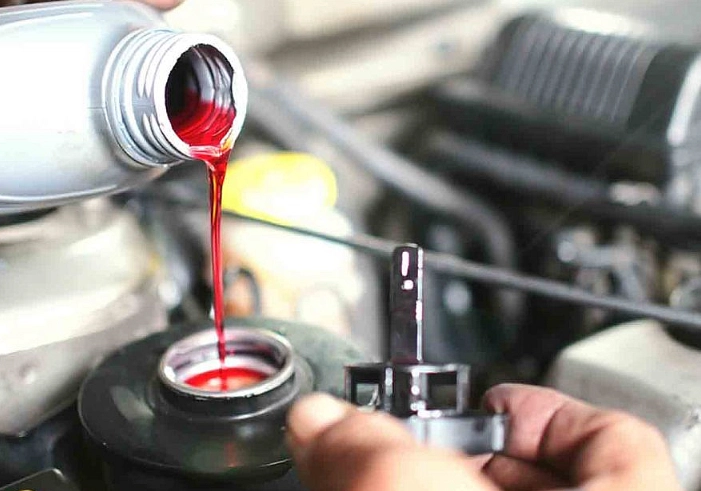
Top Mistakes People Make (And How to Avoid Them)
I've seen these happen too often. Avoiding them is half the battle in solving which brake fluid for my car correctly.
- Mixing Different Types: This is the cardinal sin. Never, ever mix DOT 5 with anything else. Mixing DOT 3, 4, and 5.1 is technically possible as they are glycol-based and "compatible," but it's a bad practice. You'll end up with a cocktail whose boiling point and properties are unpredictable. Always do a complete system flush if changing between even compatible types.
- Using the Wrong Fluid for ABS: Modern Anti-lock Brake Systems (ABS) have intricate pumps and valves. Most manufacturers specifically design their recommended fluids to work with these components. Using a non-spec fluid, especially a thick racing fluid in cold climates, can affect ABS operation.
- Ignoring the Service Interval: Brake fluid is a maintenance item, not a "lifetime" fluid. That moisture absorption happens regardless of mileage. A 5-year-old car on its original brake fluid almost certainly has water-contaminated fluid with a dangerously low boiling point. Flush it every 2-3 years.
- Buying the Cheapest Bottle: Brakes aren't the place to save $3. Stick with known brands from automotive suppliers. A cheap, off-brand fluid may not meet the full DOT spec it claims to, putting you at risk.
Pro Tip from a Mechanic Friend: When in doubt between two compatible choices (e.g., standard DOT 4 vs. high-temp DOT 4), choose the one with the higher wet boiling point listed on the bottle. That's the number that matters most in real-world, aged fluid conditions.
Your Brake Fluid Questions, Answered
These are the things people Google after the initial "which brake fluid" search.
The Final Verdict: Making Your Decision
So, after all this, what's the final answer to which brake fluid for my car?
It's not a mystery. It's a simple process of identification and matching. Start with your car's specified DOT rating as the non-negotiable foundation. Then, layer on your driving needs: standard fluid for daily use, a high-performance version of that same rating for spirited driving. Never mix silicone with glycol. Change it more often than you think you need to.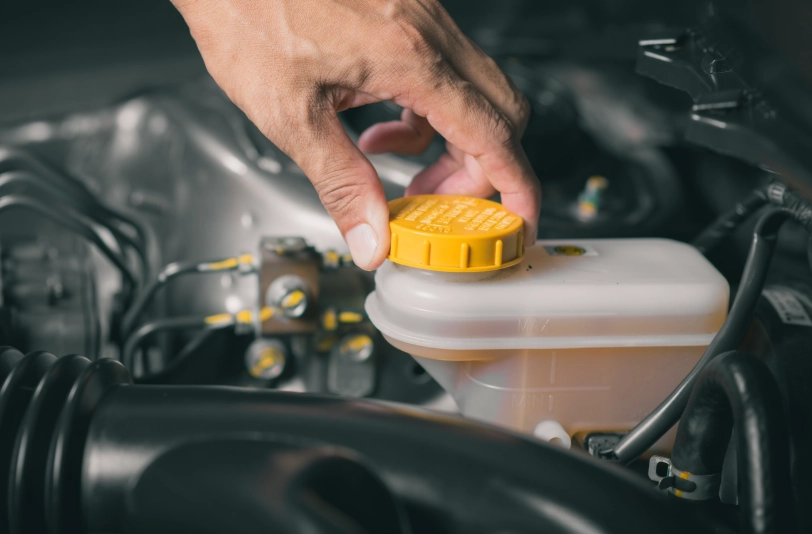
The goal isn't to make this complicated. It's to give you the knowledge to make a one-minute decision at the auto parts store with total confidence. You'll know you're buying the right bottle not because a salesperson said so, but because you understand your car's requirements. That knowledge turns a routine purchase into a direct investment in your safety and your car's reliability. And really, that's the whole point of asking the question in the first place.
Go check your manual. Right now. I'll wait.