Let's be honest. You're searching for a battery replacement cost because you're staring at a warning light, a device that won't turn on, or a repair quote that made your eyes water. You want a straight answer, not a runaround. The truth is, the price can swing from a manageable $50 to a staggering $20,000. It all depends on what's dead and where you take it.
This guide cuts through the noise. We'll break down the real costs for car batteries, phone and laptop batteries, and the big one—electric vehicle (EV) batteries. More importantly, we'll show you why prices vary so wildly and give you concrete strategies to avoid overpaying. I've been through this myself more times than I'd like to admit, from a dead Prius hybrid battery to a swollen laptop battery, and I've learned where the hidden fees and honest deals are.
What You'll Find in This Guide
The Real Cost of a Car Battery Replacement
This is the most common battery swap. A standard 12-volt lead-acid battery for a typical sedan or SUV.
The national average, including parts and labor, falls between $150 and $300. But that's just the surface.
Here's a breakdown that shows where your money goes:
| Component | Price Range | Details & Notes |
|---|---|---|
| Battery Itself | $100 - $200 | Price varies by brand (ACDelco, Optima, DieHard), warranty (3-5 years), and Cold Cranking Amps (CCA). More CCAs for colder climates cost more. |
| Core Charge | $20 - $25 (refundable) | This is a deposit you get back when you return your old battery. Don't forget it! It's an environmental recycling fee. |
| Labor/Installation | $30 - $100 | A simple top-post battery in an easy location might be $30. A battery buried under the seat or in the wheel well (looking at you, some BMWs and Mercedes) can take an hour of labor. |
| Additional Services | $20 - $50 | Often includes a system check, cleaning terminals, and registering the battery to the vehicle's computer (critical for many modern cars). |
You can save a chunk by doing it yourself if the battery is accessible. Buy the battery from a parts store like AutoZone or Advance Auto Parts—they often install for free if you buy from them. But for complex locations, paying for professional installation is worth avoiding a headache or damage.
One mistake I see? People replace the battery when the real issue is a failing alternator or a parasitic drain. A good mechanic should test the charging system first. A report from the AAA often highlights that many roadside battery calls are resolved with a jump start, not a full replacement.
Phone & Laptop Battery Replacement Prices
With consumer electronics, you have two paths: the official manufacturer route and the third-party repair shop.
Official Manufacturer Service (Apple, Samsung, Dell, etc.): You pay a premium for genuine parts and certified techs. An iPhone battery replacement at Apple is currently $99 (for most models out of warranty). A MacBook Pro battery can run $129 to $249. Samsung charges similar rates. The peace of mind is the warranty on the repair and the guarantee of a quality battery that won't swell or damage your device.
Third-Party or Independent Repair Shops: This is cheaper, usually $50 to $120 for a phone, and $80 to $180 for a laptop. The risk here is part quality. Some shops use excellent aftermarket batteries; others use cheap cells that degrade quickly. Always ask about the battery brand and the warranty on the repair.
A huge, often overlooked factor is the device's age. Replacing the battery in a 7-year-old laptop for $150 might not be worth it if other components are failing. Conversely, a $99 battery can give a two-year-old phone a new lease on life for years.
Pro Tip: Before you pay for a phone battery, check its health in settings. If it's above 80% capacity, the issue might be software or another component. Also, for laptops, some brands (like older MacBooks) have battery replacement programs—check the manufacturer's website first.
Electric Vehicle (EV) Battery Replacement: The Big One
This is the cost that generates headlines and anxiety. Let's demystify it.
Yes, a full, out-of-warranty replacement for an entire EV battery pack can be $5,000 to $20,000+. A replacement for a Tesla Model 3 battery module (not the whole pack) might be in the $5,000-$7,000 range, while a full pack replacement for an older Nissan Leaf could be $8,000. For luxury EVs, the price climbs sharply.
But here's the critical perspective almost everyone misses: You will likely never pay this. Why?
- Long Warranties: Federal law mandates at least an 8-year/100,000-mile warranty on EV battery packs. Most manufacturers offer this or better. Tesla's warranty covers 8 years/120,000-150,000 miles depending on the model. If the battery capacity drops below a certain threshold (usually 70%) within that period, it's replaced for free.
- Battery Degradation is Slow: Modern EV batteries are designed to last the life of the car. Data from groups like Geotab shows average degradation of only 2-3% per year. After 10 years, you still have 70-80% of your range.
- Module-Level Repair is Becoming Common: Instead of replacing the entire 1,000-pound pack for $20k, specialized shops (and increasingly dealerships) can now diagnose and replace individual faulty modules for a fraction of the cost, often between $1,500 and $5,000.
The fear of a $20k bill is largely based on early, out-of-warranty scenarios for first-generation EVs. The market and repair technology have evolved.
What Actually Determines Your Final Price?
Beyond the type of battery, these four factors are the real price drivers.
1. The Source of the Parts (OEM vs. Aftermarket)
Original Equipment Manufacturer (OEM) parts cost more. An Apple battery, a Toyota-branded car battery, a Tesla battery module. You're paying for the brand assurance and perfect compatibility. Aftermarket parts can be just as good (or sometimes better) for less money, but you must research the brand. For safety-critical items like batteries, I lean towards OEM or highly reputable aftermarket brands.
2. Labor Complexity and Who Does It
Labor isn't just time; it's expertise. Replacing a battery in a modern German car often requires coding the battery to the vehicle's computer system. Miss this step, and the new battery will die prematurely. This specialized knowledge commands a higher rate. A dealership or specialist will charge more than a quick-lube shop, but they're also less likely to make a costly mistake.
3. Your Vehicle or Device Model
A battery for a common Honda Civic is cheap and plentiful. A battery for a rare or luxury model is more expensive. Same with phones. An iPhone 15 battery is a standard repair. An iPhone 15 Pro Max? Slightly more due to the size and assembly. Exotic always carries a premium.
4. Warranty and Service Bundles
A cheaper battery often comes with a shorter warranty (1-2 years). A more expensive one might have a 4-5 year warranty. That longer warranty has value. Also, some service quotes bundle diagnostics, system checks, and cleanup. A bare-bones quote might just be "battery swap." Make sure you're comparing the same service scope.
Your Battery Cost Questions, Answered
Can I replace a car battery myself to save money?
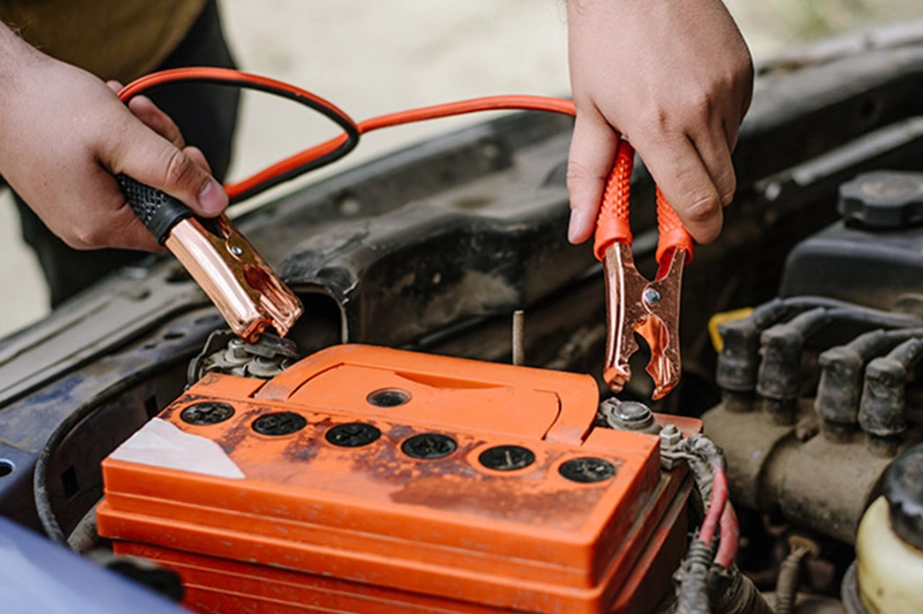
If it's in an easy-to-access location (under the hood, standard terminals), absolutely. Disconnect negative first, then positive. Swap, reconnect positive first, then negative. The tricky part is for modern cars (roughly 2008 and newer). Many require you to "register" the new battery to the car's computer using a scan tool. If you don't, the charging system won't optimize for the new battery, shortening its life. Some auto parts stores can do this registration for you after you install it.
My EV battery warranty is about to expire. Should I panic?
No. First, get a battery health check. Most dealerships or specialized EV shops can do this. If capacity is still well above 70%, you're probably fine for years. Start setting aside a small monthly maintenance fund if it eases your mind, but the odds of a sudden, catastrophic failure requiring a full $20k replacement are extremely low. Module repair is the more likely and affordable path.
The repair shop's quote seems high. How can I negotiate or verify?
Get three quotes. Always. Call two other reputable shops (dealership, independent mechanic, specialty shop) and describe your exact vehicle/model and symptoms. Ask for a breakdown: part cost (including part number), labor cost, and any fees. This gives you leverage. You can say, "I've been quoted $X for the part elsewhere, can you match it?" Most shops have some margin on parts. They might not budge on labor, but part price is often flexible.
Is it worth replacing the battery in an old device or car?
Do a quick cost-benefit. If the device/car works perfectly otherwise and a battery costs less than 25-30% of its current value, it's usually worth it. For example, a $100 battery for a car worth $4,000 is a smart fix. A $1,000 battery repair on a laptop you could replace for $1,200 is not. Consider your emotional attachment too—if it's a beloved device, the calculation changes.
What should I do with the old battery?
Never throw it in the trash. Car batteries have a core charge refund precisely to ensure recycling. Take it back to any parts store. For electronics, Best Buy, Staples, and Apple Stores often take them for free recycling. Proper recycling is crucial—batteries contain toxic materials and valuable metals that can be reclaimed.