That little orange engine icon glowing on your dashboard isn't just decoration. It's your car's primary language, a coded cry for help. Car troubleshooting codes, officially known as Diagnostic Trouble Codes (DTCs), are the Rosetta Stone for modern vehicle diagnostics. If you've ever felt a pang of anxiety when the check engine light comes on, you're not alone. But here's the truth: with a basic understanding of the OBD-II system and a $30 tool, you can shift from panic to understanding in minutes. This guide will walk you through exactly how to read, interpret, and act on these codes, saving you time, money, and countless trips to the mechanic for issues you might fix yourself.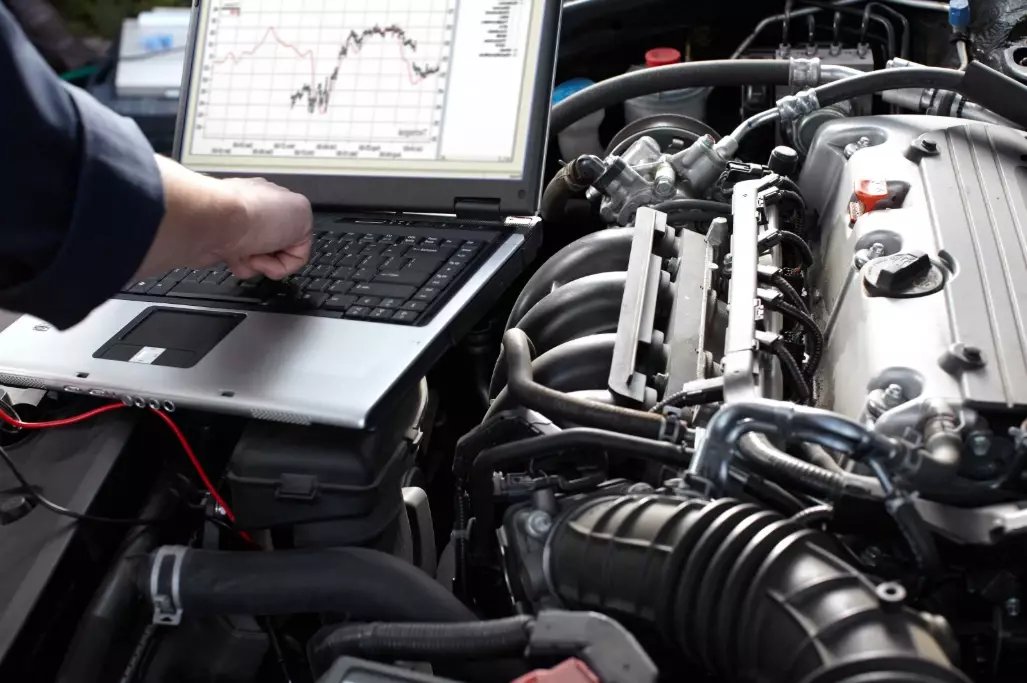
Navigate This Guide
- What Are Car Diagnostic Codes & The OBD-II System?
- How to Read Your Car's Trouble Codes
- Understanding the Code Itself: P0, B1, C2, U3
- Code Severity: From "Check Gas Cap" to "Pull Over Now"
- 5 Common Car Trouble Codes Explained
- How to Reset Check Engine Light Codes
- Expert Insights & Common Pitfalls
- Your Car Code Questions Answered
What Are Car Diagnostic Codes & The OBD-II System?
Every car built after 1996 in the US (and similar dates elsewhere) has a mandated onboard computer system called OBD-II (On-Board Diagnostics, second generation). Think of it as the car's central nervous system. Sensors monitor everything from engine temperature and oxygen levels to transmission shifts and emissions. When a sensor reads a value outside its predetermined "normal" range for a set period, the car's computer logs a Diagnostic Trouble Code and usually illuminates the dreaded check engine light (MIL - Malfunction Indicator Lamp).
The Society of Automotive Engineers (SAE) and the International Organization for Standardization (ISO) created the standards that make these codes universal. This was a game-changer. Before OBD-II, each manufacturer had its own proprietary system, locking out DIYers and independent shops. Now, a single OBD2 scanner can read basic codes from a Ford, Toyota, or BMW.
How to Read Your Car's Trouble Codes
You have two main paths here: using a scan tool or an old-school manual method for some older cars.
Using an OBD2 Code Reader or Scanner
This is the standard, easy method. The market is flooded with options, from basic code readers to advanced bi-directional scanners.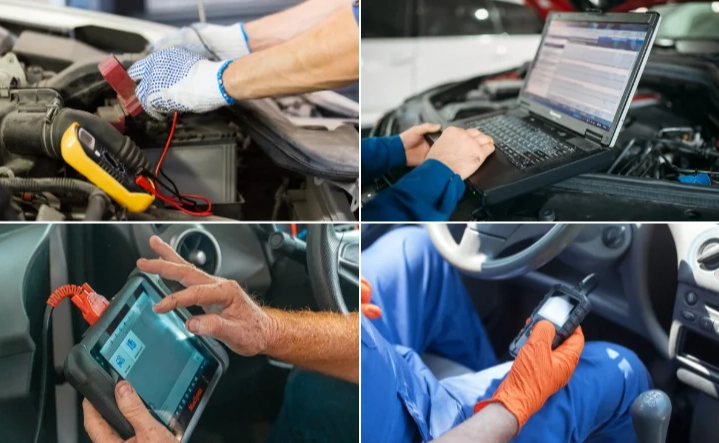
- Basic Code Readers ($20-$60): These plug in, power on, and spit out the code (e.g., P0300). They're great for the curious homeowner. Brands like ANCEL, BAFX, and BlueDriver are popular. I started with a basic one a decade ago; it paid for itself the first time it told me my issue was just a loose gas cap (P0455).
- Bluetooth/Wi-Fi Adapters & Smartphone Apps ($30-$100): These are my personal recommendation for most people. You get a small dongle (like from OBDLink or Veepeak) that plugs into the port, and it pairs with an app on your phone (Torque Pro, OBD Fusion, Car Scanner). The apps give you real-time data, graphs, and much better code definitions than basic readers.
- Professional Scan Tools ($100+): These standalone units from brands like Autel or Launch offer live data streaming, service light resets, and advanced functions. Necessary for serious DIYers or aspiring technicians.
The process is simple: locate the port, plug in the scanner, turn the ignition to "ON" (engine can be off), and follow the device's prompts to "read codes."
The "Paperclip Method" (For Older Pre-OBDII or Specific Manufacturers)
Some older cars (early 1990s GM, some Fords) allowed you to jump two pins in the diagnostic port to make the check engine light flash the codes in Morse-code-like sequences. Count the flashes: long flashes are tens, short flashes are ones. Code 12 would be flash...pause...flash, flash. It's archaic, but it works in a pinch and costs nothing but a paperclip. Don't try this on a modern OBD-II port—it won't work and could cause issues.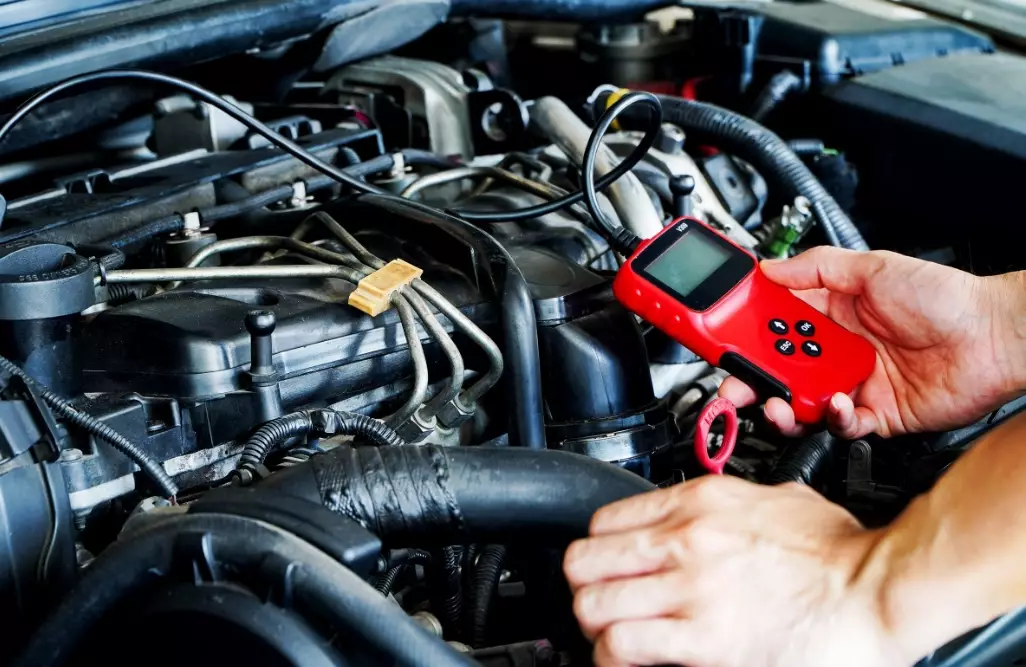
Understanding the Code Itself: P0, B1, C2, U3
A DTC is a five-character alphanumeric code. Let's break down P0304 as an example.
| Character | Meaning | In P0304 | Explanation |
|---|---|---|---|
| 1 | System | P | Powertrain: Covers engine, transmission, and emissions. This is 80% of the codes you'll see. |
| 2 | Code Type | 0 | SAE/Generic (0): A universal code defined by SAE standards. Manufacturer-Specific (1): A code unique to the carmaker (e.g., P1xxx codes). These often require more detailed repair info. |
| 3 | Subsystem | 3 | Indicates the general area. For P-codes: 1/2 = Fuel/Air, 3 = Ignition, 4 = Emission Control, 5/6 = Speed/Idle, 7/8 = Transmission. |
| 4 & 5 | Specific Fault | 04 | The unique identifier for the fault. Here, "04" means "Cylinder 4 Misfire Detected." |
Other first letters include:
- Body (airbags, power windows, seats)
- Chassis (ABS, traction control, stability control)
- U Network (communication errors between modules)
Code Severity: From "Check Gas Cap" to "Pull Over Now"
Not all codes are created equal. Your scanner might show the code's status, which is crucial.
| Status/Type | What It Means | Check Engine Light Behavior | Action Required |
|---|---|---|---|
| Pending Code | The fault has occurred a few times but not enough to fully trigger the code. The computer is watching it. | Light is OFF. | Monitor. Could be intermittent. A pending P0300 might mean a minor, occasional misfire. |
| Confirmed/Active Code | The fault has met all criteria to be logged as a confirmed problem. | Light is ON (steady). | Diagnose and address soon. This is your car saying, "Hey, fix this." |
| Permanent Code | A special type that remains in memory even after clearing until the monitor runs and passes. Used for emissions compliance. | May turn off, but code stays. | You must drive through a specific "drive cycle" to clear it after fixing the issue. |
| MIL-On Code | Emissions-related confirmed fault. | Solid light. | Needs fixing, but not an immediate breakdown risk. |
| Flash/MIL-Blinking Code | Indicates a severe misfire that can damage the catalytic converter. | Light FLASHES. | REDUCE LOAD IMMEDIATELY. Avoid hard acceleration. Get it checked as soon as possible. |
5 Common Car Trouble Codes Explained
Let's get specific. Here are codes you're statistically likely to encounter.
1. P0420 / P0430 - Catalyst System Efficiency Below Threshold
The classic "bad catalytic converter" code. Downstream oxygen sensors detect the converter isn't cleaning exhaust gases as well as it should. But here's the non-consensus part: A P0420 is rarely just a failed cat initially. It's often a symptom. A failing upstream oxygen sensor, a massive engine misfire (from a bad spark plug), or an exhaust leak before the sensor can all trick the computer into thinking the cat is bad. Always test the oxygen sensors and check for exhaust leaks or engine running issues before condemning the $1,000+ catalytic converter.
2. P0300 - Random/Multiple Cylinder Misfire Detected
The engine is stumbling, and the computer can't pin it to one cylinder. This points to a system-wide problem.
- Common Causes: Bad fuel (water contamination), low fuel pressure (weak pump or clogged filter), a massive vacuum leak (like a disconnected hose), faulty crankshaft position sensor, or a failing engine control module (ECM).
- Cost to Fix: Can range from $100 for a vacuum hose to over $1,000 for fuel pump or ECM replacement.
3. P0171 / P0174 - System Too Lean (Bank 1 or 2)
The engine is getting too much air or not enough fuel. This is a vacuum leak's calling card 90% of the time. Listen for a hissing sound. Spray carburetor cleaner or brake cleaner around intake hoses and gaskets with the engine running (be careful!). If the engine RPM surges, you've found your leak. Other causes: dirty mass airflow (MAF) sensor, failing fuel pump, or clogged fuel injectors.
4. P0442 / P0455 - Small/Large Evaporative Emission System Leak
The system that captures fuel vapor has a leak. Most common fix? Tighten or replace your gas cap. It's the first and easiest thing to check. If that's not it, you could have a leak in a charcoal canister or a purge valve. A smoke machine test is the professional way to find these tiny leaks.
5. P0700 - Transmission Control System Malfunction
This is a generic "something's wrong with the transmission electronics" code. It's almost always accompanied by a manufacturer-specific transmission code (e.g., P2714). You need a scanner that can read transmission-specific codes to get any real insight. It could be a simple solenoid, a speed sensor, or something more serious.
How to Reset Check Engine Light Codes
Clearing the code is easy. Fixing the underlying problem is the hard part. Resetting without fixing is like taking the batteries out of a smoke alarm.
- Use Your Scanner: Most have a "Clear Codes" or "Erase DTCs" function. This turns off the light.
- Disconnect the Battery (The Brute Force Method): Disconnect the negative terminal for 10-15 minutes. This resets the entire computer, so you'll lose radio presets and the engine may need to relearn idle. It's messy.
What happens after you clear? The light will stay off until the car's computer runs its self-tests (called "monitors") again. If the problem is fixed, the monitors will pass and the light stays off. If not, the code and light will return, usually within a few drive cycles.
Expert Insights & Common Pitfalls
After years of tinkering and talking to mechanics, the biggest mistake I see is treating the code as the final diagnosis. The code P0301 (Cylinder 1 Misfire) tells you where, not why. The "why" could be a bad spark plug, a faulty ignition coil, a clogged fuel injector, or low compression from a burnt valve.
You need to diagnose the component. For a misfire, swap the coil from cylinder 1 to cylinder 2. If the code moves to P0302, you've found the bad coil. If it stays on P0301, the problem is with the plug, injector, or something internal to that cylinder.
Another pitfall: relying solely on generic OBD2 scanners. For transmission, airbag, or advanced body codes, you often need a more advanced tool or factory-level software to access all modules and perform adaptations. A cheap reader might not even see a B-code for your airbag light.
Your Car Code Questions Answered
 Is a $25 Bluetooth OBD2 adapter from Amazon reliable enough for diagnosis?