Quick Navigation
- First Things First: What Does the Check Engine Light *Actually* Mean?
- The Immediate Action Plan: What to Do When the Light Comes On
- Common Check Engine Light Culprits: From Simple to Serious
- Can You Keep Driving With the Check Engine Light On?
- DIY vs. Professional Repair: Where to Draw the Line
- The Check Engine Light and Your Car's Health
- Clearing the Check Engine Light
- Frequently Asked Questions (The Stuff You're Actually Searching For)
- Final Thoughts: Your New Mindset
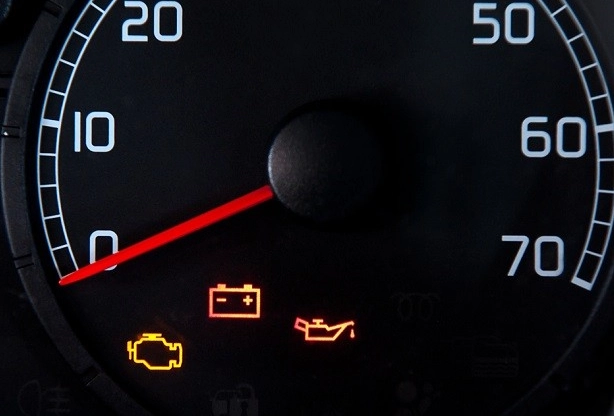
Let's be honest. That little orange or yellow engine-shaped icon lighting up on your dashboard is one of the most anxiety-inducing sights for any driver. It's vague, it's ominous, and it seems to show up at the worst possible times. I remember the first time mine came on—I was on a road trip, miles from home, and my heart just sank. Is the car about to die? Is this going to cost me thousands?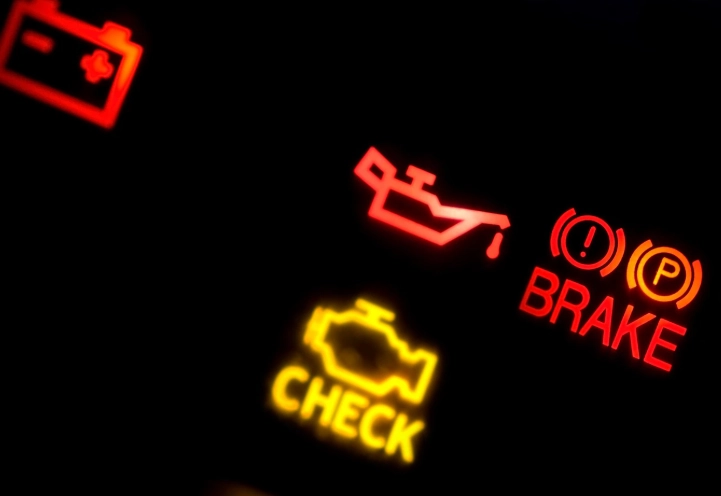
Take a deep breath. In most cases, a check engine light is more of a "check-in" light than a "panic-now" light. It's your car's way of saying, "Hey, something's not quite right with my engine or emission systems. You should probably look into this." The key is knowing how to listen to what it's trying to tell you.
This guide is here to cut through the fear and confusion. We'll break down everything you need to know, from what that light actually represents to step-by-step actions you can take, whether you're a DIY enthusiast or someone who just wants to talk intelligently with a mechanic.
The Core Idea: Your check engine light is part of the On-Board Diagnostics II (OBD2) system, a computer network that monitors your engine's performance. When a sensor detects something outside normal parameters, it logs a "Diagnostic Trouble Code" (DTC) and illuminates the light. It's a messenger, not a judge.
First Things First: What Does the Check Engine Light *Actually* Mean?
It's not just one thing. Think of it as a spectrum of alerts. The most critical piece of information is whether the light is solid or flashing/blinking. This is your car's way of communicating urgency.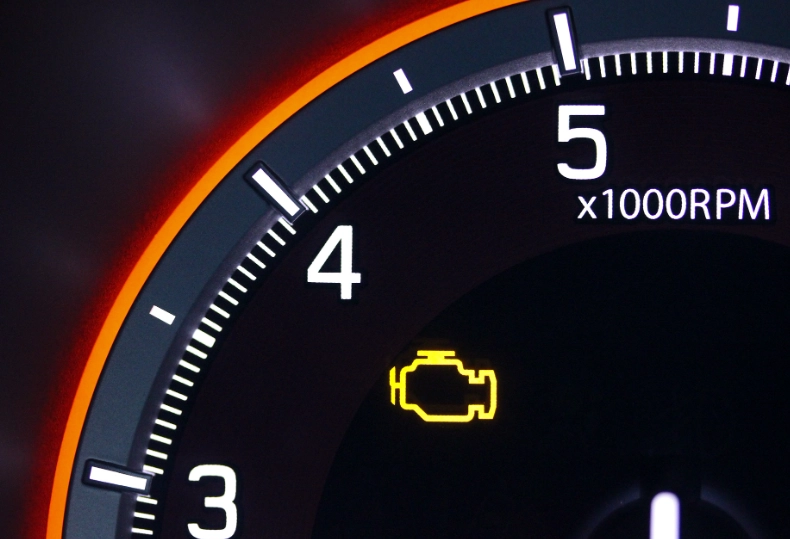
A solid check engine light means the car's computer has detected a problem. It could be minor, it could be significant, but it's generally not an immediate, catastrophic threat. You have some time to assess the situation. You should plan to diagnose the issue soon, but you don't necessarily need to pull over immediately on a highway.
A flashing check engine light is a whole different story. This indicates a severe misfire—unburned fuel is being dumped into the exhaust system. This can quickly overheat and destroy the catalytic converter, one of the most expensive parts of your exhaust system. If you see a flashing light, you need to reduce engine load immediately. Pull over safely if you can, or at the very least, ease off the gas, avoid hard acceleration, and get the car to a mechanic or a safe location as soon as possible.
Red Alert: A flashing check engine light is your car's version of screaming. Don't ignore it. Continuing to drive normally with a flashing light can turn a several-hundred-dollar repair (like spark plugs or coils) into a multi-thousand-dollar one (a new catalytic converter). I learned this the hard way on an old beater I drove in college—cost me more than the car was worth.
Sometimes the light will come on solid, then go off after a few drive cycles. This often points to an intermittent issue. Maybe a loose gas cap finally sealed, or a sensor had a momentary glitch. While it's tempting to forget about it, the code is still stored in the computer's memory. The underlying problem hasn't been magically fixed; it's just not currently active. It will likely come back.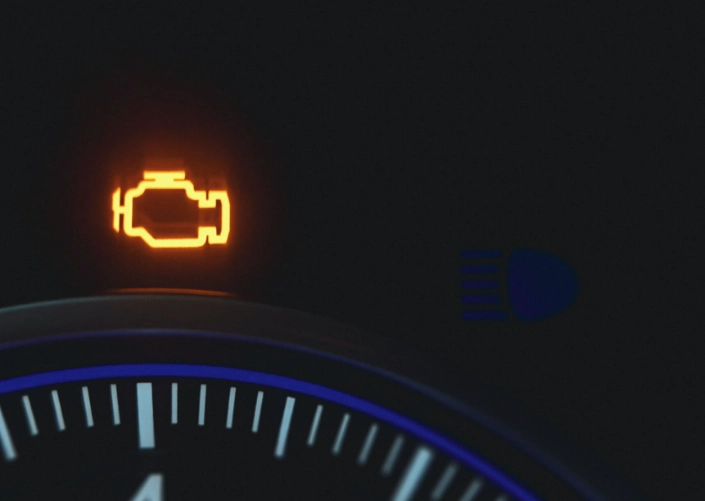
The Immediate Action Plan: What to Do When the Light Comes On
Okay, the light is on. Here's a practical, no-nonsense sequence of steps. Don't just drive straight to the dealership and hand them a blank check.
Step 1: Don't Panic, But Observe
First, note the light's behavior. Solid or flashing? Is the car driving differently? Listen for new noises (knocking, pinging, hissing). Feel for vibrations, loss of power, or rough idling. Smell for anything unusual like gasoline, burning oil, or sweet antifreeze. This sensory information is gold for diagnosis.
If the car is running terribly—shaking violently, losing power, making awful noises—safely get off the road and call for a tow. No guide can override obvious mechanical distress.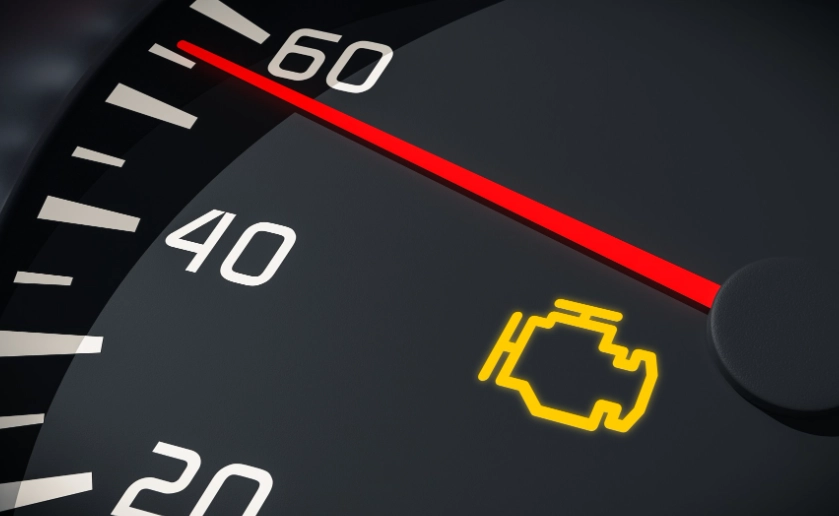
Step 2: The Classic First Check: Your Gas Cap
This seems too simple to be true, but a loose, damaged, or missing gas cap is one of the most common triggers for a check engine light. It causes a leak in the evaporative emission control system (EVAP), which the car's computer definitely notices.
Pull over safely, turn off the car, and check the gas cap. Is it tight? Give it a good twist until it clicks several times. Is the rubber seal cracked or missing? If it's damaged, a new cap is a cheap and easy fix. After tightening or replacing, drive for a day or two. For many cars, it takes a few drive cycles for the computer to re-test the system and turn the light off. It's the cheapest potential fix, so always rule it out first.
Step 3: Get the Code Read (This is the Key)
You cannot know what's wrong without reading the Diagnostic Trouble Code (DTC). This is non-negotiable. Guessing is how you get ripped off.
Thankfully, getting the code read is easy and often free.
- Auto Parts Stores: Most major chains like AutoZone, Advance Auto Parts, and O'Reilly Auto Parts offer free code reading as a service. They'll plug in a scanner, give you the code(s), and often print out a list of possible causes. Important: They are usually not allowed to clear/reset the codes for liability reasons. That's fine—you just need the information.
- Buy a Scanner: For about $30-$80, you can buy a basic OBD2 scanner. It's one of the best investments for car ownership. It plugs into a port almost always located under the dashboard near the driver's knees. I keep one in my glove box. It gives you instant, private information and lets you clear codes after making repairs.
- Mechanic or Friend: Any mechanic will have a professional scanner, and many car enthusiasts have one too.
The code will look something like P0420 or P0301. The first letter indicates the system (P for Powertrain, which is most common). The first digit is a code type (0 for generic/SAE). The next three digits are the specific code. Write it down.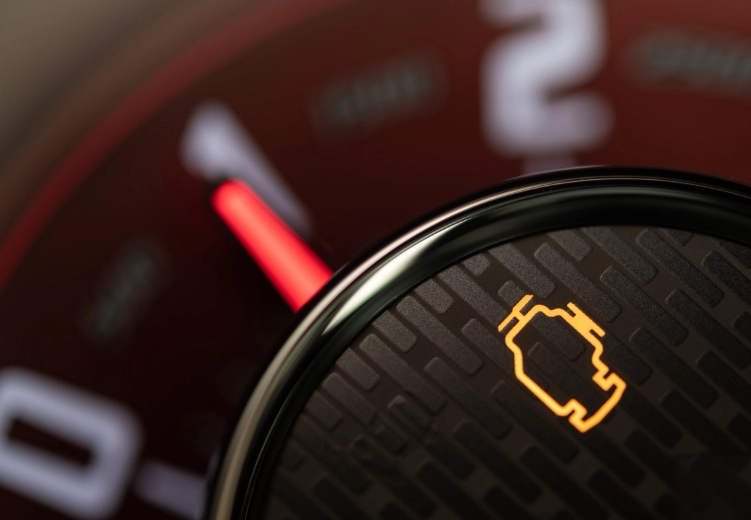
Pro Tip: Don't just get the code and leave. Ask for the "freeze frame data." This is a snapshot of the engine's conditions (speed, load, temperature) when the fault occurred. It can be incredibly helpful for diagnosing intermittent issues.
Step 4: Research and Diagnose (Before You Get a Quote)
Now you have a code. Don't just type "P0420" into Google and believe the first scary result. Use the code, along with your car's make, model, and year, to do some research.
Excellent resources include:
- Vehicle-specific forums (e.g., FordF150Forum.com, Honda-Tech.com). Real owners have likely had the exact same issue.
- Repair manuals like those from ALLDATA or iATN (International Automotive Technicians' Network - a professional resource often cited by experts).
- YouTube. Search for "[Your Car Model] P0420 repair" and you'll often find a step-by-step video.
This step empowers you. It turns an intimidating check engine light into a specific, researchable problem. You'll know if it's often a simple sensor or a major component failure.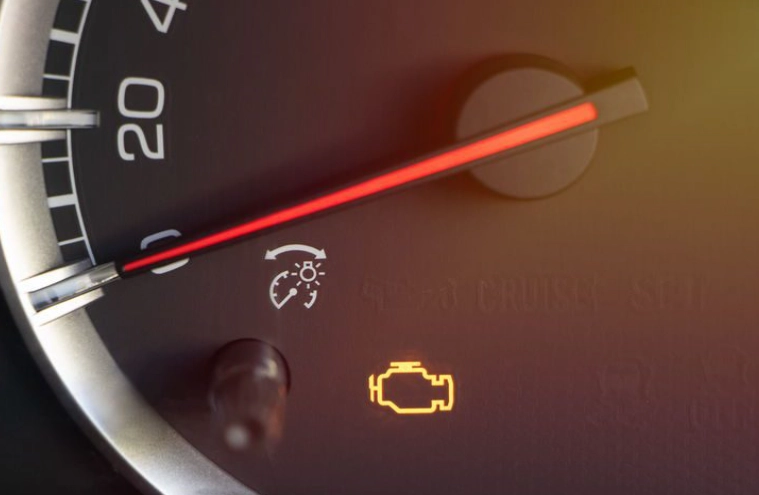
Common Check Engine Light Culprits: From Simple to Serious
While there are hundreds of potential codes, a handful of problems cause the vast majority of check engine light events. Here’s a breakdown of the usual suspects.
| Problem Area | Typical Code Examples | What It Means | Urgency & Typical Cost Range |
|---|---|---|---|
| Loose/Faulty Gas Cap | P0455, P0456, P0457 | Evaporative system leak. The simplest fix. | Low. $0-$25 for a new cap. |
| O2 Sensor Failure | P0130-P0167 (various) | The sensor monitoring oxygen in exhaust is faulty, causing poor fuel economy and emissions. | Medium. Should be fixed, but not immediate. $200-$500. |
| Catalytic Converter | P0420, P0430 | Converter efficiency below threshold. Can be caused by other problems (misfires). | Medium-High. Failing can reduce performance. Replacement is very expensive: $1,000-$2,500+. |
| Mass Airflow (MAF) Sensor | P0101, P0102 | Sensor measuring air intake is dirty or failed. Causes rough running and poor MPG. | Medium. Can cause driveability issues. $200-$400. |
| Spark Plugs/Ignition Coils | P0300 (random misfire), P0301-P0306 (cylinder-specific) | Misfire due to worn plugs, bad coils, or related wiring. A common cause of a *flashing* light. | Medium-High (if flashing). Can damage converter. $200-$600 for a set. |
| EVAP System Leak (small) | P0442, P0455 | Small leak in fuel vapor system. Could be a hose, purge valve, or vent solenoid. | Low-Medium. Needs fixing to pass emissions. $150-$500 to find/fix leak. |
Look, the table gives you a ballpark, but prices vary wildly by car and location. A spark plug change on a 4-cylinder Honda is trivial; on a German V8 with plugs buried under the intake manifold, it's a major job. That's why research for your specific vehicle is crucial.
My personal pet peeve? Mechanics who immediately jump to "needs a new catalytic converter" for a P0420 code. Often, that code is set because an upstream problem (like a faulty O2 sensor or a persistent misfire) is feeding bad data or unburned fuel to the converter. Fix the root cause first, clear the code, and see if it comes back. You might save a fortune.
Can You Keep Driving With the Check Engine Light On?
This is the million-dollar question. The unsatisfying but accurate answer is: It depends.
Driving is likely okay IF: The light is solid, the car is running perfectly normally (no changes in sound, feel, or power), and you have a plan to get the code read within the next few days. Many people drive for weeks with a solid light for a minor issue like an O2 sensor. It's not ideal for your emissions or potentially fuel economy, but it's often not an emergency.
You should NOT drive, or should drive very cautiously to a repair shop IF:
- The check engine light is flashing.
- The light is solid, but you notice significant symptoms: loss of power, loud knocking, overheating, thick smoke from the exhaust, or the car is shaking badly.
- You have other warning lights on with it, like the oil pressure light or temperature warning. This indicates a compound problem.
When in doubt, err on the side of caution. A tow is cheaper than a new engine.
DIY vs. Professional Repair: Where to Draw the Line
Once you have the code and have done your research, you need to decide: can I fix this myself?
Good DIY Candidates: These are typically "bolt-on" parts that are easily accessible.
- Replacing a gas cap.
- Changing spark plugs and ignition coils (on many, but not all, engines).
- Replacing an easily accessible O2 sensor or MAF sensor (often just one electrical connector and one wrench turn).
- Swapping out a simple solenoid or valve, like an EVAP purge valve, if it's in an easy spot.
If you have basic hand tools, a bit of patience, and a good tutorial video for your specific car, these are very doable. The sense of accomplishment is great, and the savings are massive.
Leave it to a Professional: Some jobs require specialized tools, deep mechanical knowledge, or are simply too risky for a novice.
- Anything involving internal engine components (timing chains, valve adjustments).
- Diagnosing complex electrical gremlins or network communication faults.
- Major exhaust work like catalytic converter replacement, especially on newer cars with fragile sensors everywhere.
- If the diagnosis is unclear. A good mechanic has experience, advanced scan tools that can monitor live data, and the intuition to connect dots a DIYer might miss.
I'm a fairly confident DIYer, but I know my limits. I'll do my own brakes and spark plugs, but when my old truck threw a code for variable valve timing, I handed it to a specialist. It wasn't worth the risk of me messing up the engine timing.
The Check Engine Light and Your Car's Health
A check engine light isn't just an annoyance; it's a core part of your car's emissions and performance management. Ignoring it can have consequences.
Emissions Tests: In many states and regions, a lit check engine light is an automatic failure for your required emissions/smog check. You won't be able to renew your registration until it's fixed and the light is off.
Fuel Economy: Many problems that trigger the light, like a bad O2 sensor or dirty MAF sensor, cause the engine to run inefficiently—"rich" or "lean." This can tank your miles per gallon, quietly costing you money at the pump every week.
Potential for Cascading Damage: This is the big one. A small problem (a misfiring spark plug) ignored long enough can cause a massive problem (a melted catalytic converter). What starts as a $50 repair balloons into a $1,500 one. The check engine light is your early warning system to prevent this.
You can check for open recalls related to emissions or engine control modules that might cause a check engine light on the National Highway Traffic Safety Administration (NHTSA) website. Sometimes, the fix is free from the dealer.
Clearing the Check Engine Light
Once you've addressed the problem, you need to turn the light off. Simply disconnecting the battery for a few minutes will clear the codes and reset the light, but it also resets your radio presets, clock, and the engine's adaptive learning memory. The car might run a bit rough for a few miles as it re-learns.
The better way is to use an OBD2 scanner to clear the codes. After clearing, the light will be off. The car will then go through a series of "drive cycles" (specific driving conditions) to re-test all its monitors. If the problem is truly fixed, the light will stay off. If not, it will come back on, usually with the same code, telling you the repair wasn't successful.
A quick story: I once replaced an O2 sensor, cleared the code, and the light came back 50 miles later. I was frustrated. Turns out, I had accidentally nicked the wiring harness for the sensor when I was under the car a week earlier. The new sensor was fine, but my own clumsiness caused a short. The code pointed me right to it. The system works.
Frequently Asked Questions (The Stuff You're Actually Searching For)
How long can you drive with the check engine light on?
There's no set mileage. If it's solid and the car feels fine, you could technically drive for months, but you're risking worse fuel economy, failing an emissions test, and potential for a minor issue to become major. Get it diagnosed within a week or two.
Will a check engine light reset itself?
Sometimes, if the condition that caused it becomes intermittent and doesn't re-occur over several drive cycles, the light may turn off on its own. However, the historic code will remain stored in memory. The underlying fault is usually still there, lying in wait.
How much does it cost to fix a check engine light?
Anywhere from $0 (tightening a gas cap) to $2,500+ (a new catalytic converter). The average for common repairs like O2 sensors or ignition components is often in the $200-$600 range. The only way to know is to get the code.
Can low oil cause a check engine light?
Not directly. Low oil pressure will trigger the separate oil warning light (usually red). However, very low oil can cause engine damage (like failing variable valve timing solenoids) that could trigger a check engine light. They're separate systems, but one problem can cause another.
Can AutoZone reset my check engine light?
Most corporate policies prohibit store employees from clearing codes due to liability. They can read them for free, but you'll likely need your own scanner or a mechanic to clear it after a repair.
What's the difference between a check engine light and a service/maintenance required light?
A huge difference! The service light is just a mileage-based timer reminding you to get an oil change or tire rotation. It's scheduled maintenance. The check engine light indicates a fault or problem detected by the engine computer. Don't ignore the check engine light thinking it's just a maintenance reminder.
Final Thoughts: Your New Mindset
The goal isn't to never see the check engine light. Modern cars are complex, and sensors wear out. The goal is to not fear it.
Think of it as a partner in car ownership, albeit a cryptic one. It gives you a starting point—a code. That code leads to research, which leads to understanding, which leads to an informed decision: DIY, professional repair, or even monitoring a known minor issue.
Invest in a basic OBD2 scanner. It pays for itself the first time you avoid an unnecessary diagnostic fee or successfully fix a simple problem. Use the free resources at parts stores. Tap into the collective knowledge on vehicle forums.
When that little orange engine icon glows, don't see a dollar sign. See a question. And now, you have the tools to find the answer.
Safe driving.