You know that feeling when you try to run with a stuffy nose? Your car's engine feels the same way with a dirty air filter. It's a simple part, often overlooked, but its job is critical: letting your engine breathe clean air. A clogged filter doesn't just hurt performance; it starts a chain reaction of problems that hit your wallet hard. I've seen engines with years of life shaved off because someone kept putting off a $20 part. Let's break down exactly what to look for.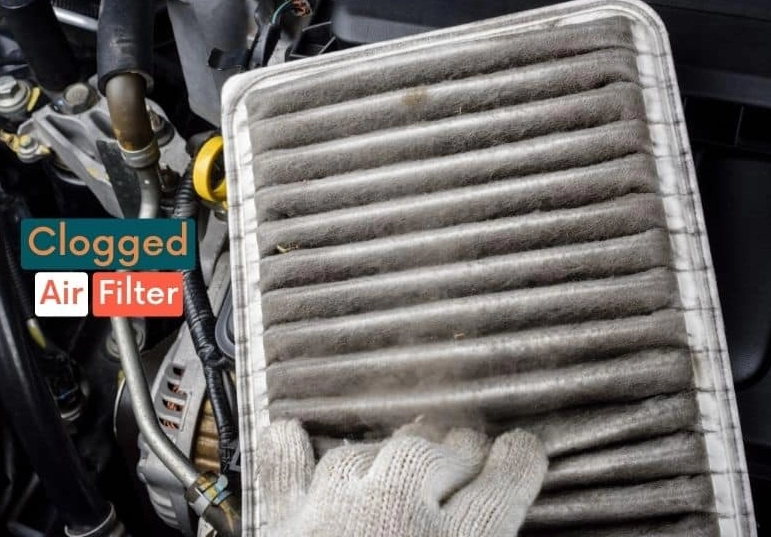
What You'll Learn in This Guide
The 7 Top Symptoms of a Failing Air Filter
These signs often creep up slowly. You might blame "old age" on your car, but the fix could be incredibly simple.
1. Your Car Feels Sluggish and Lazy
This is the most common complaint. When you press the gas pedal, the response is muted. Overtaking on the highway feels like a chore. The engine is literally starved for air. Combustion needs the right mix of fuel and air. With a clogged filter, the mix becomes too "rich" (too much fuel, not enough air), and power plummets. It's not your imagination.
2. Fuel Economy Takes a Nosedive
I tracked my own fuel consumption on a road trip once. My usual 32 MPG dropped to 28. After replacing the filthy air filter, it jumped back. That's a 12% difference. The rich fuel mixture we just talked about? It means you're burning extra gas for no extra power. The U.S. Department of Energy states that replacing a severely clogged air filter can improve acceleration by 6-11% and, in older cars, improve fuel economy. That's real money.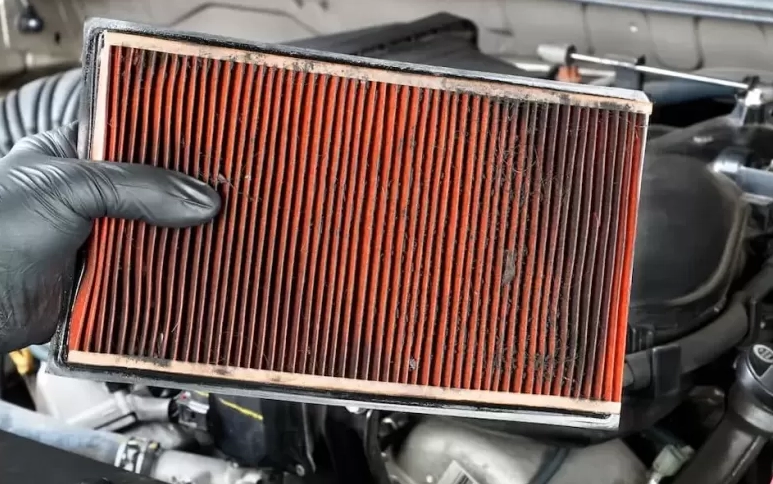
3. The Check Engine Light Might Come On
This one surprises people. A severely restricted airflow can confuse your car's mass airflow sensor (MAF). This sensor tells the computer how much air is coming in. If the reading is off, the computer adjusts the fuel wrong, potentially triggering a trouble code like P0171 (System Too Lean) or P0172 (System Too Rich). A mechanic's scan tool will point to this, but a cheap, dirty filter is often the root cause.
4. Strange Engine Sounds: Coughing or Misfiring
Listen closely. You might hear a coughing, sputtering, or rough idle. In severe cases, the engine might even misfire. That rich mixture can foul spark plugs with carbon deposits. Now you're looking at a filter and a set of plugs. I helped a friend diagnose a rough idle on his pickup. The shop quoted him $400 for a tune-up. We pulled a filter that looked like it was made of felt and dirt. A $25 filter later, the truck ran smooth as new.
5. Black, Sooty Smoke from the Exhaust
Unburned fuel has to go somewhere. When the air-fuel mix is too rich, the excess fuel gets burned in the exhaust system or catalytic converter. The result? Dark smoke from the tailpipe. This is a serious sign. Not only are you wasting fuel, but you're also cooking your expensive catalytic converter. Replacing one of those can cost over $1,000.
6. A Noticeable Gasoline Smell
When you start the car, especially if it's cold, do you smell raw fuel? That's another clue of a rich mixture caused by insufficient air. The unburned fuel vapor is making its way out.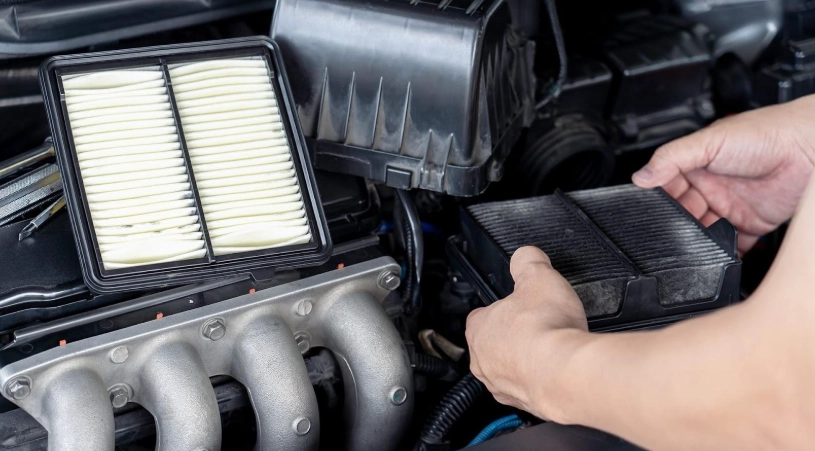
7. Visibly Dirty or Clogged Filter
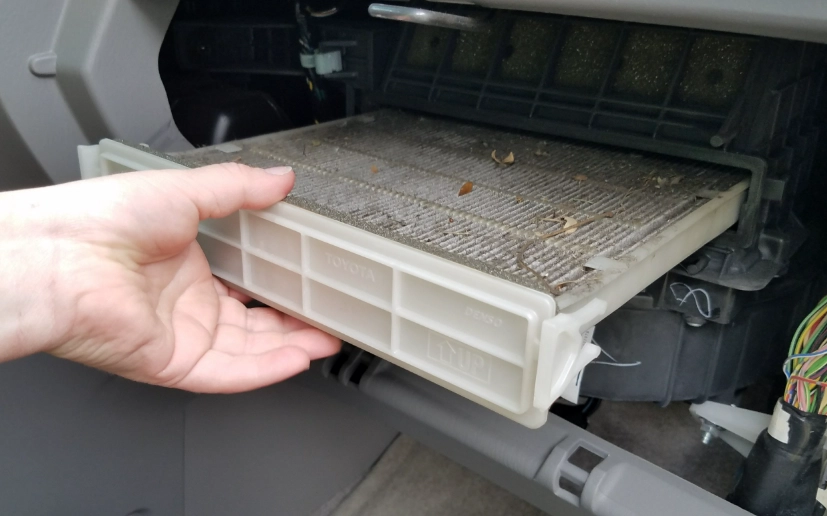
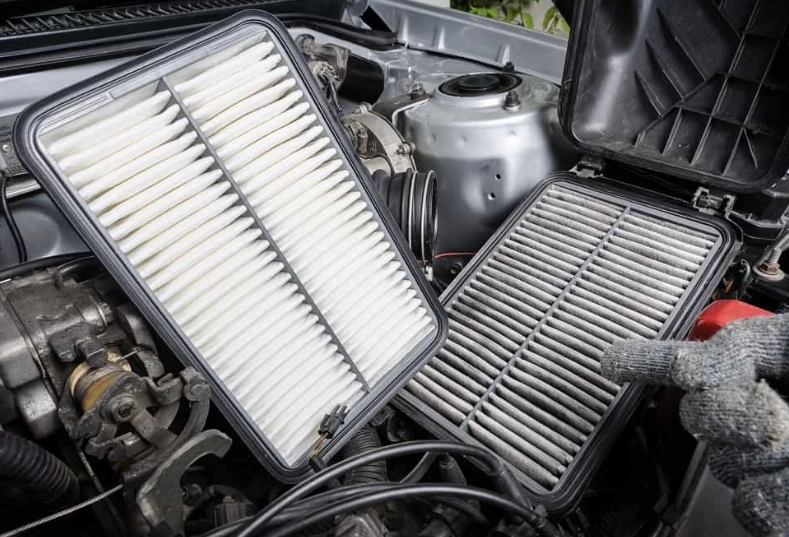
The most obvious sign. We'll get to how to check it in a second, but if you pull it out and it's caked with dirt, leaves, bugs, or looks gray/black instead of its original color (usually white, yellow, or light pink), it's toast. Hold it up to a bright light. If you can't see light passing through a significant portion of the filter media, it's restricting flow.
How to Check Your Air Filter in 60 Seconds
You don't need to be a mechanic. Most cars have a simple air filter box near the engine. It's a black plastic box with metal clips or screws on the top. Turn off the engine. Open the clips (usually no tools needed), lift the top, and pull the filter out. It's a rectangular or circular pleated paper or fabric element. Inspect it for the dirt and light test mentioned above. That's it. Snap it back in, close the clips. If it looks bad, take a picture with your phone to remember the size and shape for buying a replacement.
When Should You Actually Replace It?
Forget the old "every 12,000 miles" rule. It's useless. A car driven daily on dusty rural roads will need a new filter far sooner than one driven only on clean highways. The Society of Automotive Engineers (SAE) has published studies showing how driving environment is the primary factor.
Check it every 12 months or 12,000 miles, whichever comes first. But replace it based on condition, not just mileage. If you see any of the symptoms above, check it immediately. After a major dust storm or a long trip on gravel roads, it's wise to take a peek.
The Simple DIY Replacement (Save $50+)
Replacing an air filter is the easiest car maintenance job. A shop might charge $50-$80 for parts and labor. You can do it for the cost of the filter ($15-$30) in 5 minutes.
Steps:
- Buy the right filter. Use your car's year, make, and model at any auto parts store or online. Use the photo you took.
- Open the air filter box as you did for the inspection.
- Remove the old filter. Note which way it faces. There's usually an arrow on the filter frame pointing toward the engine.
- Wipe out the inside of the air filter box with a damp cloth. Get rid of any loose debris. This is a step many skip, but it prevents old dirt from getting sucked in.
- Insert the new filter with the arrow pointing in the correct direction.
- Close the box and secure all clips or screws firmly.
Done. You just saved money and learned something about your car.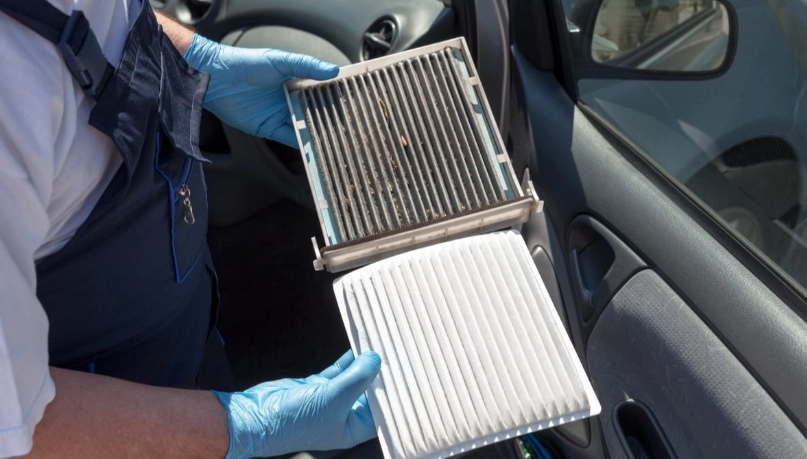
Common Mistakes and Expert Tips
Here's where my 10 years of tinkering and talking to mechanics pays off. People get this wrong all the time.
Mistake 1: Tapping the filter to "clean" it. Don't. You might knock off some surface dirt, but you drive fine particles deeper into the filter media, making the restriction worse. Just replace it.
Mistake 2: Using a cheap, no-name filter. A bargain-bin filter might not seal properly in the box, letting unfiltered air bypass the media. That's worse than a dirty filter, as sand and grit go straight into your engine. Stick with reputable brands like Wix, Mann, Bosch, or the OEM (original equipment) part.
Mistake 3: Over-oiling a reusable performance filter. If you have a cotton gauze filter (like a K&N), following the oiling instructions is critical. Too much oil can coat and damage the MAF sensor, leading to a costly repair. A light, even coat is all you need.
Pro Tip: When you remove the old filter, take a second to look inside the intake tube leading to the engine. If you see a layer of dirt in there, it's a sign your old filter was failing for a while, or there's a leak in the airbox seal.
Your Air Filter Questions Answered
 Is it worth buying a high-performance air filter for my regular car?
Look, your car's air filter is its first line of defense. The symptoms are clear once you know what to look for: poor performance, bad gas mileage, weird smells or smoke. Checking it takes a minute. Replacing it takes five and saves you a lot more than the cost of the part. Don't wait for a major problem. Make it a habit to glance at it with every oil change. Your engine—and your budget—will thank you for the deep, clean breaths.