You turn the key, the engine rumbles to life, and you crank the AC dial to max. Instead of that glorious, icy blast, you're greeted with a lukewarm sigh. Your car AC is not cold. It's more than an inconvenience on a hot day—it's a puzzle that needs solving. I've been fixing cars for over a decade, and I can tell you that most people jump straight to the worst-case scenario (the compressor!) and waste money. The truth is, the fix is often simpler and cheaper than you think. This guide will walk you through a logical, step-by-step diagnosis, from the easiest checks to the complex repairs, so you can understand what's happening under the hood and talk to a mechanic without getting taken for a ride.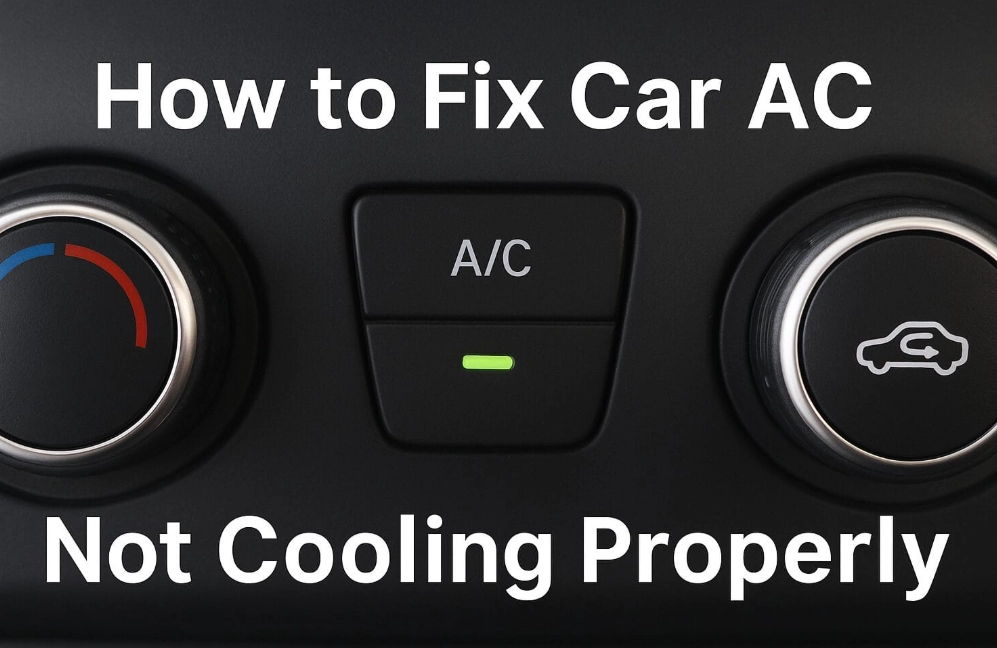
What's Inside?
- Start Here: The 5-Minute Pre-Diagnosis Checklist
- The Diagnosis Flow: From Simple to Complex
- Suspect #1: A Refrigerant Leak (The Most Common Culprit)
- Suspect #2: Electrical Gremlins
- Suspect #3: Mechanical Failures (Compressor, Condenser)
- When to Call a Pro & What It Should Cost
- Your Burning AC Questions Answered
Start Here: The 5-Minute Pre-Diagnosis Checklist
Before you pop the hood or buy any tools, run through this list. I've seen folks replace entire systems only to find the cabin air filter was a solid block of leaves.
- Is the AC system actually on? Sounds dumb, but check. Is the AC button illuminated? Is the temperature set to "Lo" or the coldest setting? Some cars have a separate "ECON" mode that disables the compressor for fuel savings.
- Feel both AC hoses. With the engine running and AC on max, pop the hood. Find the two aluminum pipes going to the firewall (the wall between engine and cabin). One should be very cold and possibly sweating, the other very warm. If both are warm, you have a major issue. If one is cold and one is hot, the system is likely working at the compressor, pointing to an airflow problem.
- Listen for the compressor clutch click. Look at the front of the AC compressor (usually driven by the serpentine belt). When you turn the AC on, you should hear a distinct click and see the center pulley hub start spinning. No click? That's a big clue.
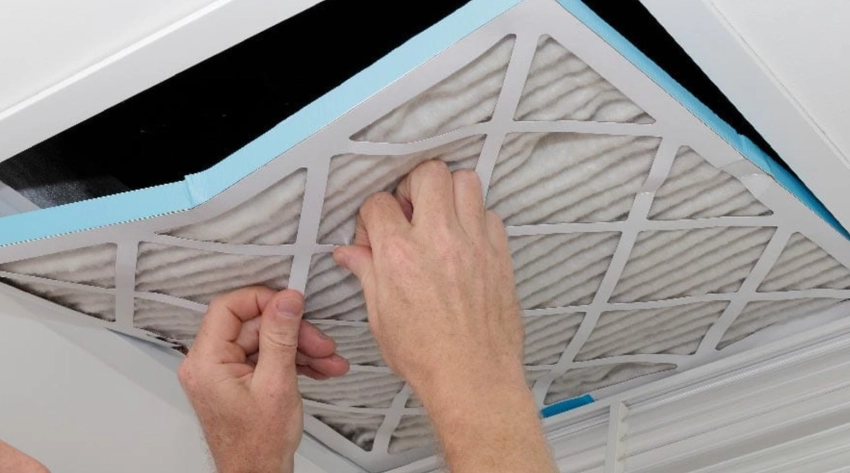
- Check cabin airflow. Is the air volume weak even on the highest fan setting? A clogged cabin air filter can restrict airflow so much that the cold air never makes it to you. It's behind your glovebox and takes 2 minutes to check.
The Diagnosis Flow: From Simple to Complex
Car AC problems follow a hierarchy. Use this table to guide your thinking. Start at the top and work down.
| Symptom / Check | Likely Cause | DIY-Friendly? | Typical Cost Range |
|---|---|---|---|
| AC blows cold only at highway speeds | Condenser fan not working, or condenser clogged with debris | Maybe (fan check/debris cleanout) | $150 - $600 |
| AC works intermittently (cold, then warm, then cold) | Low refrigerant causing icing on evaporator, faulty pressure switch, or electrical connection | No (needs professional diagnosis) | $200 - $800 |
| No cold air at all, compressor clutch does NOT engage | Very low refrigerant (safety switch), blown fuse, bad relay, faulty clutch coil or wiring | Yes (fuse/relay check) | $10 - $800+ |
| No cold air, compressor clutch DOES engage | Severely low or empty refrigerant (leak), compressor failure, major blockage | No | $300 - $1,500+ |
| Air smells musty when AC is on | Mold on evaporator core (clogged drain tube) | Maybe (clean drain tube, use cleaner) | $20 - $300 |
Suspect #1: A Refrigerant Leak (The Most Common Culprit)
Your AC system is a sealed loop containing refrigerant (commonly R-134a, or the newer R-1234yf). It doesn't get "used up." If it's low, it's leaking. Period.
Finding the Leak
This is where DIY can go wrong. Those $50 cans of refrigerant with sealant at the auto parts store? I hate them. The sealant can gum up your entire system, ruining the compressor and contaminating expensive recovery machines at shops. It's a short-term fix with a long-term cost.
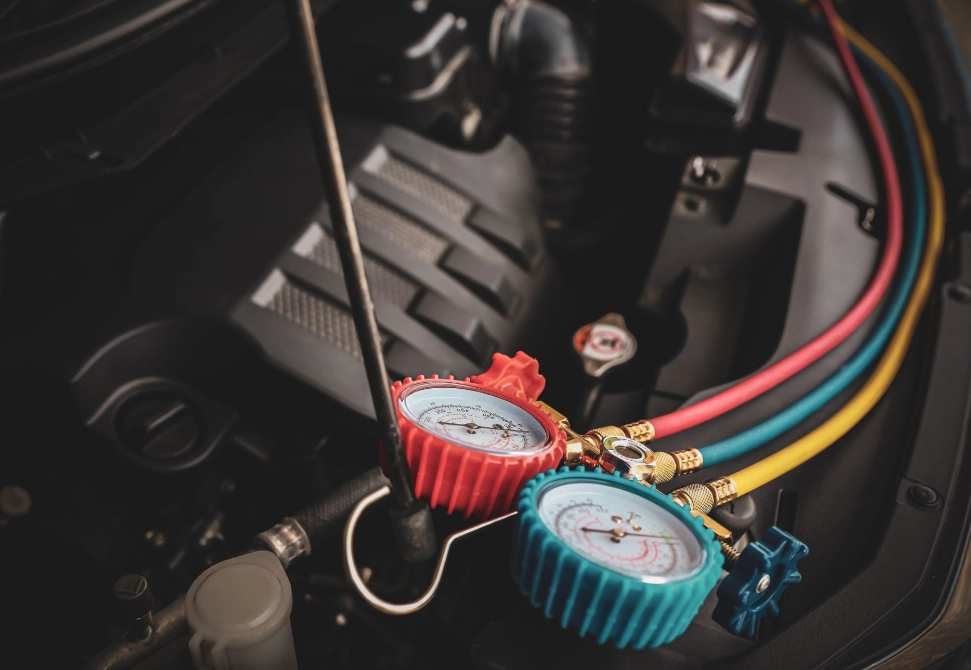
A proper diagnosis needs tools. A shop will use:
- UV Dye: Inject a fluorescent dye into the system. Run the AC, then use a black light to find the glowing leak. This is the most common method.
- Electronic Leak Detector: A sniffer that beeps near escaping refrigerant.
- Nitrogen Pressure Test: For elusive leaks, the system is pressurized with nitrogen and monitored for pressure drop.
Common Leak Points: Schrader valves (like tire valves on the service ports), O-rings at connections, the condenser (front of radiator, vulnerable to rocks), and the evaporator core (inside the dash—a labor-intensive repair).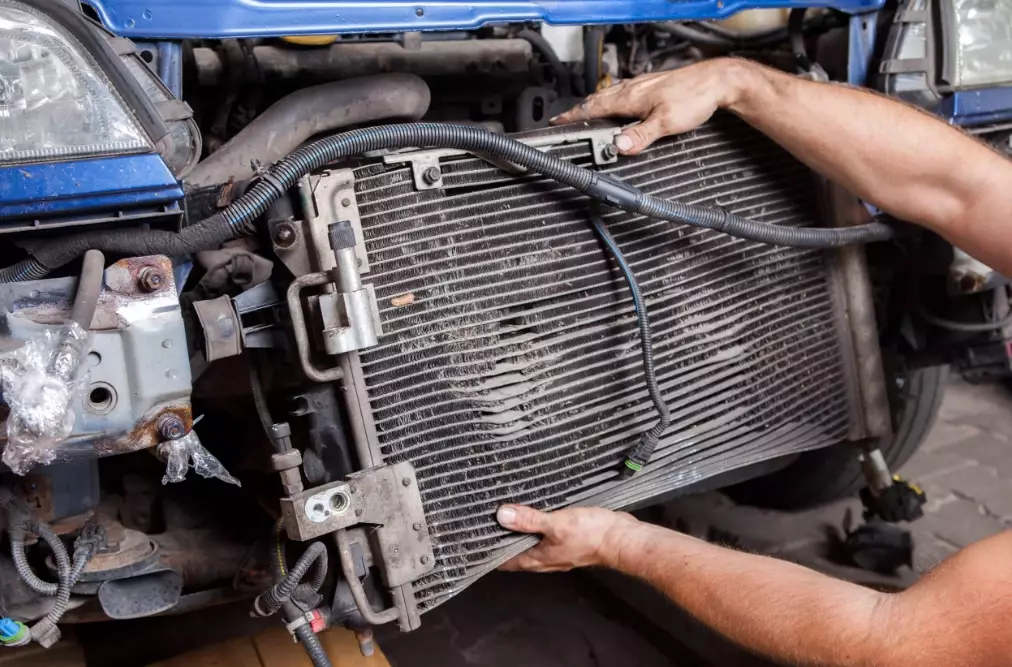
Suspect #2: Electrical Gremlins
If the compressor clutch isn't engaging, the brain of the system (the pressure switch and ECU) is telling it not to. Start cheap.
- Fuses & Relays: Locate your fuse box (under hood, manual has a map). Find the AC compressor fuse and relay. Swap the AC relay with an identical one (like the horn relay) to test. A $5 relay failure can mimic a $1,000 compressor failure.
- Pressure Switches: These safety switches prevent compressor engagement if pressure is too low (leak) or too high (blockage). They can fail. A mechanic can bypass them temporarily for diagnosis—don't try this yourself as you can damage the compressor.
- Wiring: Look for chafed, burnt, or disconnected wires near the compressor and condenser fan. Rodents love chewing on wiring harnesses.
Suspect #3: Mechanical Failures (Compressor, Condenser)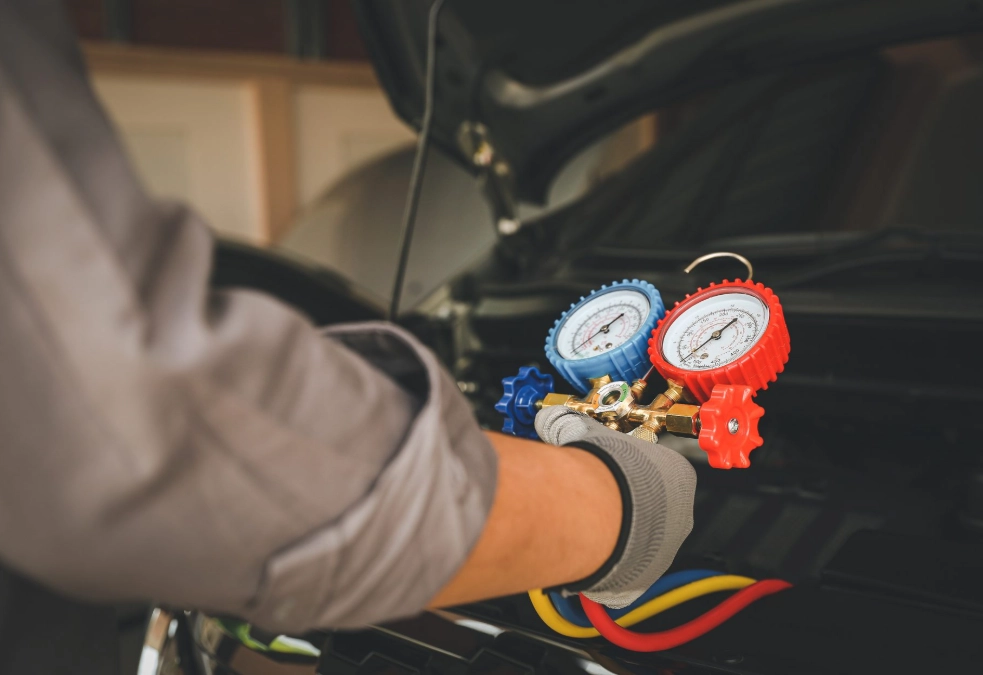
These are the big-ticket items.
The Compressor: The heart of the system. If it seizes or its internal valves fail, it won't pump refrigerant. Signs: loud grinding or clattering from the front of the engine when the clutch engages, metal shavings in the system (found during service). If a compressor fails catastrophically, it often sends debris throughout the entire system, requiring a flush and replacement of the receiver/drier and expansion valve—a much more expensive job.
The Condenser: It's the radiator for your AC, mounted in front of the engine coolant radiator. It can get clogged with bugs, leaves, and road debris, reducing its ability to dissipate heat. A rock can also puncture it. If it's leaking or clogged, performance plummets. You might notice the AC works better when the car is moving (more airflow) than when idling.
When to Call a Pro & What It Should Cost
You've done the basic checks. Now what? If you've identified a bad fuse or a filthy cabin filter, great. If the problem is deeper, it's time for a professional. Look for a shop that specializes in AC or has good reviews for it. Ask them:
- "Can you perform a full performance test, not just a recharge?"
- "Will you use UV dye to find the leak?"
- "If the compressor is bad, does your quote include flushing the system and replacing the receiver/drier?" (If they say no, go elsewhere).

Cost Reality Check (Parts & Labor):
- Evacuate & Recharge (if no leak found): $150 - $300.
- Fix a simple leak (O-ring, Schrader valve) + Recharge: $250 - $450.
- Condenser Replacement: $500 - $900. The part itself isn't crazy expensive, but labor involves removing the front bumper/grille on many modern cars.
- Compressor Replacement (with flush and drier): $800 - $1,500+. This varies wildly by car. Luxury or hybrid vehicles can be double.
- Evaporator Core Replacement: $1,000 - $2,000+. This requires removing the entire dashboard—it's almost all labor.
According to the SAE International, proper service procedures are critical for system longevity and environmental protection. A shop following these standards is a good sign.
Your Burning AC Questions Answered
 I get a musty, moldy smell for the first minute when I turn on the AC. Is this related to it not being cold?