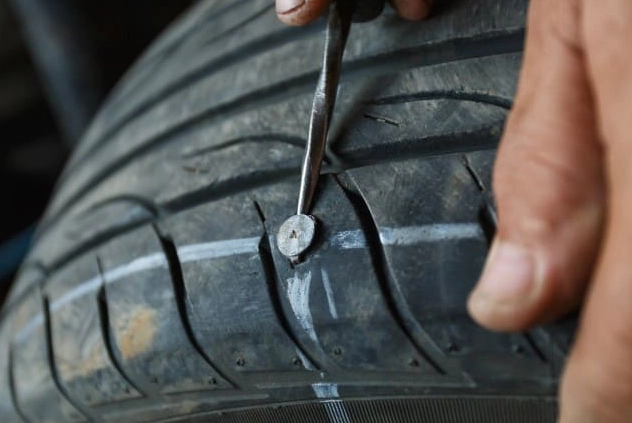
You're driving, maybe on your way to work, and you feel that subtle but unmistakable thump-thump-thump. Or worse, the tire pressure warning light glares at you from the dashboard. You pull over, walk around the car, and there it is—a shiny nail head, lodged squarely in the tread of your tire. Your heart sinks. The immediate question floods your mind: Can a tire with a nail be repaired?
The short answer is yes, most of the time. But that "most" carries a huge weight. As someone who's spent over a decade in auto shops, I've seen the relief on a customer's face when a $30 patch saves a $200 tire. I've also seen the horror when a poorly assessed repair fails on the highway. The difference between a safe fix and a dangerous gamble boils down to a few critical factors that many guides gloss over.
What's Inside: Your Quick Guide to Tire Nail Repair
When Can a Nail-Punctured Tire Be Repaired?
Not every nail wound is a death sentence for your tire. The industry follows strict guidelines, primarily those set by the U.S. Tire Manufacturers Association (USTMA), which most reputable shops adhere to. A repair is considered safe and reliable only if it meets all of the following conditions:
- The puncture is in the tread area. This is the flat part of the tire that contacts the road. Draw an imaginary line from the top of the tread's outer groove to the top of the inner groove. Anything inside that "box" is the primary repair zone.
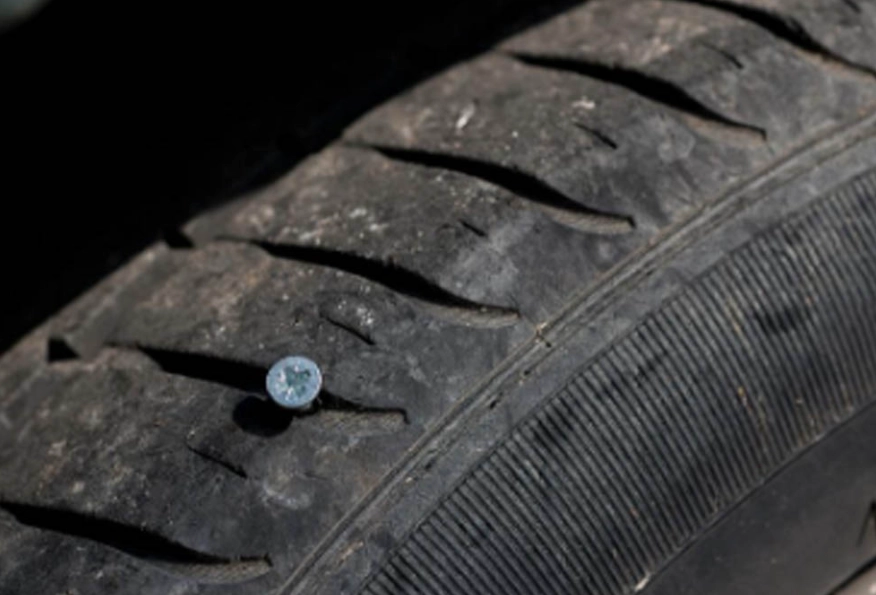
- The nail hole is 1/4 inch (6mm) in diameter or smaller. A standard nail usually makes a hole well within this limit. But if you tried to yank it out with pliers and mangled the rubber, you might have exceeded it.
- The tire's internal structure is intact. This is the deal-breaker you can't see from the outside. The steel belts and fabric plies inside the tire must not be severed or damaged. A technician has to inspect the inside of the tire to confirm this.
- The tire hasn't been driven flat. This is the most common reason a repairable puncture becomes irreparable. Driving on a flat tire, even for a short distance, crushes the sidewall's internal structure. The damage is often invisible externally but fatal to the tire's integrity.
Pro Insight: Many drivers think a slow leak is "fine." They top up the air every few days for weeks. Here's the hidden risk: that nail is a moving object. Every time the tire rotates, it flexes, and the nail can saw away at the internal belts, enlarging the damage beyond repair. What started as a simple puncture can become a complex, unrepairable mess.
When Must a Tire with a Nail Be Replaced?
Knowing when to say "no" to a repair is more important than knowing when to say "yes." Compromising here is playing with your safety. Replacement is non-negotiable if:
| Location of Damage | Why It Can't Be Safely Repaired |
|---|---|
| Sidewall Puncture | The sidewall flexes constantly. No patch or plug can withstand that repetitive bending motion without eventually failing. It's a major structural weak point. |
| Shoulder Puncture (where tread meets sidewall) | This is a high-flex area. Repairs here are not recommended by any major tire or safety organization, despite what some quick-fix shops might claim. |
| Large or Irregular Damage (over 1/4") | The hole is too big for a repair unit to seal effectively and maintain the tire's structural integrity. |
| Damage to Internal Belts/Cords | If the steel belts are cut or frayed, the tire's strength is compromised. A patch covers the hole but doesn't restore lost strength. |
| Tire Was Driven While Flat | This causes internal sidewall damage (called "run-flat damage"). The tire may look okay but is prone to a sudden blowout. |
| Existing, Poor Repairs | A tire should only have one repair. Multiple repairs, or one that's failing, weaken the carcass. It's time for a new tire. |
I once had a customer insist on repairing a nail in the sidewall because "it's just a tiny hole." We refused the job. He went down the street to a less scrupulous shop that plugged it. Two weeks later, that tire blew out on the interstate. The cost of a tow and a new tire was far higher than just replacing it correctly the first time.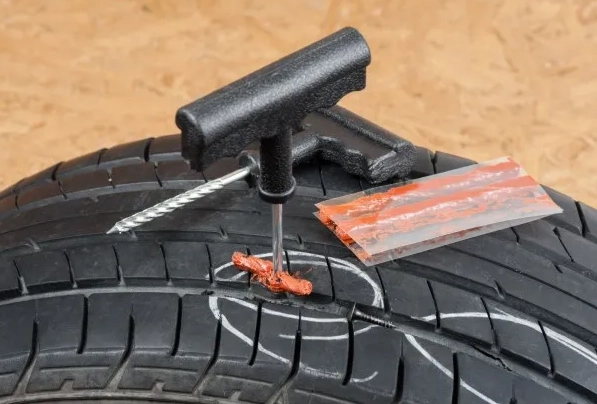
How is a Nail Hole in a Tire Professionally Repaired?
Forget the old stringy plug you hammer in from the outside. The only method considered permanently reliable by the USTMA and the Tire Industry Association is the combination patch/plug (also called a radial patch). Here's what a proper shop should do:
- Remove the Tire from the Wheel. Any shop that says they can do a proper repair without taking the tire off the rim is cutting corners. You must inspect the inside.
- Full Internal Inspection. The technician will feel the inside lining for hidden damage, check for separation, and confirm the puncture location and size.
- Clean and Buff. The area around the puncture on the inside is cleaned and lightly buffed to create a perfect surface for the patch to bond to.
- Apply Vulcanizing Cement. This isn't just glue; it chemically bonds the patch to the tire rubber.
- Install the Patch/Plug Unit. This one-piece unit has a stem that fills the puncture channel and a patch that seals the inner liner. It's applied from the inside out.
- Roll and Cure. The patch is firmly rolled to ensure no air bubbles, then given time for the cement to cure.
- Re-inflate and Re-balance. The tire is remounted, inflated to spec, and the wheel assembly is balanced. An unbalanced repaired tire will wear unevenly and vibrate.
This process takes about 30-45 minutes of skilled labor. If you're quoted 10 minutes and $15, you're not getting this repair.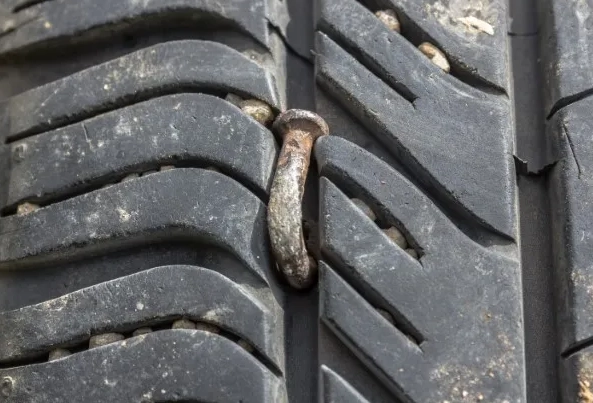
Should You Try a DIY Tire Plug Kit?
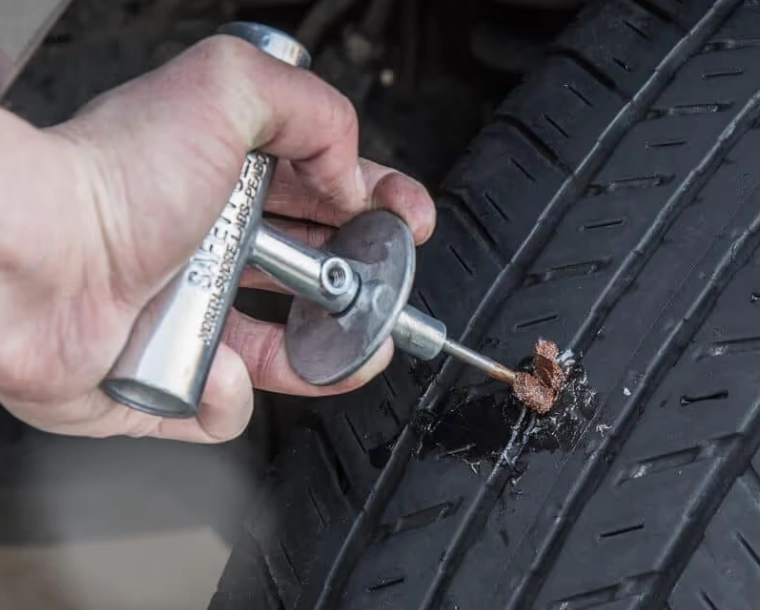
You can buy a tire plug kit at any auto parts store for $10. It's tempting. Let's be brutally honest.
A DIY plug is an emergency temporary fix only. It's meant to get you to a repair shop, not to be a permanent solution. The plug is inserted from the outside, leaving the inner liner unprotected from moisture and air seepage. It doesn't address potential internal damage. Many professional shops will refuse to work on a tire that has an old DIY plug because they can't guarantee the integrity of the area around it.
I keep one in my trunk. But I also know that using it means I'm driving straight to the tire shop, not forgetting about it for the next 10,000 miles.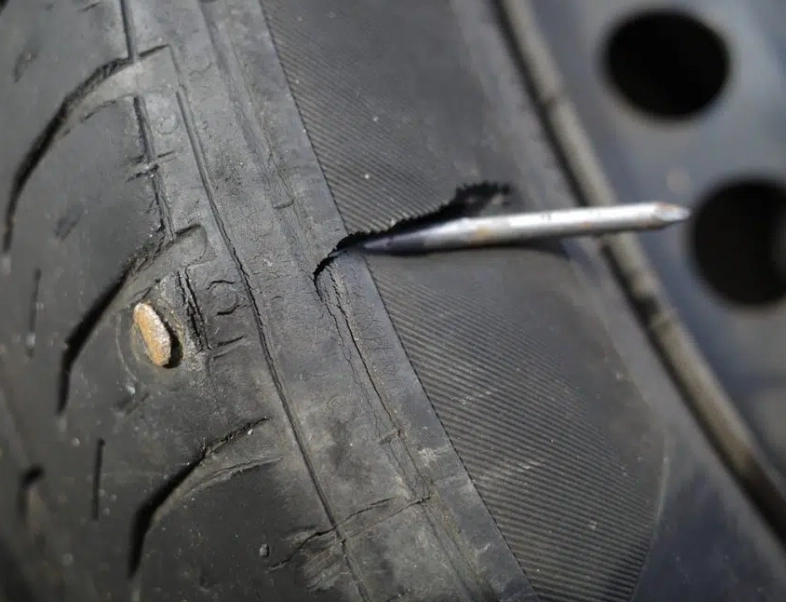
The Big Risk: A DIY plug can mask more serious damage. It might hold air, giving you a false sense of security while the internal belts continue to degrade from moisture and flexing, leading to a potential blowout down the road.
Tire Repair Costs vs. Replacement Costs
Let's talk numbers. The financial decision is usually straightforward.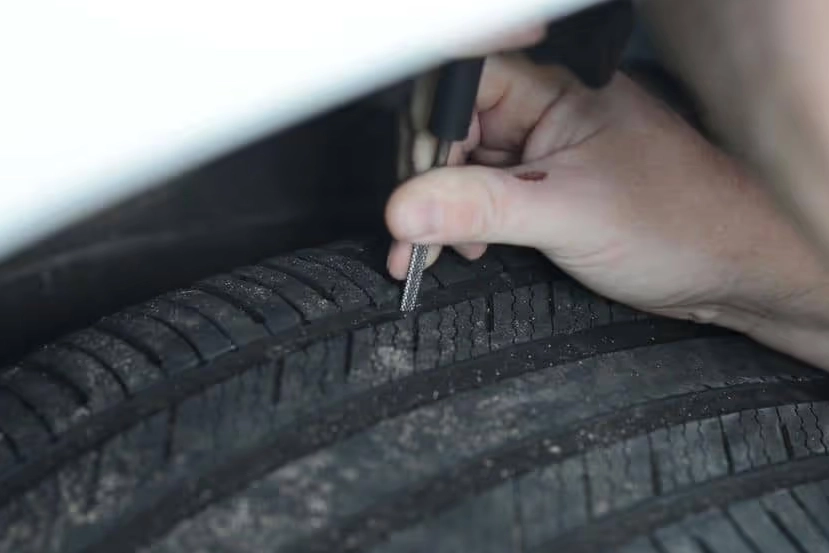
- Professional Patch/Plug Repair: Typically costs between $25 and $50 per tire. This includes inspection, the repair, re-balancing, and sometimes disposal fees. National chains might run specials for $20-$30.
- New Tire Replacement: Costs vary wildly by vehicle and tire brand. For a common sedan, expect $100 to $250+ per tire, plus installation and fees. If your vehicle requires all-wheel-drive or has a staggered setup (different sized tires front and rear), you may need to replace two or even four tires to maintain proper drivetrain function, which multiplies the cost.
The math heavily favors repair when it's viable. But don't let cost pressure you or a technician into an unsafe repair. A $50 safe fix is smart. A $50 risky "fix" is a terrible investment in your safety.
What to Do Right After You Find the Nail
Your actions in the first 10 minutes determine whether you have a repair or replacement bill. Here's the drill:
- Don't Pull the Nail Out. Leave it in! It's acting as a plug. Removing it will let the air escape rapidly, possibly stranding you or forcing you to drive on a flat tire.
- Check the Tire Pressure. Use a gauge. If it's only slightly low (e.g., 28 PSI instead of 35 PSI), you can likely drive cautiously to the nearest repair shop. If it's very low or flat, do not drive.
- If Flat, Use Your Spare or Call for Service. Install your compact spare ("donut")—remember they have severe speed and distance limits (usually 50 mph for 50 miles). Or call roadside assistance for a tow or mobile repair. Driving on a flat is the single worst thing you can do.
- Choose a Reputable Shop. Go to a dedicated tire shop or a service center you trust. Describe the situation: "I have a nail in my tire. I haven't driven on it flat. Can you inspect it for a possible repair?"
Your Burning Questions Answered (FAQ)
So, can a tire with a nail be repaired? In the vast majority of straightforward cases where the nail is in the tread and you haven't driven on it flat—absolutely, and you should get it repaired. It's safe, cost-effective, and the right move. But the moment that damage touches the sidewall, or the tire saw miles without air, the equation flips. Then, replacement isn't an expense; it's an investment in not ending up on the side of the road. Listen to the technician's assessment, understand the "why" behind their recommendation, and you'll make the right call for your wallet and your safety.