In This Guide
- The Core Difference: It's All About the Filaments
- Breaking Down the Specs: A Side-by-Side Look
- So, Can You Interchange Them? The Million-Dollar Question
- Beyond the Basics: Other Factors to Consider
- Installation: Don't Make This Simple Job Hard
- Your Questions, Answered
- Final Verdict: Which One Should You Buy?
Alright, let's talk about one of the most common head-scratchers in the auto parts aisle. You're standing there, holding a burnt-out tail light bulb, and you see these two little numbers: 3057 and 3157. They look almost identical. The packages might even be right next to each other. Your car manual says one thing, but a quick online search throws up a bunch of forum posts saying "they're basically the same."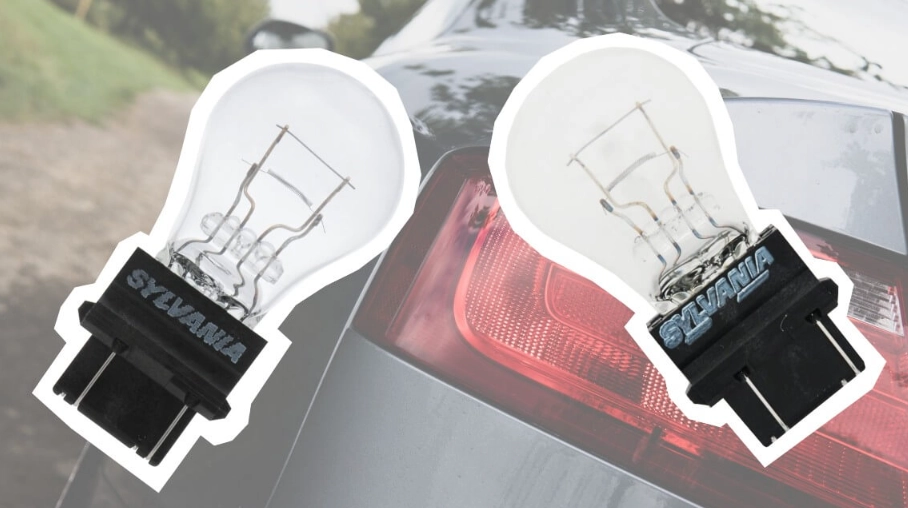
So, what gives? What is the difference between a 3057 and a 3157 tail light bulb, really?
I've been down this rabbit hole myself. I remember once trying to save a few bucks by grabbing what I thought was the equivalent bulb for my old truck. It fit in the socket just fine, but then my brake lights were dimmer than they should have been. Not a great feeling when you're trying to be safe. That experience taught me that the devil is in the details with these things.
The Core Difference: It's All About the Filaments
Let's cut to the chase. The single most important thing to understand is how these bulbs are wired inside. Both the 3057 and 3157 are dual-filament bulbs. That means they have two separate little wires (filaments) inside one glass bulb. One filament is for your tail lights (parking lights), which are on whenever your headlights are on. The other, brighter filament is for your brake lights and turn signals.
Two jobs, one bulb. Neat, right?
But here's the kicker: the brightness and the electrical design of these two filaments are different between the 3057 and 3157. This isn't just some random numbering scheme; it's a code that tells you exactly how the bulb behaves.
The Main Event: The primary difference between a 3057 and a 3157 bulb lies in the wattage (and therefore brightness) of its brake/turn signal filament. The 3157's brake light filament is significantly brighter.
Think of it like this: your car's computer (or the simple wiring in older cars) is expecting a specific amount of electrical resistance from each filament. If you put in the wrong bulb, the brightness levels will be off. It might work, but not as intended.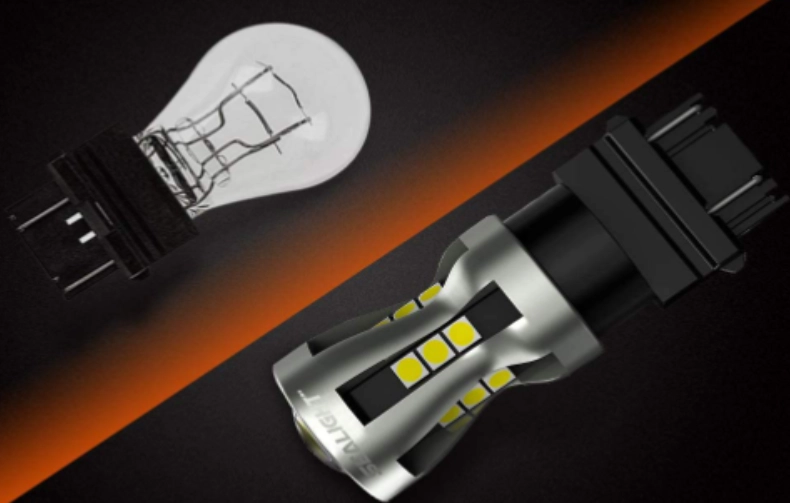
Breaking Down the Specs: A Side-by-Side Look
Numbers tell the story better than words sometimes. Let's lay it all out on the table. This comparison is the heart of understanding what is the difference between a 3057 and a 3157 tail light bulb.
| Feature | 3057 Bulb | 3157 Bulb |
|---|---|---|
| Primary Use | Tail Light (Parking Light) & Brake/Turn Signal | Tail Light (Parking Light) & Brake/Turn Signal |
| Base Type | Standard Bayonet (BAY15d) | Standard Bayonet (BAY15d) |
| Filament 1 (Tail Light) | ~5-8 Watts | ~5-8 Watts |
| Filament 2 (Brake/Turn) | **~26-32 Watts** | **~37-40 Watts** |
| Key Characteristic | Standard brightness brake light. | **High-intensity** brake light. |
| Physical Appearance | Virtually identical. Same glass size, same base pins. | Virtually identical. Same glass size, same base pins. |
| Lumen Output (Brake Light, approx.) | 400-500 lumens | 500-600+ lumens |
See that? The tail light filament (the one that's on all the time) is pretty much the same. It's the brake light filament where the 3157 pulls ahead. That extra 10 watts or so of power translates directly into more light output.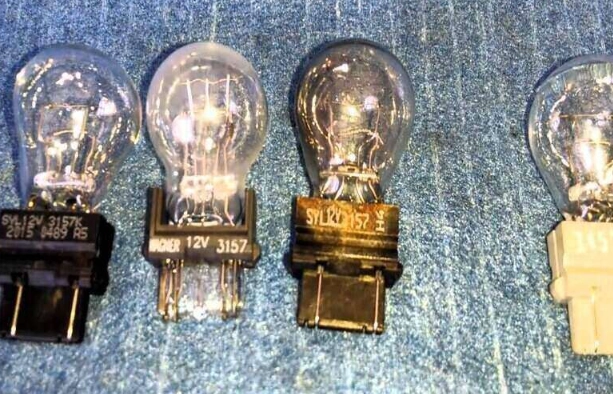
Why does this matter? Safety, mostly. A brighter brake light is more noticeable to the driver behind you, especially in bright daylight, fog, or heavy rain. Some vehicle manufacturers specifically design their rear light assemblies to use the hotter, brighter 3157 to meet certain visibility standards.
So, Can You Interchange Them? The Million-Dollar Question
This is where forums get into heated debates. The physical answer is often yes. They have the exact same bayonet base with the two offset pins. You can usually twist a 3157 into a socket designed for a 3057, and vice-versa. It will physically fit and light up.
But just because it fits doesn't mean it's correct. This is the crucial point everyone needs to understand.
Think about your vehicle's wiring. It's designed to deliver a specific amount of current for each function. If your car's wiring and lens reflectors were engineered for the lower-wattage 3057, putting in a hotter-burning 3157 might not be a great idea long-term. The extra heat could potentially damage plastic lens housings or sockets over many years, though this is a debated point. More importantly, the brighter light might scatter or glare incorrectly through a lens designed for a different focal point.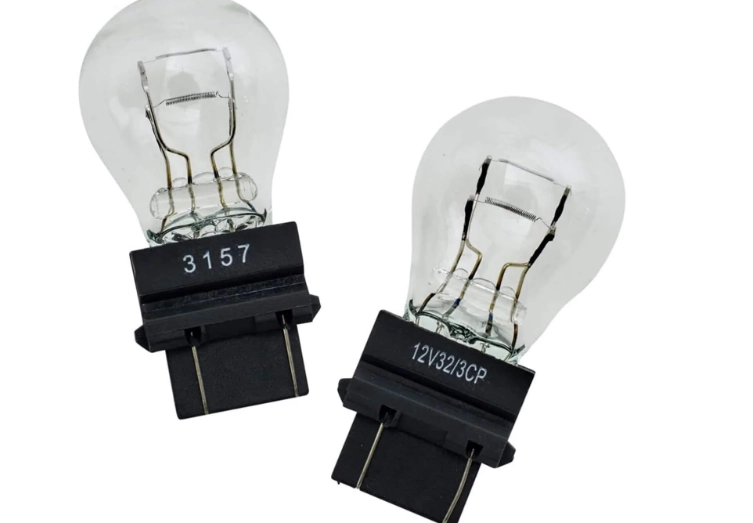
On the flip side, putting a 3057 in a socket meant for a 3157 means your brake lights will be dimmer than the vehicle manufacturer intended. That's a safety compromise I'm not willing to make.
My rule of thumb? Always, always check your owner's manual first. It's the definitive source. If the manual says 3057, use a 3057. If it says 3157, use a 3157. If you've lost the manual, a quick search on a site like Sylvania's automotive bulb guide or even the official parts catalog for your car's manufacturer (like GM Parts Direct or similar for your brand) will give you the right answer. Don't rely on the guy at the parts store who's just looking at a computer screen—those databases can have errors.
Beyond the Basics: Other Factors to Consider
Okay, so we've covered the wattage difference. But when you're actually buying a bulb, you'll see a bunch of other options. Let's decode those.
Long-Life vs. Standard
You might see 3057LL or 3157LL. The "LL" stands for Long Life. These bulbs have slightly thicker filaments or are built with sturdier materials to withstand more vibration and last longer. They're often worth the small extra cost, especially if you drive on rough roads. The trade-off? Sometimes the light output is a tiny bit less than a standard bulb, but it's usually negligible.
LED Conversions: A Modern Alternative
This is a huge topic now. People are ditching the old incandescent bulbs for LED versions that say "3057/3157 compatible." Here's the real deal with those.
LEDs are brighter, use less power, and last way, way longer. But they come with their own headaches. Because they draw so little current, they can confuse your car's computer into thinking a bulb is out (causing hyper-flashing turn signals or dash warnings). Most decent LED kits come with built-in resistors or are CAN-bus compatible to prevent this, but the cheap ones often don't.
Pro Tip: If you go LED, look for ones that specifically mention "no hyperflash" or "CAN-bus ready." And check the return policy—some just don't work well in certain cars.
Color Matters
The standard bulb is clear glass with a colorless filament, producing a white light. Your car's lens provides the red (brake/tail) or amber (turn signal) color. You can also find bulbs with colored glass (e.g., red 3057R) which are sometimes used in clear lens applications. Just make sure the color matches your local vehicle codes.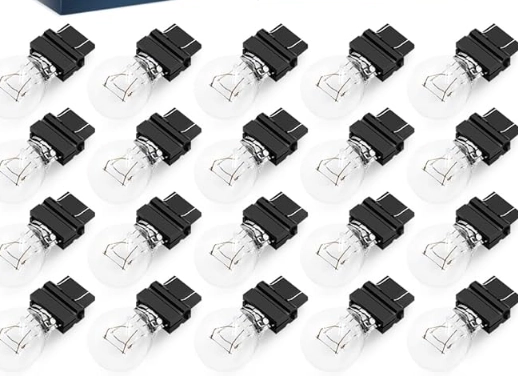
Installation: Don't Make This Simple Job Hard
Swapping these bulbs is usually a 5-minute job. But I've seen people break things. Here's a no-nonsense approach.
- Safety First. Turn off the car. Set the parking brake. Don't just rely on the light switch being off.
- Access the Bulb. Usually, it's from inside the trunk or hatch. You'll peel back a fabric liner or unscrew a small access panel. Sometimes you have to remove the entire light assembly from the outside—this often involves a couple of bolts or nuts.
- Remove the Old Bulb. Find the bulb socket. It's a round plastic piece with wires coming out. Press down gently, turn it counter-clockwise (usually about 1/8th of a turn), and pull it straight out. Now, pull the old bulb straight out of the socket. Don't wiggle it excessively.
- Insert the New Bulb. This is key: look at the new bulb's base. See the two metal pins? They are different heights. Now look at the socket. The slots are different sizes. Line up the pins with the correct slots and push the bulb in firmly until it seats. If it doesn't go in smoothly, don't force it! You have it aligned wrong. Rotate it 180 degrees and try again.
- Test Before You Reassemble! Plug the socket back into the car, turn on your headlights to test the tail light filament. Then have a friend press the brake pedal or turn on the hazard lights to test the brake filament. Do not skip this step. If it doesn't work, the bulb isn't seated right, or you have the wrong type.
- Reassemble. Once it works, twist the socket back into the housing, click it in place, and put your interior panels back.
Seriously, testing it before putting everything back saves so much frustration.
Your Questions, Answered
Final Verdict: Which One Should You Buy?
Let's make this simple.
- Step 1: Consult Authority. Don't guess. Open your glove box and check the owner's manual. If it's gone, use a reputable online bulb guide from a manufacturer like Philips Automotive Lighting or the NHTSA's vehicle equipment pages for general safety standards context. Your car's maker knows best.
- Step 2: Understand the Difference. Remember, the core answer to "what is the difference between a 3057 and a 3157 tail light bulb" is brake light brightness. The 3157 is the high-output version.
- Step 3: Consider Upgrades. If you're buying incandescent, a Long-Life (LL) or Krypton (K) version is a smart buy for a bit more durability. If you're considering LEDs, do your homework on compatibility and brightness reviews.
- Step 4: Install Correctly. Take the two minutes to test the lights before buttoning everything up. It's the easiest way to ensure you've solved the problem.
At the end of the day, this isn't just about a bulb. It's about being seen. It's a small, cheap part that plays a huge role in safety. Knowing the precise difference between a 3057 and a 3157 tail light bulb means you're not just throwing parts at your car—you're making an informed choice to keep it working as designed.
And honestly, that's the best kind of DIY repair there is.