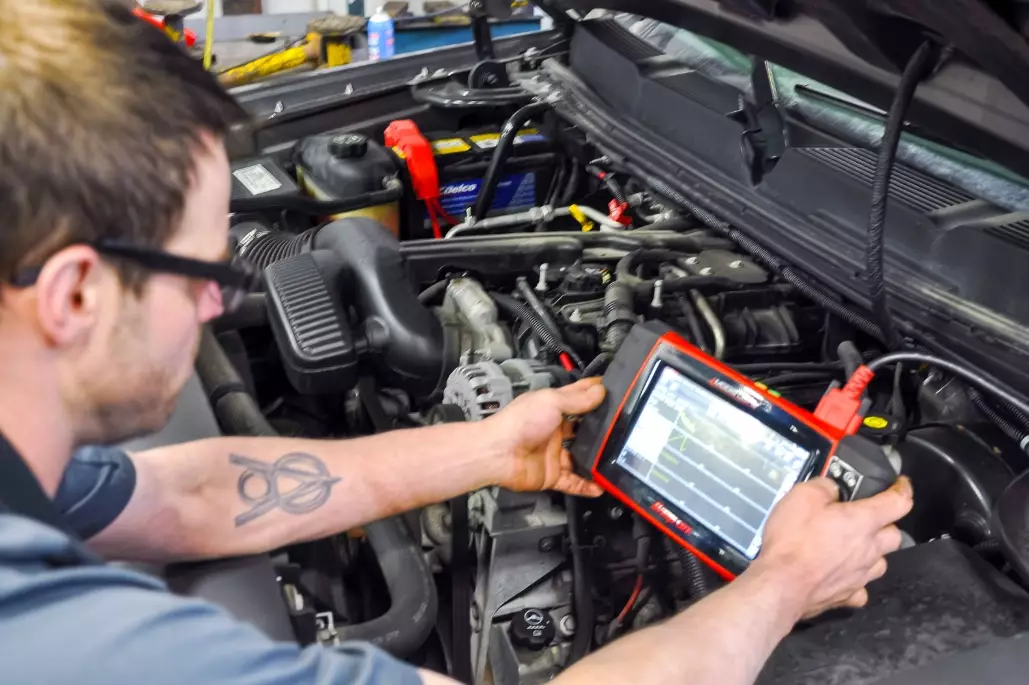
That puddle of green or orange fluid under your car isn't just a nuisance. It's your cooling system crying for help. A failing radiator can strand you, but more importantly, it can silently cook your engine into a several-thousand-dollar paperweight. I've seen it happen too many times in the shop. This guide cuts through the noise. We'll look at how your radiator works, when you can tackle the job yourself, what it really costs, and the critical signs that mean you need a pro—immediately.
What You'll Learn in This Guide
How Your Radiator Works (And Why It Fails)
Think of your radiator as the heart of your car's cooling system. Hot coolant from the engine flows through its thin tubes, and as air passes over the fins (helped by the fan), the heat dissipates. Coolant returns to the engine, and the cycle repeats. It's a simple but vital heat exchange.
Most modern radiators are made of aluminum cores with plastic end tanks. This design is lightweight and cost-effective but has weak points. Here are the main enemies:
- Leaks: The number one issue. Plastic end tanks crack from heat cycles and age. The seams between the metal and plastic fail. Tubes get punctured by road debris.
- Internal Clogging: Using tap water, mixing incompatible coolants, or neglecting flushes leads to scale and sludge buildup. This acts like cholesterol in arteries, restricting flow.
- External Blockage: Bugs, leaves, and dirt pack the fins, blocking airflow. You'd be surprised how much a layer of mud on the radiator can raise temperatures.
- Physical Damage: A minor fender-bender or a large rock can bend fins or crack tanks.
| Symptom | Possible Radiator Problem | Urgency |
|---|---|---|
| Coolant puddle under the front-center of car | Leaking tank, seam, or drain plug | High - Schedule repair |
| Overheating in traffic, cools on highway | Clogged fins, failing fan, or low coolant from a slow leak | High - Diagnose immediately |
| Overheating all the time | Severe clog, major leak, or other system failure (thermostat, water pump) | Critical - Do not drive |
| Discolored or oily coolant | Internal engine issue (head gasket) contaminating system | Critical - Professional diagnosis needed |
DIY Radiator Leak Fix: A Step-by-Step Walkthrough
Fixing a leaky radiator yourself is satisfying and can save you a lot on labor. But be honest about your skill level. This is a moderate-difficulty job. If your leak is from a cracked plastic tank or a severely bent core, replacement is the only real fix. For small seam weeps or a punctured tube in a metal radiator, repair is possible.
What You'll Need
Gather your tools first: a socket set, screwdrivers, pliers, a drain pan, a garden hose, safety glasses, and gloves. You'll need new coolant—check your owner's manual for the specific type (e.g., Honda Blue, GM Dex-Cool, universal). Don't guess. Mixing types can cause gelation. You'll also need a new radiator if replacing, or a high-temperature epoxy kit (like JB Weld SteelStik) for a temporary external patch on a metal area.
The Process: Draining, Access, and Repair
Start by parking on level ground with a cool engine. Place the drain pan underneath, open the drain plug (usually at the bottom corner of the radiator), and let it flow. Loosen the radiator cap to help. Once drained, disconnect the upper and lower radiator hoses. You'll likely need to remove a fan shroud or the cooling fan assembly—this is usually held by a few bolts. Take pictures with your phone before disconnecting anything. Trust me.
Now you can access the radiator. For a replacement, unbolt it from its mounts, lift it out, and reverse the process with the new unit. It should come with new seals for the transmission cooler lines if your car has them.
For a temporary epoxy repair on a clean, dry metal tube, follow the product instructions to the letter. Roughen the area with sandpaper, mix the epoxy thoroughly, and apply. Let it cure fully—overnight is best—before refilling.
Here's a mistake I made early on: not replacing the radiator hoses if they're older than 5 years. You have the system empty, the access is clear. A brittle hose will fail soon after, wasting all your work. Feel the inside of the hose. If it's swollen, gummy, or cracked, swap it now.
Refilling and Bleeding the System
This is the step everyone messes up. After everything is reconnected, close the drain plug. Fill the radiator slowly with a 50/50 mix of coolant and distilled water (not tap water). Start the engine with the heater on max hot and fan on low. This opens the heater core valve. Let the engine run, and as the thermostat opens, the coolant level will drop. Keep topping it off until the level stays steady and no more bubbles appear.
Squeeze the upper radiator hose a few times to burp out trapped air. Replace the cap tightly. Check for leaks over the next few days and monitor the temperature gauge.
Radiator Repair Cost: DIY vs. Professional
Cost is the big deciding factor. Let's break it down realistically.
DIY Radiator Replacement: The main cost is the part. A new radiator for a common sedan like a 2015 Honda Civic can range from $80 (economy) to $250 (premium/OEM). Add $25 for coolant, maybe $40 for new hoses, and $20 for a new radiator cap. Your total parts investment: $125 to $335. Your labor: 3-5 hours of your weekend.
Professional Radiator Replacement: Here, you're paying for the part (marked up slightly), coolant, and shop labor. Labor rates vary from $90 to $150 per hour. This job typically books 2-3 hours. So, for that same Civic, expect a total bill between $450 and $900, depending on the shop and part quality.
When You Absolutely Must Call a Professional
Some situations scream "call a tow truck, not a friend."
- Internal Clogging: If the radiator is clogged inside from neglect or stop-leak products, a replacement is the only fix. A pro can flush the block and heater core too.
- Leak is at the Transmission Cooler Lines: If your radiator has integrated lines for automatic transmission fluid, a leak here mixes coolant and ATF, ruining both systems. Repair is complex.
- Major Physical Damage: A large impact crack isn't a DIY fix.
- You've Tried and It's Still Overheating: This points to a bigger issue—a failed head gasket, a bad water pump, or air still trapped in the system. A mechanic has the tools (pressure tester, vacuum filler, combustion leak detector) to diagnose it right.
How to find a good shop? Look for ASE-certified technicians. Ask if they pressure test the system after repair. A reputable shop will guarantee their work for at least 12 months/12,000 miles.
How to Prevent Future Radiator Problems
Maintenance is cheaper than repair. Follow these simple habits:
- Check Coolant Level Monthly: When the engine is cold, check the overflow tank. If it's constantly low, you have a leak.
- Flush According to Schedule: Don't believe in "lifetime" coolant. Most manufacturers recommend a flush every 5 years or 60,000 miles. This removes acidic contaminants that eat seals.
- Use the Right Coolant: Refer to your manual. Organizations like SAE International set standards for coolant formulations. Using the correct one prevents corrosion and scaling.
- Keep the Exterior Clean: Gently spray water through the fins from the engine side out (opposite normal airflow) during a car wash to remove debris.
- Inspect Hoses and Cap: Replace hoses every 5 years and the radiator cap every time you change the coolant. A weak cap lowers the boiling point of your coolant.