You’re driving down a straight, flat road, hands lightly on the wheel. But the car seems to have a mind of its own, gently tugging you towards the shoulder. Or maybe you notice the steering wheel is crooked even when you’re going straight. That nagging feeling that something’s "off" with your car’s handling is often the first clue your alignment is out of whack. Ignoring it isn’t just annoying—it’s costing you money in tire wear and potentially compromising safety.
I’ve been in the auto service industry for over a decade, and I can tell you that wheel alignment is one of the most misunderstood and overlooked maintenance items. People often confuse it with tire balancing or think it’s only necessary after a major pothole hit. The truth is, it’s a gradual wear item, and the signs can be subtle until they’re suddenly expensive.
What You'll Learn in This Guide
- The Steering Wheel Test: Your #1 Dashboard Indicator
- The Pull Test: Does Your Car Drift on Its Own?
- The Tire Wear Autopsy: Reading the Tread’s Story
- Squealing Tires in Normal Turns
- A Steering Wheel That Feels Loose or Vibrates
- Recent Impact or Suspension Work
- What Actually Is a Wheel Alignment?
- What Happens During an Alignment Service?
- What Does a Wheel Alignment Cost?
- Your Alignment Questions, Answered
1. The Steering Wheel Test: Your #1 Dashboard Indicator
This is the simplest, most obvious check you can do right now. Find a long, straight, and level road with little traffic. Drive at a steady speed (say, 35-45 mph) and briefly take your hands off the wheel for just a second or two—safely, of course. Now, look at your steering wheel.
Is it perfectly level? The emblem should be straight, and the wheel should be symmetrical. If it’s tilted even a few degrees to the left or right while the car tracks straight, you have a classic symptom of misalignment. We call this a "steering wheel off-center."
2. The Pull Test: Does Your Car Drift on Its Own?
This is different from the steering wheel being crooked. Here, you actively have to fight the car to keep it in your lane. On that same straight, flat road, drive with your hands lightly on the wheel. Does the car consistently drift to the left or right without any steering input from you?
A gentle pull is a major red flag. Now, a slight drift due to road crown (roads are sloped for drainage) is normal, usually to the right. Test it on different roads. If it always pulls one way, it’s your car, not the road.
I had a customer once who thought his car’s pull was just "character." He wore out the outer edge of his two front tires completely in 10,000 miles. The alignment was so far out it was effectively scrubbing the tires sideways as he drove.
3. The Tire Wear Autopsy: Reading the Tread’s Story
Tire wear patterns are the undeniable, physical evidence of alignment issues. They don’t lie. Get down and look at your tires, especially the front ones. Run your hand across the tread. It should feel even.
- Feathering: The tread ribs feel sharp on one edge and smooth on the other when you run your hand across them. This is a sign of incorrect toe alignment.
- One-Sided Shoulder Wear: The inner or outer edge of the tire is visibly more worn down than the center or the opposite edge. This screams camber misalignment.
- Cupping or Scalloping: Irregular dips or cups around the edge of the tire. While this can be caused by worn shocks, it’s often exacerbated by misalignment.
4. Squealing Tires in Normal Turns
Your tires shouldn’t squeal during slow, everyday turns like pulling into a parking spot or navigating a roundabout at reasonable speed. If they do, it often means the tires are being dragged sideways (scuffed) because the toe alignment is wrong. The rubber is fighting against the direction you’re turning.
5. A Steering Wheel That Feels Loose or Vibrates
While a loose steering wheel can indicate worn suspension components (tie rods, ball joints), misalignment can be a contributor or a consequence. If the alignment is severely out, it puts extra stress on those parts, accelerating their wear. A vibration in the steering wheel, especially at highway speeds, is more commonly a tire balancing issue, but severe alignment problems can sometimes cause a similar shimmy.
6. Recent Impact or Suspension Work
This one’s straightforward but often forgotten. Did you recently:
- Hit a massive pothole or curb?
- Drive over a deep manhole cover or road debris?
- Have suspension components replaced (struts, control arms)?
Any of these events can knock your alignment out of spec instantly. A good shop will always recommend an alignment after major suspension work, but after a hard impact, it’s on you to get it checked.
What Actually Is a Wheel Alignment?
It’s not about adjusting the wheels themselves. It’s about adjusting the angles of the wheels relative to each other and to the car’s body. Think of it as fine-tuning the geometry of your suspension. There are three primary angles technicians adjust:
- Camber: The inward or outward tilt of the wheel when viewed from the front. Negative camber (top tilted in) can cause inner edge wear.
- Toe: Whether the fronts of the tires are closer together (toe-in) or farther apart (toe-out) than the rears, viewed from above. Incorrect toe is the most common cause of rapid tire wear.
- Caster: The forward or backward tilt of the steering axis. This affects steering feel and stability, more than tire wear.
A modern alignment uses computerized sensors attached to the wheels to measure these angles with laser precision against the manufacturer’s exact specifications. It’s a science, not a guess.
What Happens During an Alignment Service?
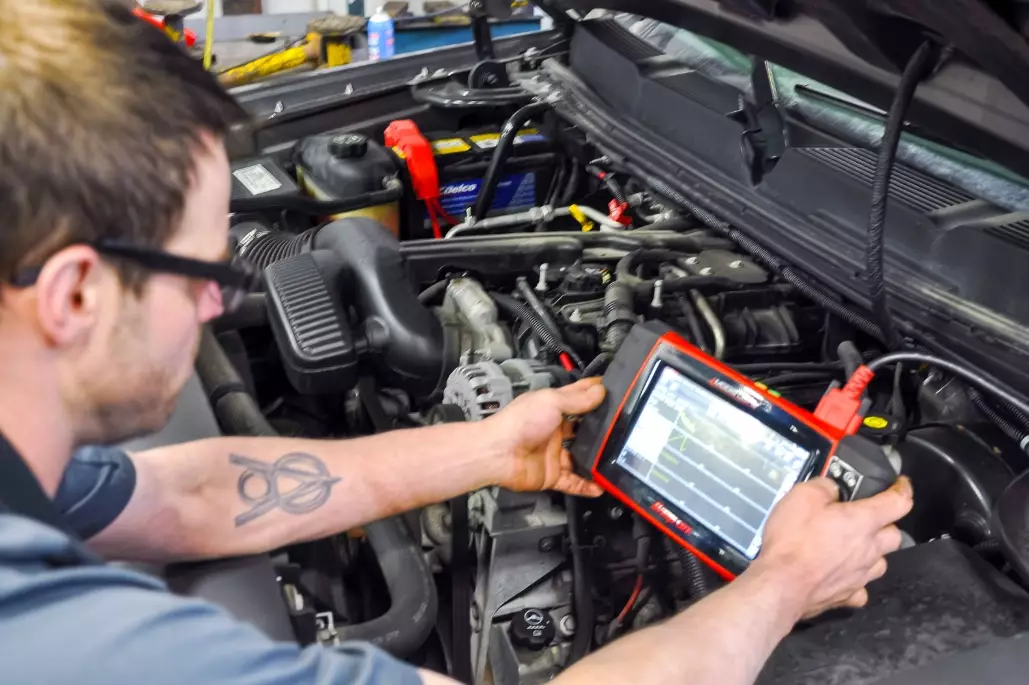
If you’ve never had one done, here’s what to expect. You’ll drive onto a flat rack. The technician will first do a pre-alignment check, looking for worn suspension/steering parts. If a component is loose, aligning over it is pointless. Then, sensors are mounted on all four wheels. The computer shows real-time measurements. The tech will adjust bolts on your suspension (usually at the tie rods for toe, control arms for camber) to bring the green bars into the "in spec" zone on the screen. A test drive often follows to confirm the fix.
What Does a Wheel Alignment Cost? (Price Ranges)
Costs vary widely by location, shop type, and your vehicle. Here’s a realistic breakdown:
| Service Type | Average Price Range | What It Typically Includes |
|---|---|---|
| Front-End Alignment | $65 - $100 | Adjusts camber, caster, and toe on the two front wheels only. Common for older solid-axle rear-wheel-drive vehicles. |
| Four-Wheel Alignment | $100 - $200 | The standard for most modern cars (FWD, AWD, and independent rear suspension). Adjusts all four wheels. This is what you likely need. |
| Specialty/Sports Car Alignment | $150 - $300+ | For performance vehicles, may include custom "corner balancing" or track-oriented settings. |
Dealerships tend to be on the higher end, independent shops in the middle, and chain tire stores often run promotions. Don’t just shop by price—shop by reputation and the thoroughness of their pre-check.