You're running late, you hop in your car, turn the key... and nothing happens. No cranking, no clicking, not even a groan from the starter. Just silence. That sinking feeling in your stomach is all too familiar for many drivers. A car that won't start and makes no noise is a classic symptom of an electrical fault, not a mechanical one. The good news? It's often simpler and cheaper to diagnose than you think, and you might be able to fix it yourself in the driveway.
Quick Troubleshooting Guide
- Your Silent Start Diagnosis Roadmap
- Check the Battery Terminals (The Most Overlooked Fix)
- How to Test Your Battery Voltage with a Multimeter
- Is It the Starter Motor? The Screwdriver Test
- Spotting a Failing Ignition Switch
- When Your Car's Security System is the Culprit
- The Main Relay and Fuse Box Check
- Your Silent Start Questions Answered
Your Silent Start Diagnosis Roadmap
Think of your car's starting system like a chain. If there's a break in the chain, the signal from your key never reaches the starter motor. A silent no-start means the break is early in that chain. We'll follow the electrical path from the battery to the starter. Before you call a tow truck, grab a pair of gloves and a basic multimeter (you can get one for $20). Here are the main suspects, in the order you should check them:
| Symptom (Besides Silence) | Most Likely Culprit | DIY Difficulty |
|---|---|---|
| Dashboard lights are dim or don't come on at all. | Dead battery or severely corroded terminals. | Easy |
| Dashboard lights are bright, but nothing happens when you turn the key. | Ignition switch, faulty starter solenoid, or a blown main fuse. | Moderate |
| Security/anti-theft light is flashing on the dash. | Immobilizer/security system issue. | Moderate to Hard |
| You hear a single, solid *click* from under the hood but no cranking. | Starter motor itself is seized or has internal failure. | Moderate |
Check the Battery Terminals (The Most Overlooked Fix)
Here's my non-consensus tip from a decade in the shop: look at the battery terminals before you buy a new battery. I've seen hundreds of "dead" batteries that were perfectly fine. Corrosion (that white, green, or blue crusty stuff) builds up and acts as an insulator, preventing electrical current from flowing. It's the number one cause of intermittent no-starts that drivers misdiagnose.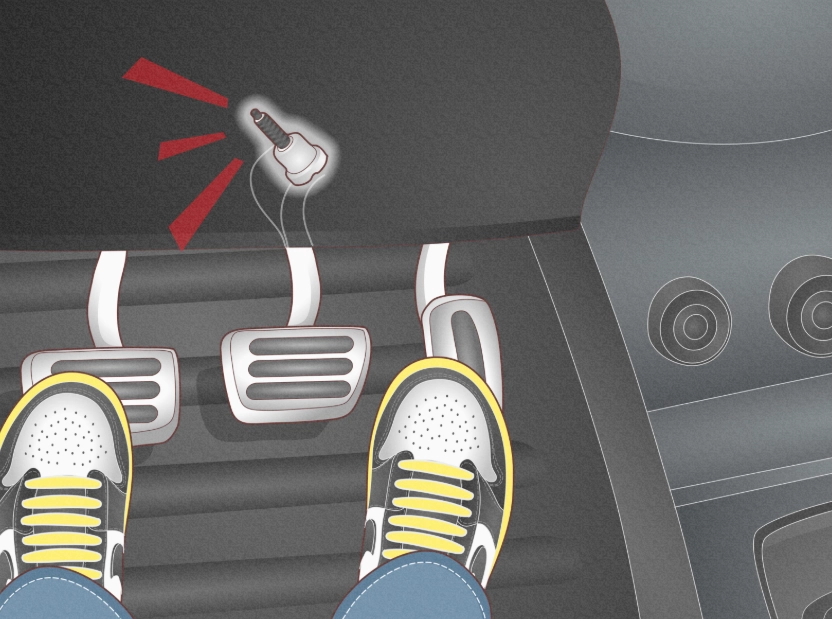
Pop the hood. Are the cable connections on the battery posts tight? Wiggle them. They shouldn't move. If you see corrosion, here's the fix:
- Disconnect the NEGATIVE (black, "-") terminal first, then the POSITIVE (red, "+").
- Mix a tablespoon of baking soda with a cup of warm water.
- Pour it over the corroded posts and terminals. It'll fizz as it neutralizes the acid.
- Scrub with an old toothbrush or wire brush until the metal is shiny.
- Dry everything thoroughly, reconnect the POSITIVE terminal first, then the NEGATIVE, and tighten them securely.
Try starting the car. You'd be amazed how often this works. If the cables themselves are frayed or green inside, they need replacement—a much cheaper fix than a starter.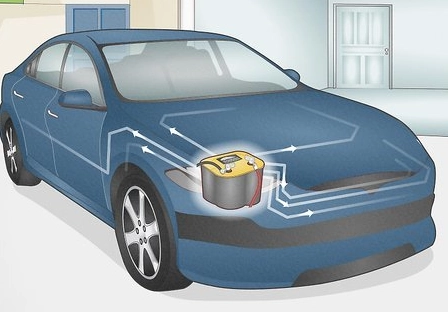
How to Test Your Battery Voltage with a Multimeter
If the terminals are clean and tight, the battery itself might be dead. A "dead" battery can still power your dome light and dash, but not the huge current surge needed by the starter motor. This is where the multimeter comes in.
- Set your multimeter to DC Volts (20V range).
- Touch the RED probe to the battery's POSITIVE (+) terminal.
- Touch the BLACK probe to the NEGATIVE (-) terminal.
- Read the voltage with the car completely off.
12.6V or higher: Battery is fully charged. The problem is elsewhere.
12.0V - 12.5V: Battery is partially discharged. Might still start, but could be weak.
Below 12.0V: Battery is discharged. This is likely your problem.
Now, have a friend try to start the car while you watch the meter. If the voltage plunges below 10V during the attempt, the battery is toast and can't hold a load. Time for a new one. If the voltage stays above 12V but nothing happens, the battery is fine, and you need to look downstream.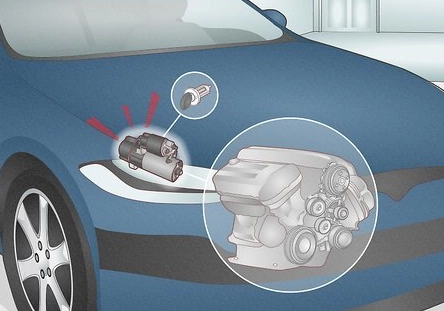
Is It the Starter Motor? The Screwdriver Test
If you have a good battery (clean terminals, 12.6V), the next suspect is the starter motor circuit. The starter has two main parts: the motor that spins and the solenoid (a heavy-duty switch) that engages it. Sometimes the solenoid fails internally.
There's a classic, slightly old-school test. WARNING: This involves touching metal parts in the engine bay. Ensure the car is in Park or Neutral with the parking brake on. Be mindful of hot engine parts. If you're uncomfortable, skip to the fuse check.
Locate the starter motor (usually on the bottom of the engine where it meets the transmission). It will have a large cable from the battery and a smaller "signal" wire. Find the main terminal where the big battery cable connects. Using a large screwdriver with an insulated handle, carefully bridge the gap between this main terminal and the smaller metal tab where the signal wire connects. This manually sends power to the solenoid.
If the starter suddenly engages and cranks the engine, you've just proven the starter itself works. The problem is in the signal circuit: the ignition switch, a fuse, or a relay. If you get nothing—not even a spark—the starter or its solenoid is likely dead.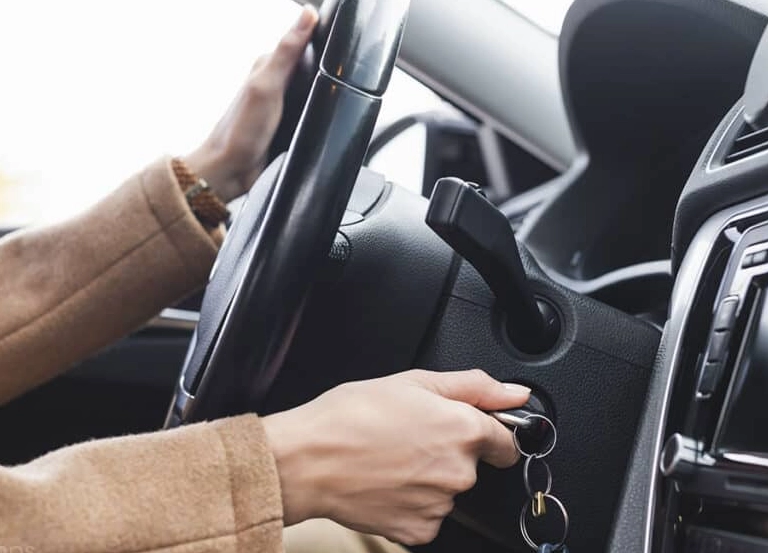
Spotting a Failing Ignition Switch
The ignition switch is the electrical component behind your key cylinder. It wears out over thousands of cycles. Symptoms are subtle: sometimes the car starts, sometimes it doesn't. You might jiggle the key and it works. Or, as in our case, you turn it and get zero response—no dash lights, no fuel pump hum, nothing.
A quick test: turn the key to the "Run" position (just before "Start"). Do the dashboard warning lights come on? Does the fuel pump whir for a second? If yes, the switch is probably getting power. If the dash is completely dead when the key is in "Run," but the battery is known to be good, the ignition switch is a prime suspect. This is often a job for a mechanic, as it involves steering column trim removal.
When Your Car's Security System is the Culprit
Modern cars have immobilizers. A chip in your key talks to the car's computer. If it doesn't recognize the key, it won't allow the car to start. Usually, you get a flashing security light on the dash. Sometimes, after a dead battery replacement or other electrical glitch, the system gets confused.
Try this reset procedure, which works on many makes:
- Put the key in the ignition and turn it to "On" (Run). Don't try to start.
- Leave it in the "On" position for about 10 minutes. Watch the security light.
- Usually, the light will stop flashing and either go off or stay on solid after this time.
- Turn the key off, wait 30 seconds, and try to start normally.
If you have a spare key, try that one. If the spare works, the chip in your primary key may have failed—a surprisingly common issue with older key fobs.
The Main Relay and Fuse Box Check
Finally, we get to the fuse box. There is usually a main fuse or fusible link that protects the entire starter circuit. If it blows, you get silence. Consult your owner's manual to find the starter, ignition, or ECM fuse. Pull it out and visually inspect the thin metal strip inside. If it's broken, replace it with one of the same amperage.
Relays are electromagnetic switches. The starter relay (sometimes called the ignition relay) might be stuck. A telltale sign is a single, faint click from under the dash or hood when you turn the key. Try swapping the starter relay with another identical one in the fuse box (like the horn or AC relay). If the car starts, you've found a cheap fix—a new relay costs around $15.
Your Silent Start Questions Answered
My car was working yesterday but now it's completely dead. What's the most likely cause?
A sudden, complete failure overnight almost always points to the battery. Something drained it: an interior light left on, a faulty glove box switch, or a parasitic draw from an aftermarket accessory (like a dash cam wired incorrectly). A battery can also just fail internally from old age. Start with the voltage test and terminal inspection.
I cleaned the terminals and the battery tests good, but still nothing. Could it be a bad ground strap?
Absolutely. The negative battery cable connects to the car's chassis (the "ground"). If that connection at the chassis or engine block is rusty or loose, electricity can't complete its circuit. Follow the black negative cable from the battery. It bolts to the body and another cable goes to the engine. Ensure these connection points are clean, tight, and free of paint or rust. A bad ground can mimic every symptom of a dead starter or battery.
How much does it typically cost to fix a starter motor vs. an ignition switch?
Costs vary widely by car. A starter motor replacement, including parts and labor, often ranges from $400 to $800. The part itself is $150-$400. An ignition switch is usually cheaper on parts ($50-$250) but can be labor-intensive if buried in the steering column, leading to a similar total bill of $300-$600. This is why accurate diagnosis is crucial—you don't want to pay for a starter when you needed a $15 relay.
Is it safe to jump-start a car that won't start with no noise?
You can try, but manage your expectations. If the cause is a truly dead battery, jump-starting will work. If the battery is completely dead internally (shorted cell), it may not accept a jump. If the problem is a faulty starter, ignition switch, or bad connection, jump-starting won't help. Always connect jumper cables properly (positive to positive, negative to a good ground on the dead car's engine block) to avoid damaging electronics.
What's one tool I should keep in my car to help with this?
A compact battery jump starter pack. The modern lithium-ion ones are small, powerful, and can jump-start your car without another vehicle. They also usually have a built-in flashlight and USB ports to charge your phone. If your no-start is simply due to a drained battery from leaving a light on, this $60-$100 tool can get you going in minutes and is a lot safer than dealing with jumper cables in the rain.