Quick Navigation
Let's talk about the part of your car you probably never think about until it starts making your drive feel like a rollercoaster on its last legs. I'm talking about rear shocks. That's right. I had my own wake-up call last year on a road trip. Every bump on the highway sent a shudder through the cabin, and my coffee was in constant danger. I knew it was time. The dreaded rear shocks replacement.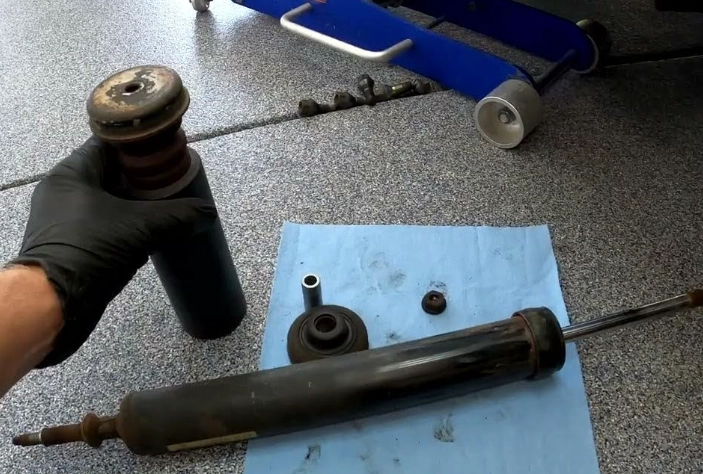
Most folks just grit their teeth and take it to a shop, paying whatever the mechanic says. But what if you could understand exactly what's happening? Maybe even do it yourself? Whether you're a hands-on DIYer or just want to be an informed customer, this guide is going to walk you through the whole messy, sometimes frustrating, but ultimately satisfying process of replacing your rear shocks. We'll cut through the jargon and get to what actually matters.
Bottom Line Up Front: Replacing worn rear shocks isn't just about comfort—it's a critical safety repair. Bad shocks hurt your car's ability to grip the road, especially when braking or cornering.
How Do You Know You Need New Rear Shocks? (The Tell-Tale Signs)
Shocks don't usually just snap and fail. They wear out slowly, so you get used to the degrading ride. It's a sneaky process. Here's what to watch (and feel) for.
The Obvious Physical Symptoms
The classic test is the "bounce test." Push down hard on the rear corner of your car and let go. A car with good shocks will bounce back up and settle immediately. If it bounces more than once or twice, those shocks are tired. It's not a perfect lab test, but it's a great first indicator.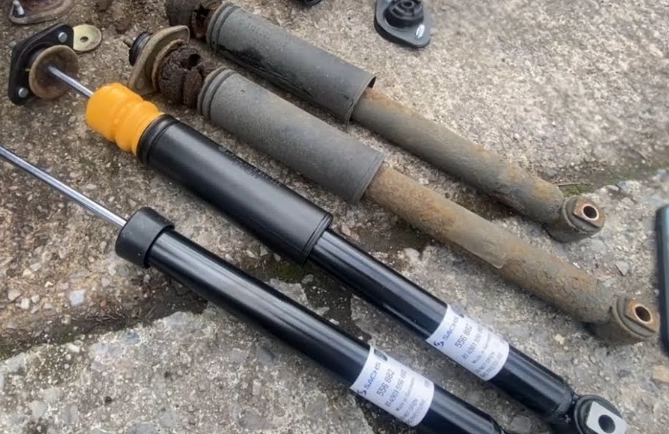
Then, get down and look. Really look. Grab a flashlight.
- Leaking Fluid: This is the big one. Shocks are filled with hydraulic fluid. If you see an oily, dirty streak running down the body of the shock absorber, it's leaking. The seal is gone, and so is its effectiveness. I once ignored a small leak thinking it was just road grime. Big mistake.
- Dents or Damage: The shock body shouldn't look like it's been in a fight. Any major dent can restrict the piston's movement.
- Worn Bushings: Look at the top and bottom mounts. The rubber (or polyurethane) bushings that isolate the shock can crack, crumble, or fall out. This causes a whole different set of clunks.
The Feel-It-In-Your-Gut Driving Symptoms
This is where you really notice it. Driving becomes a chore.
You hit a small bump or a pavement seam, and the car doesn't just absorb it—it floats or oscillates afterward. The rear end feels loose and unsettled. On highway on-ramps, the car might lean excessively and feel less planted. You might notice the rear tires losing grip more easily in the rain. Braking can feel less stable, with the nose diving forward and the rear feeling light.
Honestly, the worst for me was the constant small jiggling. It wasn't one big bump, just a thousand tiny ones that made long drives exhausting. That's a dead giveaway for worn shocks.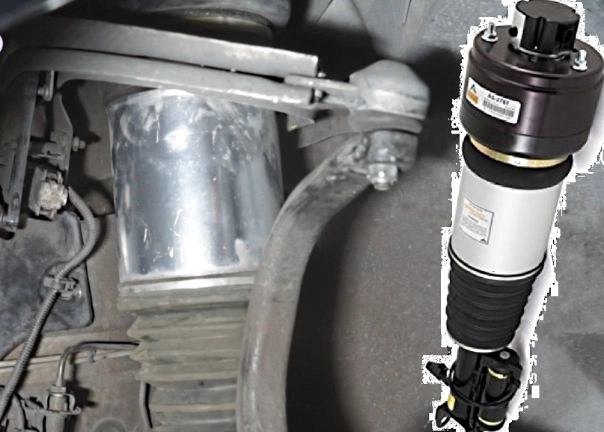
Don't Ignore This: If you see fluid leaking from a shock, it's not a "maybe next month" item. The performance is already severely compromised. Plan the rear shock absorber replacement soon.
To DIY or Not to DIY? Let's Be Real.
This is the million-dollar question. A rear shocks replacement is often considered one of the more approachable suspension jobs. But it's not changing a light bulb.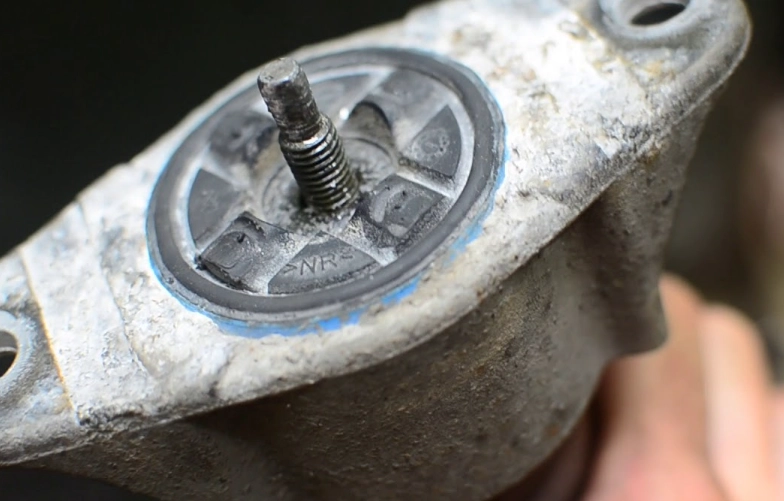
Here’s my honest take, having done it in my driveway and also paid a pro before.
When You Should Seriously Consider the DIY Route
You're a good candidate if you have basic mechanical confidence, have done work like brake pads or oil changes before, and own or are willing to get a decent set of tools. The job is very straightforward on many trucks, SUVs, and older sedans where the rear shock is a simple standalone unit.
The satisfaction is huge. You'll save a ton on labor, and you'll know it was done right. Plus, you get to pick the exact parts you want.
When You Should Probably Call a Pro
Walk away from the wrenches if your car has a complex independent rear suspension where the shock is integrated with a coil spring (a "coilover" unit). Replacing these requires spring compressors, which are dangerous tools if you don't respect them. Just don't.
Also, if the mounting bolts look like they've been welded by rust and corrosion (common in the Snow Belt), you're in for a brutal fight involving heat, penetrating oil, and likely broken bolts. A shop with air tools and a torch will handle this in minutes. Sometimes paying the labor is a sanity tax, and it's worth every penny.
Let's break down the cost difference, because that's usually the deciding factor.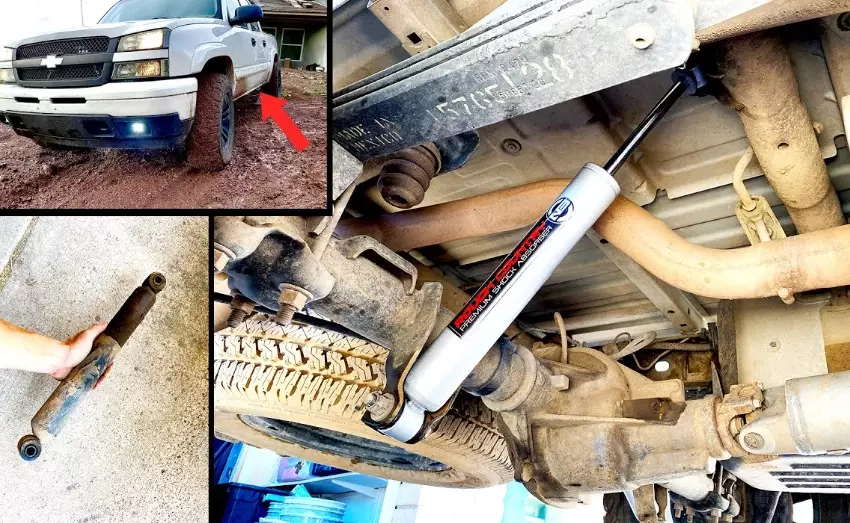
| Cost Component | DIY Approach | Professional Service |
|---|---|---|
| Parts (Pair of Mid-Range Shocks) | $100 - $300 | $100 - $400 (marked up) |
| Labor | Your time (2-4 hours) | $200 - $400 |
| Additional Tools | ~$50 for rental/penetrants | Included |
| Alignment Check? | Usually not required* | May be recommended |
| *Replacing just the shock (not a coilover) typically doesn't require a rear alignment, but it's never a bad idea to get it checked, especially if you have uneven tire wear. | ||
So, a pro job can easily run $400 to $800+ for a typical car. The DIY rear shock replacement cost is mostly just parts. That's the trade-off.
Gearing Up: The Tools and Parts You Actually Need
If you've decided to tackle it, let's get your toolkit ready. Nothing kills DIY momentum faster than being halfway through and missing one crucial tool.
The Must-Have Tool List
- Jack and Jack Stands: Never, ever work under a car supported only by a jack. Use sturdy jack stands on solid ground. This is non-negotiable.
- Basic Socket Set & Wrenches: Sizes will vary by car, but 14mm, 15mm, 17mm, and 19mm are common. A breaker bar or long ratchet is your best friend for stubborn bolts.
- Penetrating Oil: PB Blaster, Liquid Wrench, Kroil. Soak those mounting bolts the night before and again an hour before you start.
- Safety Glasses: You'll be looking up at rusty parts. Don't risk it.
- Torque Wrench: Crucial for the final step. Overtightening can damage mounts; undertightening is dangerous.
Choosing the Right Shock Absorbers
This is where you can tailor the car's feel. Don't just buy the cheapest pair on the shelf.
- OE Replacement (Monroe, Gabriel, KYB): These aim to match the original ride quality. Perfect if you just want things back to normal. KYB Excel-G are fantastic OEM-style replacements.
- Premium/Performance (Bilstein, Koni): These often improve handling and control. Bilstein B4s are a direct upgrade over OEM, while B6s are for heavier use. They cost more but last longer and perform better. I put Bilsteins on my car and the difference was night and day.
- Adjustable (Koni Specials): Let you fine-tune stiffness. Great for enthusiasts who might track the car or tow occasionally.
- Load-Leveling (Gas-charged or air-adjustable): If you frequently haul heavy loads or tow, these prevent the rear from sagging.
My advice? For a daily driver, you can't go wrong with a quality OE-type shock from a major brand. If you have a little extra budget, stepping up to a Bilstein or Koni is an investment you'll feel every mile. Always, always buy in pairs. Replacing just one rear shock leads to unbalanced handling.
For authoritative technical information on shock absorber design and function, organizations like the SAE International publish extensive research papers that form the basis of modern automotive suspension engineering.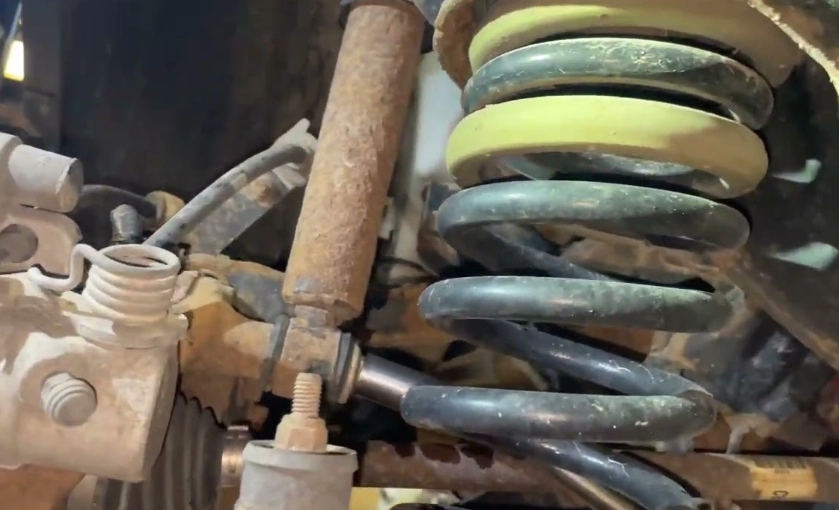
The Step-by-Step: Swapping Out Your Rear Shocks
Alright, let's get dirty. This is a general guide. Your car's service manual (you can often find them online) is the ultimate authority.
Preparation is Everything
Park on a flat, hard surface. Loosen (but don't remove) the lug nuts on the rear wheels. Jack up the rear of the car and place it securely on jack stands. For safety, you often want the rear wheels off the ground but the suspension somewhat loaded. Sometimes it's easier with the wheel off; sometimes you can work around it. When in doubt, take the wheel off. It gives you room.
The Removal Dance
Locate the top and bottom mounts of the shock. The bottom is usually a bolt through an eyelet into a bracket. The top is often a nut on a stud that goes into the chassis or trunk area.
Spray everything with penetrating oil. Again.
I usually start with the bottom bolt. It's often the dirtiest and most stuck. Use your breaker bar. If it snaps... well, that's a problem for future-you. Hopefully, it breaks free. Remove the bolt.
Now for the top. You may need to open the trunk or pull back some interior trim to access the top nut. Hold the shock's piston rod from spinning with an Allen key while you loosen the nut. Once the nut is off, the old shock should just... fall out. Sometimes you need to coax it. Mind your fingers.
Installation and The Final Torque
Take your shiny new shock. Often, you need to transfer a rubber dust boot or a bump stop from the old one. Don't forget this.
Manipulate the new shock into position. It can be a bit of a puzzle. Start the top nut first, just a few threads. Then line up the bottom mount and insert the bolt. Don't tighten anything fully yet.
Once both shocks are in place (both sides), lower the car so its full weight is on the suspension. This sets the bushings in their neutral position. Now you take your torque wrench and tighten all mounting bolts and nuts to the manufacturer's specification. This step is critical for bushing life and safety.
Reinstall the wheels, lower the car, and do a final check that everything is tight.
Pro Tip from Hard Lessons: When installing the new shock, don't extend the piston rod all the way out and then try to compress it into place. It can damage the internal valving. Compress it gently by hand and use a zip-tie to hold it compressed while you maneuver it into position. Cut the zip-tie once it's bolted in.
Beyond the Basics: Questions You're Too Embarrassed to Ask
Living With Your New Rear Shocks
The first drive is the best part. That floaty, boat-like feeling is gone. The car should feel planted and controlled. Small bumps are absorbed with a single, damped motion. It might even feel a little firmer at first—that's the new, correct damping force you're feeling.
Give it a few days. Listen for any new clunks or rattles (indicating something you didn't tighten). Enjoy the restored stability. You've just completed one of the most impactful maintenance jobs for both comfort and safety.
Whether you turned the wrenches yourself or wrote the check, understanding the rear shocks replacement process empowers you as a car owner. You know what the parts do, why they failed, and what good feels like. That knowledge is worth more than any tool in your box.
So, next time your car starts feeling a little loose in the rear, you won't dread it. You'll know exactly what to do.