Quick Guide
- It's Not Magic, It's Two Wires and Two Filaments
- The Other Half of the Story: Separate Bulbs and Modern LED Units
- How to Know Which System Your Car Uses
- Bulb Types: A Quick Reference Table
- Why Does This Design Even Exist? The Pros and Cons
- Frequently Asked Questions (The Stuff You Really Want to Know)
- Final Verdict: So, Can They Be The Same Bulb?
You're driving behind someone at night, and you see their red lights on. Then they tap the brake, and the same red lights just get brighter. Or maybe you're popped open your own trunk, staring at the cluster of lights, holding a replacement bulb, and wondering... is this one bulb doing two jobs? Can brake light and tail light be the same bulb? It's one of those car questions that seems simple but has a surprisingly interesting answer tucked under the lens.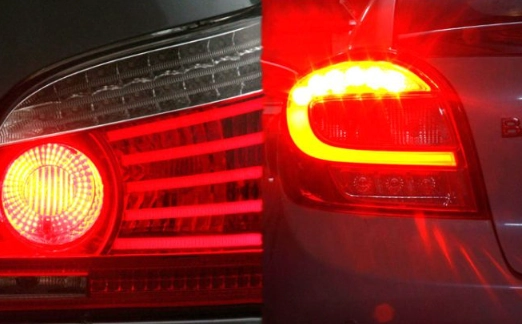
Let's cut to the chase right away. The short answer is: Yes, absolutely, they often are the same physical bulb. But—and this is a huge but—it's not one simple light doing a simple trick. It's a specific type of bulb designed to perform two distinct functions from a single socket. Calling it the "same bulb" oversimplifies the clever engineering and critical safety rules behind it. Most people asking "can brake light and tail light be the same bulb" are really asking about the physical hardware they see in the socket. And for a vast number of cars on the road, especially older models, that hardware is a single, special bulb.
The Core Concept: In many vehicles, a single dual-filament bulb (like the common 1157, 7443, or P21/5W) sits in one socket to serve as both the tail light (running light) and the brake light. One low-power filament glows for the tail light. When you press the brake, a separate, higher-power filament in that same glass envelope lights up at full intensity, creating the brighter brake signal.
I remember helping a friend replace what he called a "dead brake light." He'd bought a single-filament bulb because it looked similar. We put it in, the tail light worked, but when he hit the brakes... nothing. He was baffled. "The bulb is on!" he said. That's when we learned the hard way about the two-filament system. The bulb he bought only had the tail light filament. The car's wiring was waiting for that second, brighter circuit to close. A perfect example of why the question "can brake light and tail light be the same bulb" matters for real repairs.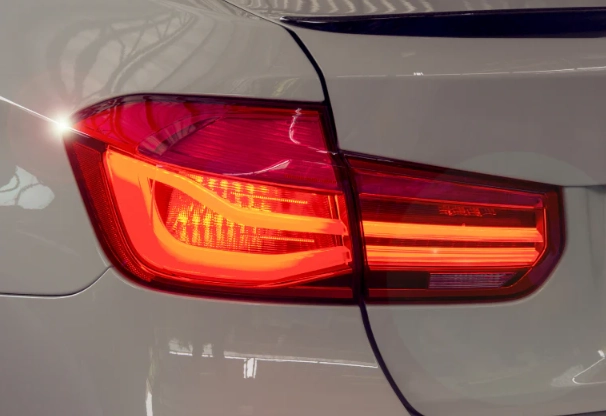
It's Not Magic, It's Two Wires and Two Filaments
To really get this, you need to picture the bulb itself. Forget the fancy LED arrays for a minute—let's talk about the classic incandescent bulb that defined this system. If you look at a standard dual-filament bulb, you'll see it has three contacts on the bottom, not the usual two. That's your first clue.
- One contact is the common ground (usually the metal sleeve or a specific pin).
- The second contact routes power to the first, dimmer filament (the tail light).
- The third contact routes power to the second, brighter filament (the brake light).
The car's wiring harness plugs into a socket that connects to all three. When you turn on your headlights, the car's computer or light switch sends a lower voltage (or runs the filament on a circuit designed for constant, dimmer output) to the tail light filament. It glows red, marking the rear of your car.
Press the brake pedal. A separate switch activates, sending full battery power down the other wire to the second filament. Because this filament is designed for more power (it's often a thicker wire), it burns much brighter. From the outside, the same red lens appears to intensify dramatically. It's a brilliantly simple system that saves space, wiring, and complexity.
So, when someone asks if the brake light and tail light can be the same bulb, they're usually seeing this system in action. But here's where it gets more complex, because not all cars use this method anymore.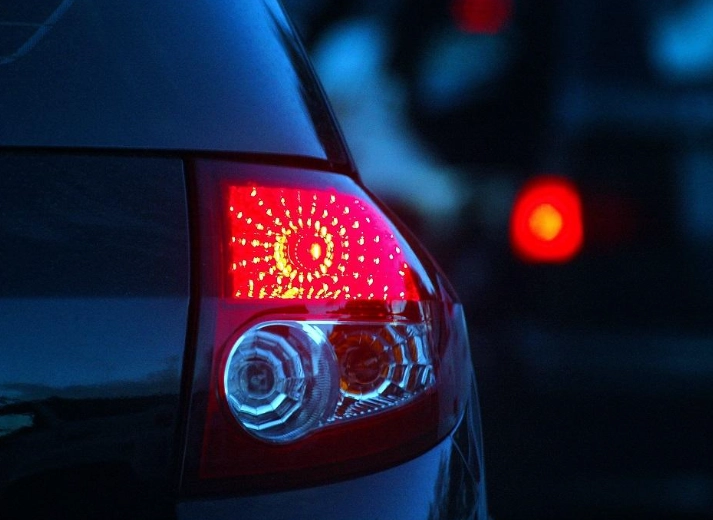
The Other Half of the Story: Separate Bulbs and Modern LED Units
Walk around a modern SUV or a high-end sedan. Look closely at the rear light cluster. You might see what looks like two distinct red sections or LEDs within one housing. In many modern designs, the answer to "can brake light and tail light be the same bulb" shifts to "No, they are separate light sources within the same assembly."
Car designers love LEDs now. They're bright, efficient, and last forever. With LEDs, a manufacturer can design a light cluster where one set of LED chips is dedicated to the tail light function, and a completely different, often more numerous or differently arranged set of LED chips lights up for braking. They're housed together behind the same red lens, but electrically and physically, they're separate. This allows for cooler designs, like sweeping light bars or specific patterns.
Some cars, even older ones, use two separate single-filament bulbs sitting right next to each other in their own sockets. One is the tail light bulb, the other is the brake light bulb. This is less common because it uses more parts, but it's out there.
Critical Safety & Legal Point: This isn't just about engineering preference. Federal motor vehicle safety standards, like those enforced by the National Highway Traffic Safety Administration (NHTSA), mandate minimum brightness levels for brake lights and tail lights. The brake light must be significantly brighter to convey urgency. The dual-filament bulb is a certified, reliable way to meet this standard. Swapping in the wrong bulb can make your brake light illegitimately dim or your tail light too bright, confusing other drivers and potentially making your vehicle unsafe or illegal on the road.
I think some car makers moved to separate LEDs partly for styling, but also for redundancy. If a single dual-filament bulb burns out, you lose both functions. With separate LEDs, one might fail while the other works. Although, in my experience, whole LED units failing is a more expensive headache than swapping a $5 bulb.
How to Know Which System Your Car Uses
This is the practical part. You're not just wondering "can brake light and tail light be the same bulb" out of curiosity—you probably need to fix or replace something. Here's how to figure out your car's setup.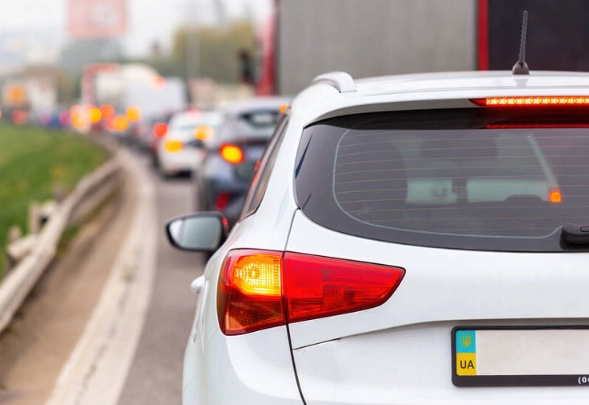
Method 1: The Bulb Removal Test
This is the most reliable way. Turn off your car, open the trunk or tailgate, and access the rear light housing (you might need to remove a plastic cover or a few screws—your owner's manual is your friend here). Carefully twist and remove the socket for the red rear-position lights.
- Look at the bulb base. Does it have two contacts on the bottom (like a tiny silver dome and a side nub) or three? Three contacts mean it's almost certainly a dual-filament bulb.
- Look at the bulb itself. Hold it up to the light. Can you see two separate tiny wire filaments inside the glass? If yes, it's a dual-filament bulb serving both purposes.
- Look at the socket. Are there two separate bulb sockets right next to each other, both aiming at the red lens? You might have separate bulbs.
Method 2: The Partner & Pedal Test
Have someone help you. At night or in a dim area, turn on your headlights so your tail lights are illuminated. Have your partner look at the rear of the car. Now, press the brake pedal while they watch. Ask them: "Does the same red area just get brighter, or does a different section or additional set of lights come on?"
If it's the same area getting brighter, it's a dual-filament bulb or an LED unit where the same chips intensify. If a distinctly different section lights up (like an inner ring or a upper segment), you likely have separate light sources.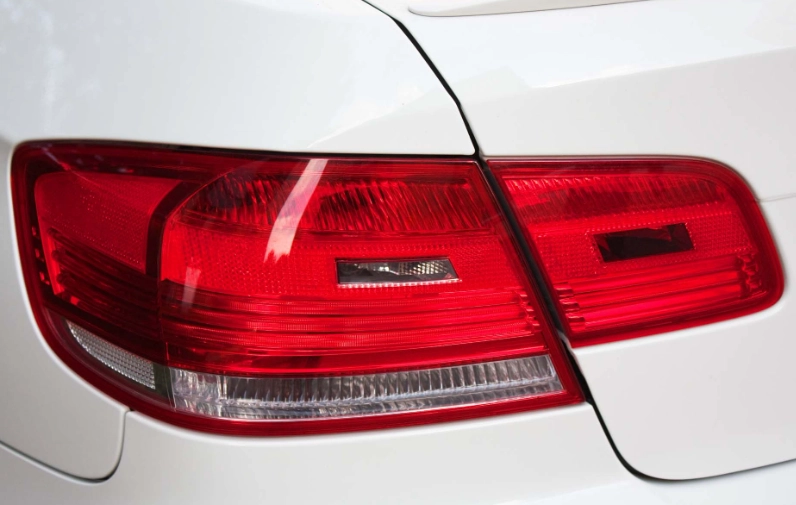
Method 3: Check the Owner's Manual or Bulb Chart
This is often overlooked. Your car's manual has a bulb chart in the back. It will list every bulb by function and its corresponding number (e.g., 1157, 7443, 3157). If the chart lists the same bulb number for both "Tail Light" and "Stop Light (Brake Light)," then you have your answer—it's a shared, dual-filament bulb. If they list different numbers, they're separate.
Pro Tip: Before you buy a replacement, pull the old bulb out and take it to the parts store with you. Match it physically. Even better, know your car's exact year, make, model, and trim. A 2010 Honda Civic LX might use a different bulb than a 2010 Honda Civic EX with different taillight assemblies.
Bulb Types: A Quick Reference Table
To make sense of the numbers you'll encounter, here's a breakdown of common bulb types related to our question.
| Bulb Number | Type | Filaments | Common Functions | Notes |
|---|---|---|---|---|
| 1157 | Bayonet Base | Dual | Tail & Brake Light (also often used for Turn Signals in rear) | The classic. Two offset pins on the base. |
| 7443 | Wedge Base | Dual | Tail & Brake Light, often in modern sockets | Plastic wedge base. Common in 2000s+ cars. |
| 3157 | Wedge Base | Dual | Tail & Brake Light | Very similar to 7443, slightly different specs. Often interchangeable but check your manual. |
| 1156 | Bayonet Base | Single | Brake Light ONLY (if separate), Reverse Light | Only one filament. If your car uses this for brakes, it has a separate bulb for tail lights. |
| 194 | Wedge Base (Tiny) | Single | Tail Light ONLY (if separate), Side Marker | A small, low-power bulb. Never used for brake lights. |
See? The numbers tell the story.
Why Does This Design Even Exist? The Pros and Cons
Thinking about it, using one bulb for two jobs seems like a cost-saving move for manufacturers (and it is), but it also has genuine engineering merits and some drawbacks.
Advantages of the Dual-Filament (Same Bulb) System:
- Simplicity: One socket, one bulb to manufacture and inventory.
- Cost-Effective: Cheaper to produce and assemble on the car line.
- Compact: Saves space in the tight confines of a light housing.
- Proven Reliability: The design has been used for decades and is well-understood.
Disadvantages & Why Some Cars Avoid It:
- Single Point of Failure: If that one bulb burns out, you lose both your tail light and your brake light on that side. That's a major safety risk. I've been caught with this—a failed bulb meant I was driving at night with no rear side marker and no brake signal until I fixed it.
- Heat Concentration: Two filaments in one glass envelope generate more heat in one spot, which can potentially degrade the socket or lens over a very long time.
- Less Design Flexibility: With LEDs, designers want to create unique "signature" lighting. Having separate light sources allows for more creative and dynamic shapes than a single bulb's glow can provide.
The move towards LEDs and separate sources is, in a way, an answer to the limitations of asking one bulb to do two critical jobs. The Society of Automotive Engineers (SAE International) publishes standards (like J586 for lighting) that guide these designs, balancing innovation with safety requirements.
Frequently Asked Questions (The Stuff You Really Want to Know)
Let's tackle some specific scenarios that pop up when people dig into this topic.
Can I replace a dual-filament bulb with two separate single-filament bulbs?
Absolutely not. Unless you are rewiring the entire socket and housing—which is a complex, custom job—the socket is designed for one three-contact bulb. Putting in a single-filament bulb will only complete one circuit. You'll either have a tail light with no brake function, or a brake light that's on all the time (and likely too bright as a tail light). It's a surefire way to create a malfunction and a safety hazard.
My new LED "bulb" for my dual-filament socket isn't working right. The tail light is super bright and the brake light doesn't change much.
This is a common complaint with cheap LED replacements. Incandescent bulbs don't care about electrical polarity. LEDs do. Many aftermarket LED "bulbs" designed to replace 1157 or 7443 bulbs have built-in circuitry to handle the two circuits. If you install it backwards in the socket (which is easy to do, as it often fits both ways), the circuitry gets confused. Try flipping the bulb 180 degrees in the socket. If that doesn't work, you may need a model with a more sophisticated decoder or a load resistor kit. Frankly, some off-brand LEDs are just poorly made for this specific application.
Are there any cars where the brake light and tail light are NEVER the same bulb?
Yes. Many motorcycles use completely separate bulbs or LEDs for clarity and safety. Some high-end cars and trucks with full LED tail light assemblies have no traditional "bulbs" at all—just sealed LED modules. In these cases, the functions are separate from the ground up. Also, some European cars have had separate bulbs historically for redundancy.
Is it illegal if my brake light and tail light are on the same bulb?
No, not at all. It's a perfectly legal and federally approved method. The law cares about the performance—the correct color (red or amber for turn signals) and the minimum/maximum brightness levels—not how you achieve it. Whether it's one dual-filament bulb, two bulbs, or a cluster of LEDs is up to the manufacturer.
A quick story: I once had an old pickup where the previous owner had messed with the wiring. The brake lights worked, but the tail lights were dead. I assumed the bulbs were bad. After replacing them (with the correct dual-filaments) and still having the problem, I traced it to a blown fuse that only controlled the tail light circuit. The brake light circuit was on a different fuse. That was the day I fully appreciated how these two functions, even in one bulb, are electrically independent. The bulb was fine; the car's wiring was telling only half the story.
Final Verdict: So, Can They Be The Same Bulb?
Let's wrap this up. The question "can brake light and tail light be the same bulb" has a layered answer.
For a massive portion of the automotive world, particularly vehicles from the 1970s through the early 2000s, the physical bulb is indeed the same. It's a dual-filament bulb, a clever piece of engineering that fulfills two legally distinct lighting requirements from one inexpensive, replaceable unit. It's the default answer for millions of cars.
However, the function is never the same. The tail light and the brake light are separate signals with different brightness requirements. The bulb is just the vessel. In modern vehicles, the trend is shifting toward separate LED light sources within a unified housing, moving away from the shared-bulb concept for reasons of design, redundancy, and efficiency.
The most important takeaway is for your own car. Don't guess. When a red light at the back of your car goes out, take a few minutes to diagnose it properly. Pull the bulb, look for two filaments, check the number, and replace it with the exact correct part. Your safety and the safety of those driving behind you depend on that bright, clear brake signal. Whether it comes from the same glass bulb as your tail light or from a separate microchip, making sure it works is what truly matters.
And next time you're in traffic at night, watch the car ahead. You'll see the whole system in action—the dim red glow suddenly flashing into a bright warning. Now you'll know exactly what's happening behind that red lens.