Quick Guide Highlights
Look, I get it. You pop the hood, see that coolant reservoir sitting right there, and the thought hits you: can I refill coolant myself? It looks simple enough. The cap twists off, you pour some liquid in, job done. Save a trip to the shop, save some cash. That's the dream, right?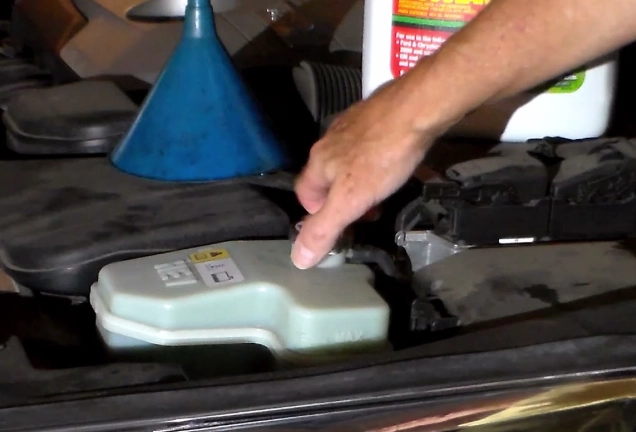
Well, hold on a second. The short answer is yes, absolutely, you can refill coolant yourself. It's one of the more accessible DIY car maintenance tasks. But—and this is a big but—there's a right way and about a dozen wrong ways to do it. Do it wrong, and you're not just wasting a few bucks on fluid; you're flirting with a cracked engine block or a warped cylinder head. Repairs that make a mechanic's vacation fund very happy.
So, if you're serious about learning how to do this properly, you're in the right place. I've topped up coolant in everything from old beaters to newer cars, and I've learned the hard way what matters and what doesn't. This isn't just a quick "yes, pour it here" article. We're going to dig into the why, the when, the how, and the "oh heck no" of coolant refills.
What You Need to Know Before You Even Touch the Cap
Coolant isn't just fancy water. It's a carefully engineered cocktail (usually a 50/50 mix of antifreeze and distilled water) that does three critical jobs: it cools your engine, protects it from freezing in winter and boiling over in summer, and inhibits corrosion inside your entire cooling system—the radiator, water pump, heater core, and all those little passages.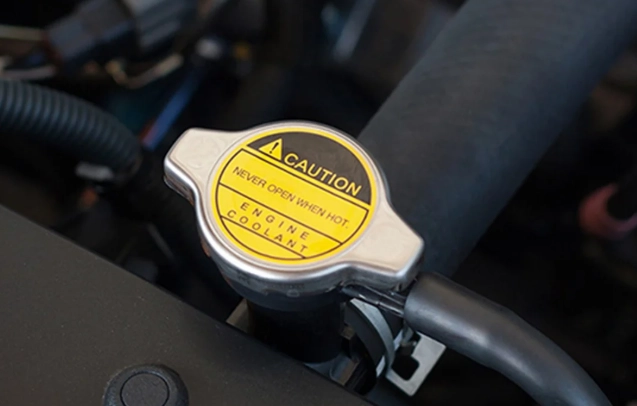
So, asking "can I refill coolant myself?" isn't just about adding liquid. It's about maintaining a complex chemical system. Use the wrong type, mix incompatible ones, or use plain tap water, and you can gum up the works with silicate drop-out or form corrosive gunk. The Society of Automotive Engineers (SAE) sets standards for these fluids because the chemistry matters. A lot.
The Two Main Reasons Your Coolant is Low
Before you pour anything in, stop and figure out why it's low. This is the most skipped step. There are two basic reasons:
- Normal Evaporation/Minor Depletion: Over a year or two, a tiny amount of water in the mix can evaporate, even through sealed systems. The level in the overflow (or coolant reservoir) might drop an inch below the "Cold" line. This is a top-off scenario.
- A Leak: This is the problem. Leaks can be slow (a weeping hose clamp, a tiny crack in the reservoir) or fast (a blown radiator hose). If you're adding coolant more than once every few months, you have a leak. Topping off is just treating a symptom while the disease gets worse.
I learned this the annoying way. My old truck kept needing coolant every few weeks. I kept topping it off, proud of my DIY spirit. Turns out, the water pump seal was slowly failing. By the time it went completely, it had also corroded some surrounding parts from the constant dampness. A simple fix became a bigger job. Don't be like past me.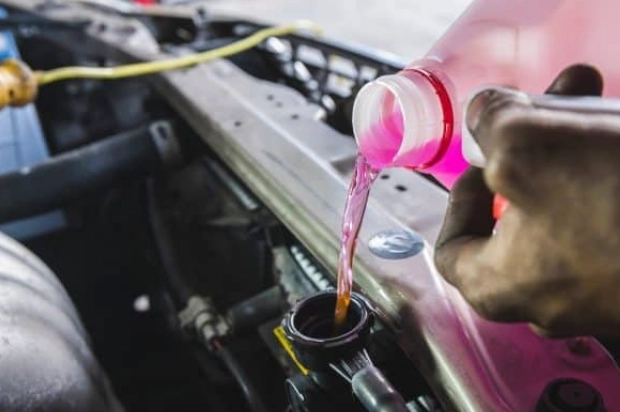
The Step-by-Step Guide to Refilling Coolant (The Right Way)
Alright, let's say you've checked and it's just a minor low level. No signs of major leaks (no puddles, no sweet smell from the exhaust). Here's how to answer that "can I refill coolant myself?" question with action.
Safety First: This Stuff is Nasty
Also, wear gloves and safety glasses. Ethylene glycol (the main ingredient in most antifreeze) is sweetly poisonous to pets and humans, and it can irritate skin. Clean up any spills immediately.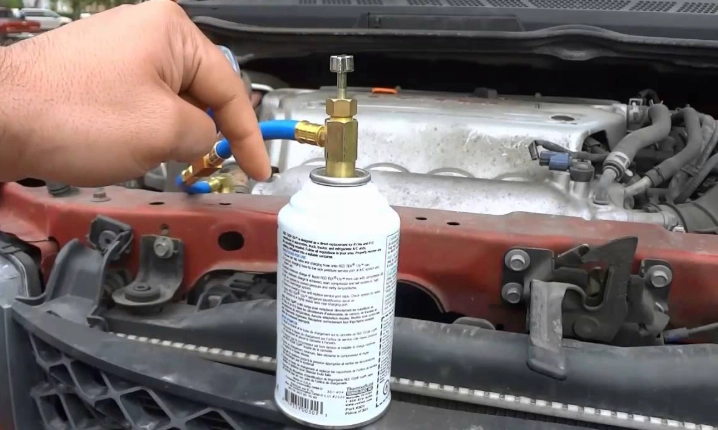
Gathering Your Supplies
You don't need a fancy toolbox, but you do need the right stuff:
- The Correct Coolant: This is the big one. Check your owner's manual. Don't guess. Common types are:
- IAT (Inorganic Additive Technology): The old-school green stuff for older cars. Needs changing every 2-3 years.
- OAT (Organic Acid Technology): Common in GM, VW, and others. Often orange, red, or yellow. Long-life (5 yrs/150k miles).
- HOAT (Hybrid Organic Acid Technology): A hybrid. Common in Fords, Chryslers, BMWs, Mercedes. Often yellow or turquoise.
- Distilled Water: If you're using concentrated antifreeze, you'll need this to make the 50/50 mix. Never use tap water—the minerals cause scale and corrosion.
- A Funnel: A long-neck funnel helps avoid spills.
- Clean Rags or Paper Towels.
- A Flashlight to see the level marks clearly.
The Actual Refill Process
- Park on Level Ground & Cool Down: Make sure the car is off, cool, and parked level so your level readings are accurate.
- Locate the Coolant Reservoir: It's usually a translucent white plastic tank with a black cap, connected to the radiator by a hose. It has "MIN" and "MAX" or "COLD" and "HOT" lines. This is where you'll add fluid 99% of the time for a top-off. The radiator itself has a separate, more heavy-duty cap.
- Check the Level: Look at the side of the reservoir. The coolant level should be between the two lines when the engine is cold. If it's at or below the "MIN" line, it needs topping up.
- Open the Reservoir Cap Slowly: With a rag over the cap, twist it counter-clockwise slowly. If you hear any hissing, stop and let it sit longer. Once the pressure is released, remove the cap completely.
- Add Coolant: Place your funnel in the neck. Slowly pour the correct coolant (or 50/50 pre-mix) until the fluid reaches the "MAX" or "COLD FULL" line. Do not overfill. The reservoir needs empty space for the fluid to expand into when it gets hot.
- Replace the Cap Securely: Click or twist it until it's tight.
- Start the Engine: With the radiator cap still on (leave it alone), start the engine and let it run for a few minutes with the heater on full blast. This circulates the new fluid and bleeds any small air bubbles that might have entered. Watch the temperature gauge—it should stay normal.
- Re-check When Cold: After the engine cools down completely again (the next morning is perfect), check the reservoir level. It may have dropped slightly as air pockets worked their way out. Top it up again to the "COLD" line if needed.
When "Can I Refill Coolant Myself?" Becomes "Should I?"
Topping off is one thing. A full coolant flush and fill, or dealing with a major air pocket (an "air lock"), is a different beast. Here's a quick table to help you decide when DIY is okay and when to wave the white flag and call a professional.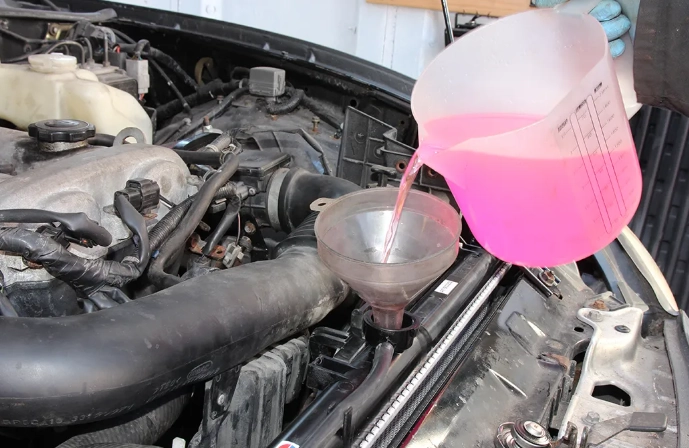
| Situation | DIY-Friendly? | Why & Risks |
|---|---|---|
| Minor top-off (to MAX line) | Yes | Low risk if you use the right coolant and the car is cold. The core task we just covered. |
| Complete coolant flush & replacement | Maybe, for experienced DIYers | Requires draining the system, often from multiple points (radiator drain plug, engine block plug), flushing with water, and performing a proper bleed to remove all air. Getting air pockets out can be tricky and can lead to overheating if done wrong. |
| Coolant system has a major leak | No | Topping off is useless. The leak must be diagnosed and repaired first (could be radiator, hoses, water pump, head gasket). This is repair work, not maintenance. |
| Engine is overheating | No | Adding coolant to an overheating engine is a band-aid on a bullet wound. The overheating cause (thermostat, water pump, fan, clogged radiator) must be diagnosed. Driving an overheating engine can destroy it in minutes. |
| Replacing a major component (thermostat, water pump) | Maybe | If you're doing the repair, you'll have to drain and refill the coolant anyway. Just be prepared for the bleeding process afterward. |
Choosing the Right Coolant: Don't Just Grab the Prettiest Color
This is where most DIYers trip up. Coolant color is not a reliable indicator of type anymore. A green coolant could be old IAT or a modern HOAT. An orange one could be OAT or another HOAT.
The only way to be sure is to:
- Read your owner's manual. It will specify a performance standard, like "GM Dex-Cool" or "Ford WSS-M97B44-D" or "Use coolant meeting ASTM D3306."
- Buy coolant that explicitly states it meets that specification on the bottle.
If you're mixing or topping off an unknown system, the safest path is to use a "global" or "universal" coolant that's formulated to be compatible with a wide range of chemistries and is often yellow. But even then, check the fine print. For a critical system, I'm a believer in finding the exact OEM-recommended fluid. It's a few bucks more, but you know it's right. The U.S. Environmental Protection Agency (EPA) even has guidelines on proper used coolant disposal, as it's a regulated waste product—another reason to get the type right the first time and not have to change it prematurely.
Frequently Asked Questions (The Stuff You're Really Wondering)
In a true roadside emergency (overheating due to a leak), yes, you can add plain water to get to a repair shop. But understand it's a temporary fix. Water alone has a lower boiling point and will freeze, and it lacks corrosion inhibitors. Get the system properly drained, flushed, and refilled with the correct coolant mix as soon as possible. And use distilled water if you have it.
Make it a habit every time you check your oil, or at least once a month when the engine is cold. A quick visual check of the reservoir takes 10 seconds and can save you thousands.
If the plastic reservoir is bone dry, there's a good chance there's air in the main system. After filling the reservoir to the MAX line, you'll need to "bleed" or "burp" the system to remove that air. This often involves opening a bleed screw on the thermostat housing or radiator while the engine runs (with the heater on). Consult a service manual for your specific car—the procedure varies. This is where the DIY difficulty ramps up.
No. Never mix based on color. Mix only coolants that are explicitly stated to be compatible with each other or that meet the same manufacturer specification. Mixing incompatible types can cause them to gel, clog your radiator and heater core, and lose their protective properties. A costly mistake.
That's a bad sign. It means the corrosion inhibitors have broken down and the system is, well, corroding. This often happens with old, neglected IAT coolant. The system needs a thorough flush and the coolant needs to be replaced. This is not just a top-off job.
Final Verdict: So, Can I Refill Coolant Myself?
Let's circle back to the title. Can I refill coolant myself? For the vast majority of people needing a simple top-off of a marginally low system, the answer is a confident yes. It's a quick, inexpensive, and satisfying piece of basic car care. The steps are simple: cold engine, right fluid, fill to the line, cap it tight.
The real skill isn't in the pouring; it's in the knowledge before you pour. Knowing why it's low, knowing what fluid belongs in your car, and knowing when a simple refill is masking a bigger problem. That's what separates a savvy car owner from someone who just follows steps.
If your situation is more complex—a flush, a repair, persistent air locks, or an overheating engine—respect the limits of your tools and knowledge. There's no shame in taking it to a pro. The goal is a healthy car, not just checking a task off a list.
Now you know. Go check that reservoir. Is it at the line? Good. If not, you know what to do. And more importantly, you know what to check for before you do it. Happy (and safe) wrenching.