I remember the first week with my EV. The silence was eerie. The instant torque was addictive. And then, on day three, I stared at the charger in my garage like it was an alien artifact. The salesperson talked about "saving the planet" and "low maintenance," but the real story of electric vehicle ownership is in the mundane details—the daily charging ritual, the road trip planning, the weirdly satisfying lack of oil changes.
This isn't another article listing EV specs. Let's talk about the lived experience.
What's Inside: Your EV Ownership Roadmap
The Charging Reality: Home, Public, and the In-Between
Forget "filling up." Charging is a mindset shift. If you can't charge at home or work reliably, an EV becomes a chore. It's that simple.
Home Charging: The Non-Negotiable Game Changer
This is the secret sauce. Plugging in overnight in your garage is like having a gas station at home. You wake up to a "full tank" every morning. Most people use a Level 2 charger, which needs a 240-volt outlet (like your dryer uses).
The catch? Installation. An electrician might charge $500 to $2,000 to run the line and install the outlet or hardwired charger. Get multiple quotes. Don't assume your panel has capacity. My friend learned this the hard way and needed a $3,000 panel upgrade.
Once it's in, life is good. Your cost per mile plummets. According to the U.S. Department of Energy, fueling an EV costs about half as much per mile as a gas car, on average.
Public Charging: The Wild West
Public charging is improving, but it's fragmented. You'll need apps. Lots of them.
- DC Fast Charging (Level 3): For road trips. Gets you from 20% to 80% in 20-45 minutes. Networks like Electrify America, EVgo, and Tesla's Supercharger (now opening to more brands) are the big players. Speeds vary wildly—a 350 kW charger is useless if your car maxes out at 150 kW.
- Level 2 Public Chargers: Found at malls, grocery stores, offices. Good for topping up while you shop or work. Often slower than you think (adds 20-30 miles of range per hour).
The biggest headache? Reliability. A charger might be broken, occupied by a gas car ("ICE'd"), or just painfully slow. Always check the station's status in the app before you divert your route.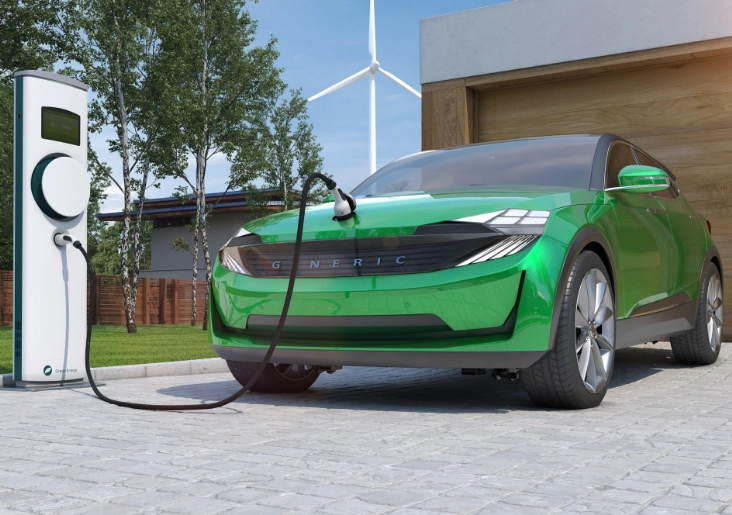
Range, Cost, and Other Myths We Need to Debunk
Let's clear the air on a few things.
Myth 1: You get the advertised EPA range every day. Nope. That number is from a specific test cycle. Real-world factors slash it: driving 75 mph on the highway, using climate control (especially heat), and cold weather. A car rated for 300 miles might give you 230 in winter. Plan for a 20% buffer.
Myth 2: EVs are always cheaper to run. They can be, but the math isn't universal.
| Cost Factor | Electric Vehicle | Gasoline Vehicle | Notes |
|---|---|---|---|
| Fuel/Energy | ~$0.04 - $0.15 per mile | ~$0.10 - $0.20 per mile | EV cost depends heavily on local electricity rates and where you charge (home vs. public DC fast). |
| Maintenance (5 yrs) | ~$2,000 - $3,000 | ~$4,500 - $7,000 | EVs save on oil changes, brakes (due to regen), and have fewer fluids. Tires may wear faster due to weight/torque. |
| Insurance | Often 10-25% higher | Baseline | Repair costs for advanced tech and battery packs drive premiums up. |
See the insurance line? That's the surprise for many new owners. Get quotes before you buy.
Maintenance Is Different, Not Necessarily Less
You skip the oil changes, spark plugs, and timing belts. That's the easy win. But EVs aren't maintenance-free.
Tires are a bigger deal. The instant torque and heavy weight (hello, battery pack) chew through tires faster. I replaced my first set at 28,000 miles. Rotate them every 5,000-7,000 miles religiously. Don't cheap out.
Brakes last longer because of regenerative braking, which uses the motor to slow the car and recapture energy. But the brake pads and rotors can actually seize from lack of use in humid climates. The fix? Occasionally use the brakes hard to clean off corrosion.
Cabin air filter and coolant for the battery pack still need periodic service. It's less frequent, but don't ignore the manual.
Buying Advice That Goes Beyond the Sticker Price
Looking at a Tesla Model 3, a Ford Mustang Mach-E, or a Hyundai Ioniq 5? Stop fixating on 0-60 times for a second.
Ask these questions instead:
- What's the real-world charging speed? Look for the peak kW rate it can accept on a DC fast charger. A higher number means shorter stops on road trips. A car that charges at 250 kW is in a different league than one that maxes at 50 kW.
- How is the software? The infotainment and navigation are now critical. Does it have good route planning that automatically finds chargers? Does it pre-condition the battery (warm it up) when navigating to a fast charger for optimal speed? Tesla is the benchmark here; others are catching up.
- Where will you service it? Is there a certified dealer or service center within a reasonable distance? Not every local mechanic can or will touch a high-voltage battery system.
Consider a used EV. The steep initial depreciation hits the first owner, not you. You still get the federal tax credit on some used models (under $25,000, from a dealer). Just get a battery health report.
Your Electric Vehicle Questions, Answered Honestly
The bottom line? An electric vehicle isn't just a car with a plug. It's a different system. For the right person—someone with a place to charge overnight, a predictable commute, and a willingness to plan the occasional long trip—it's not just viable. It's fantastic. The smooth drive, the low running costs, the simplicity. But go in with your eyes open to the real-world details, not just the brochure promises.